Snowy Owl Taxidermy Mount
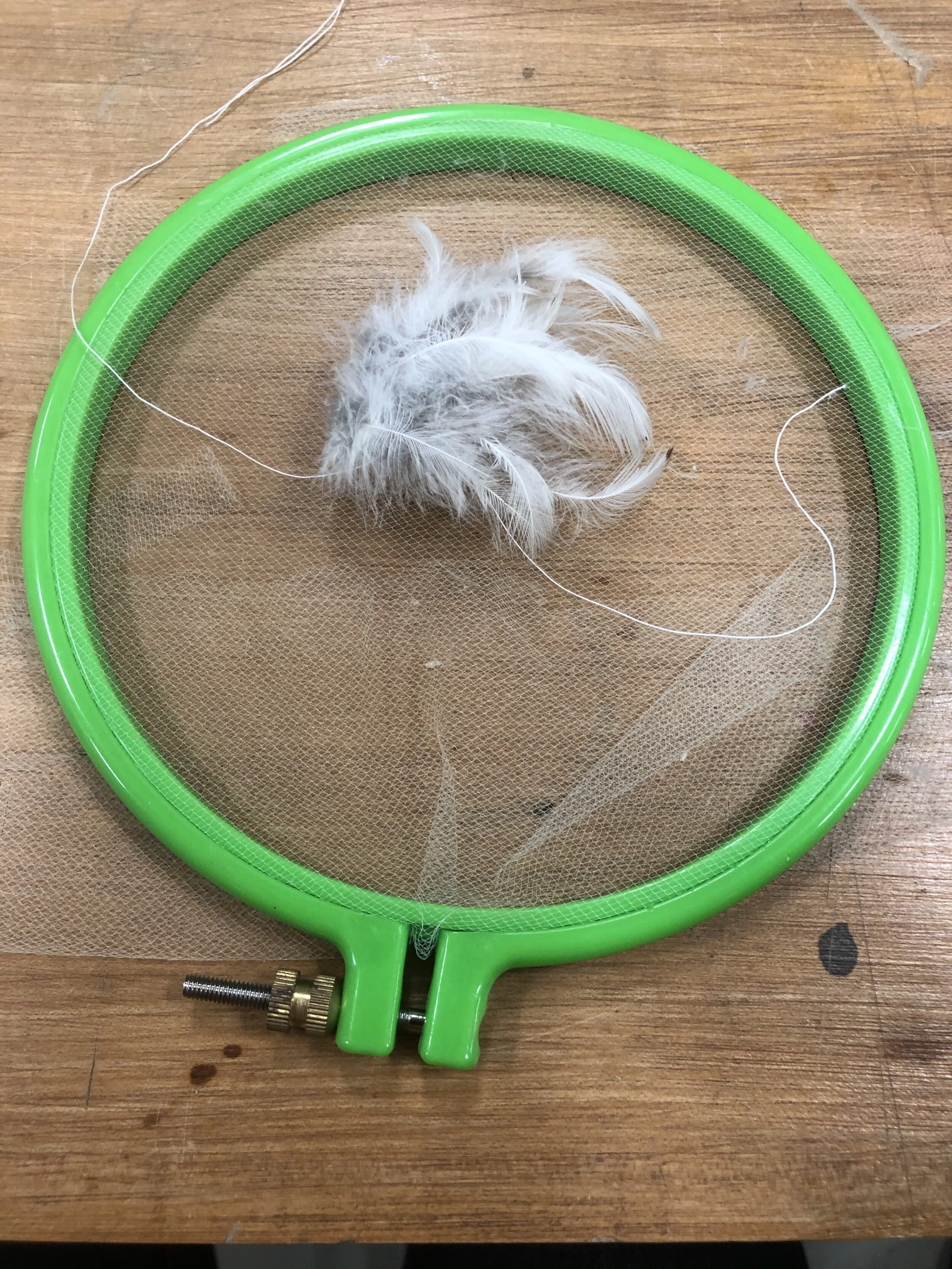
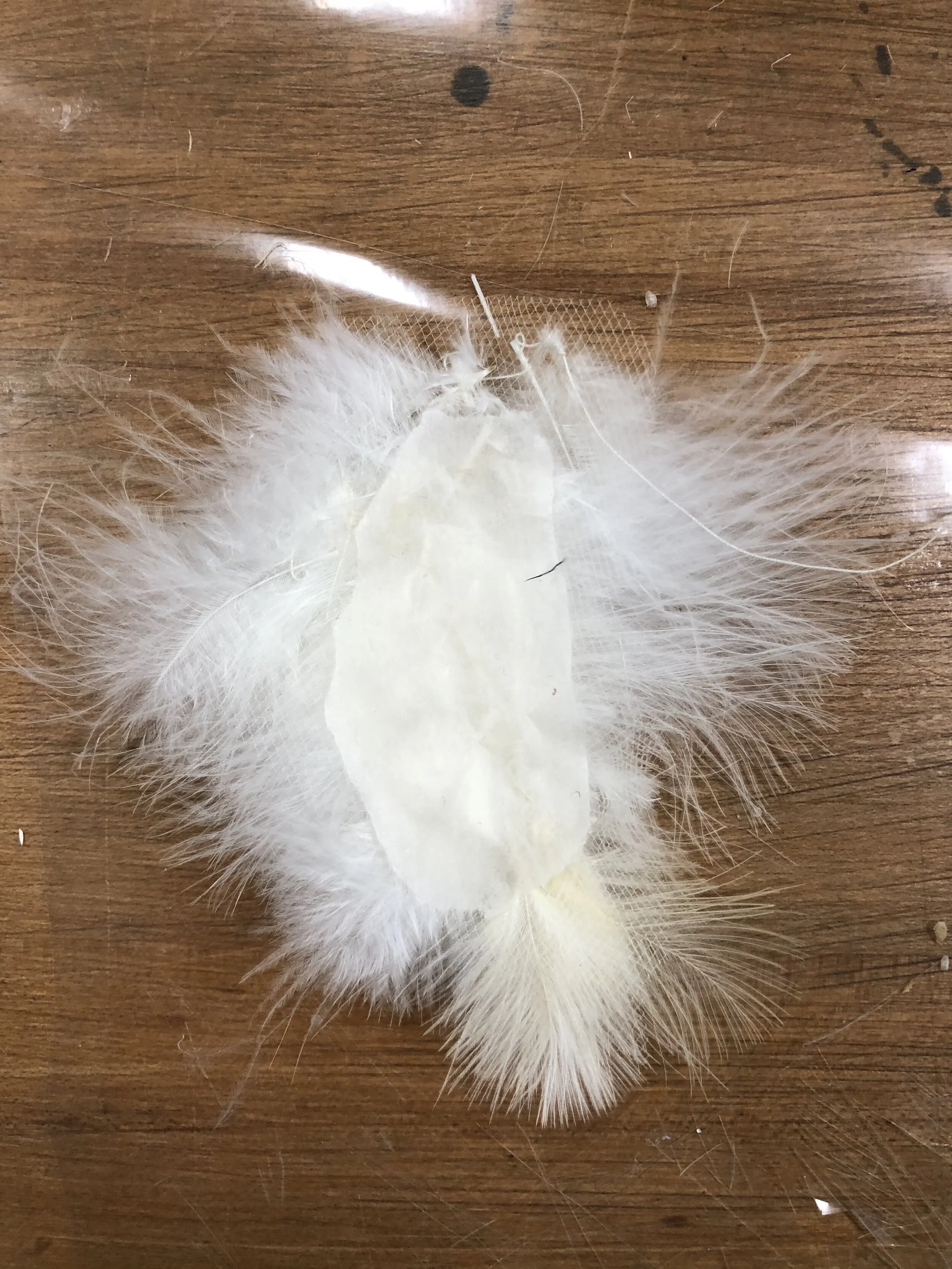
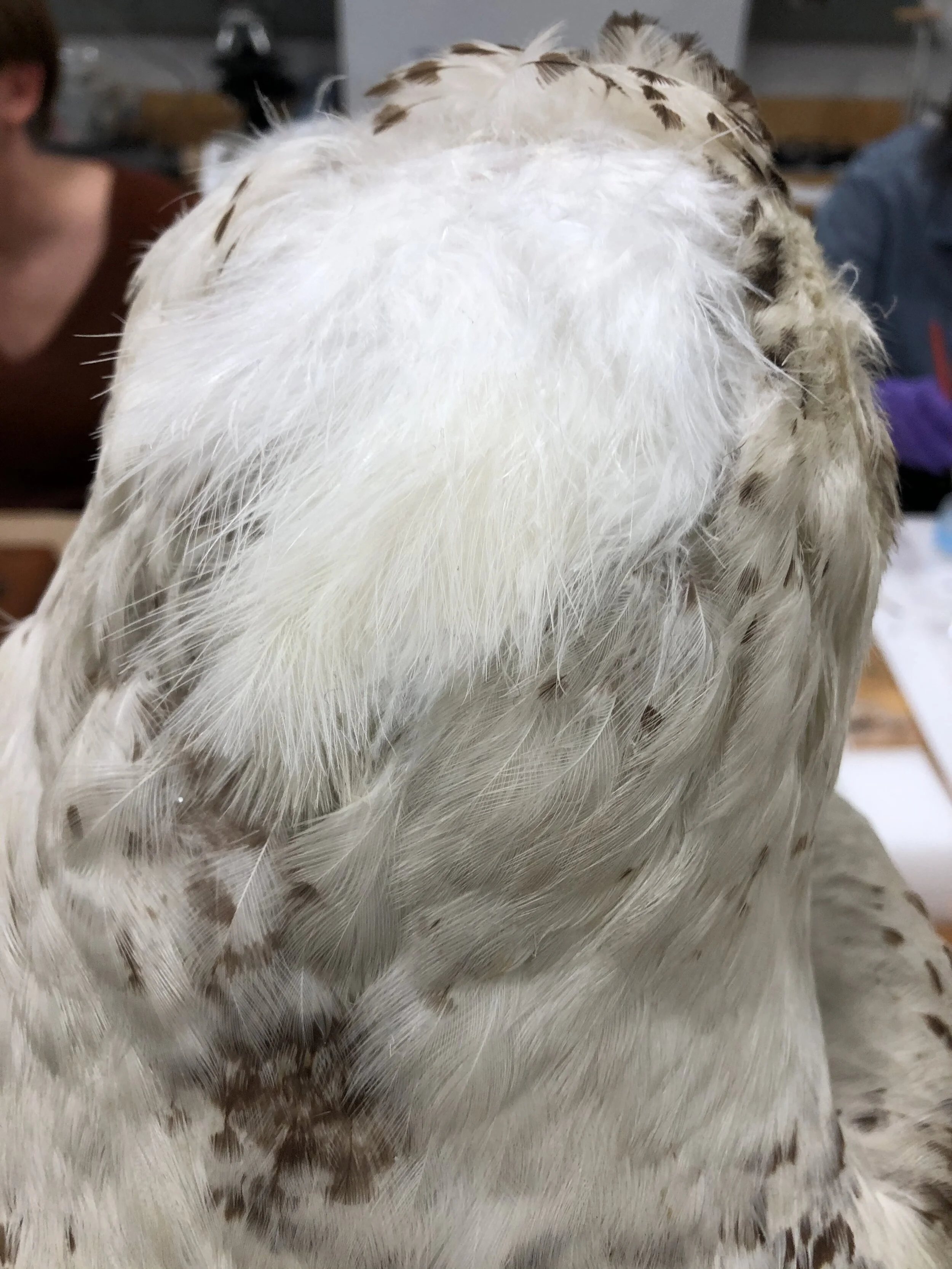
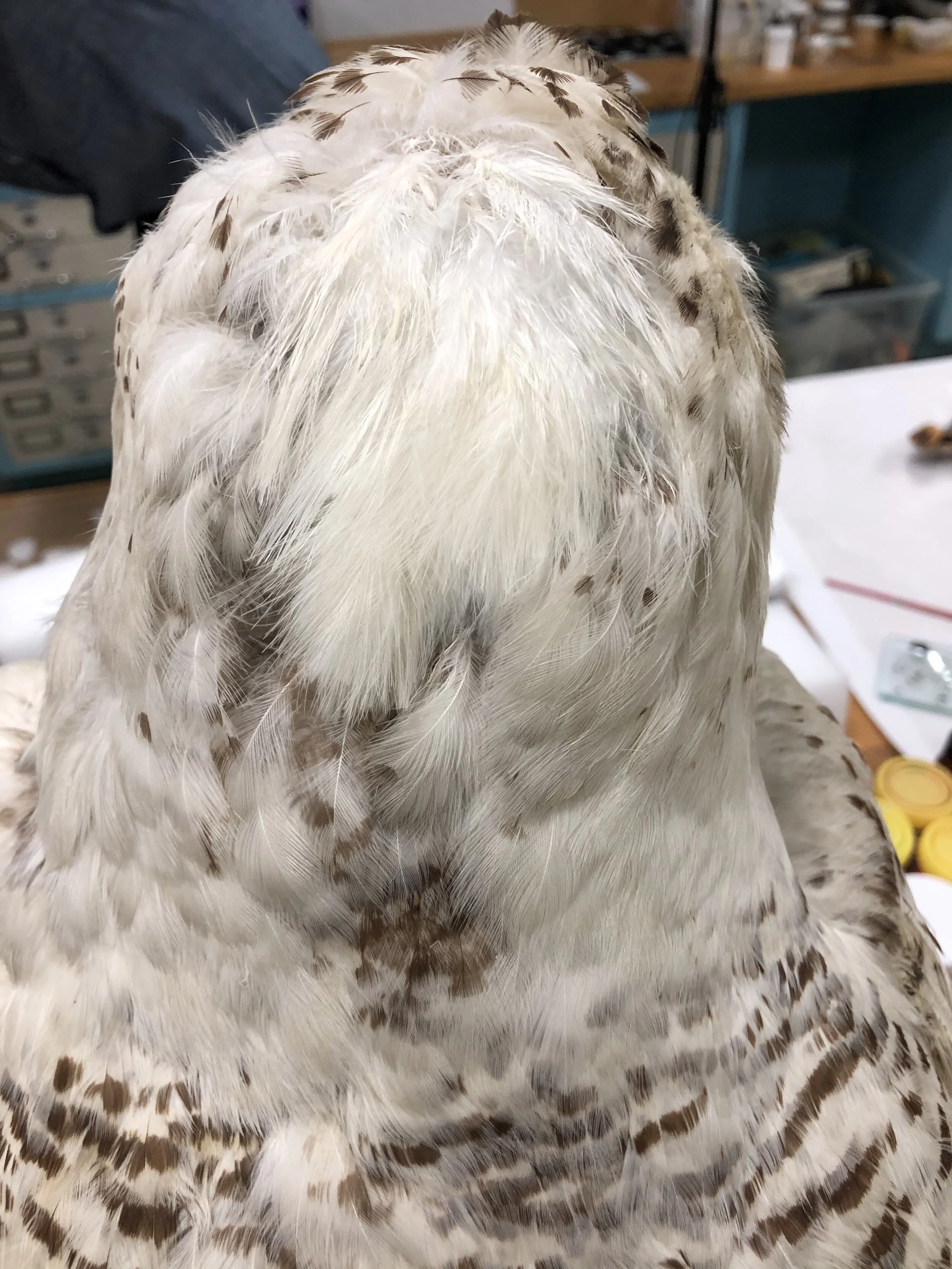
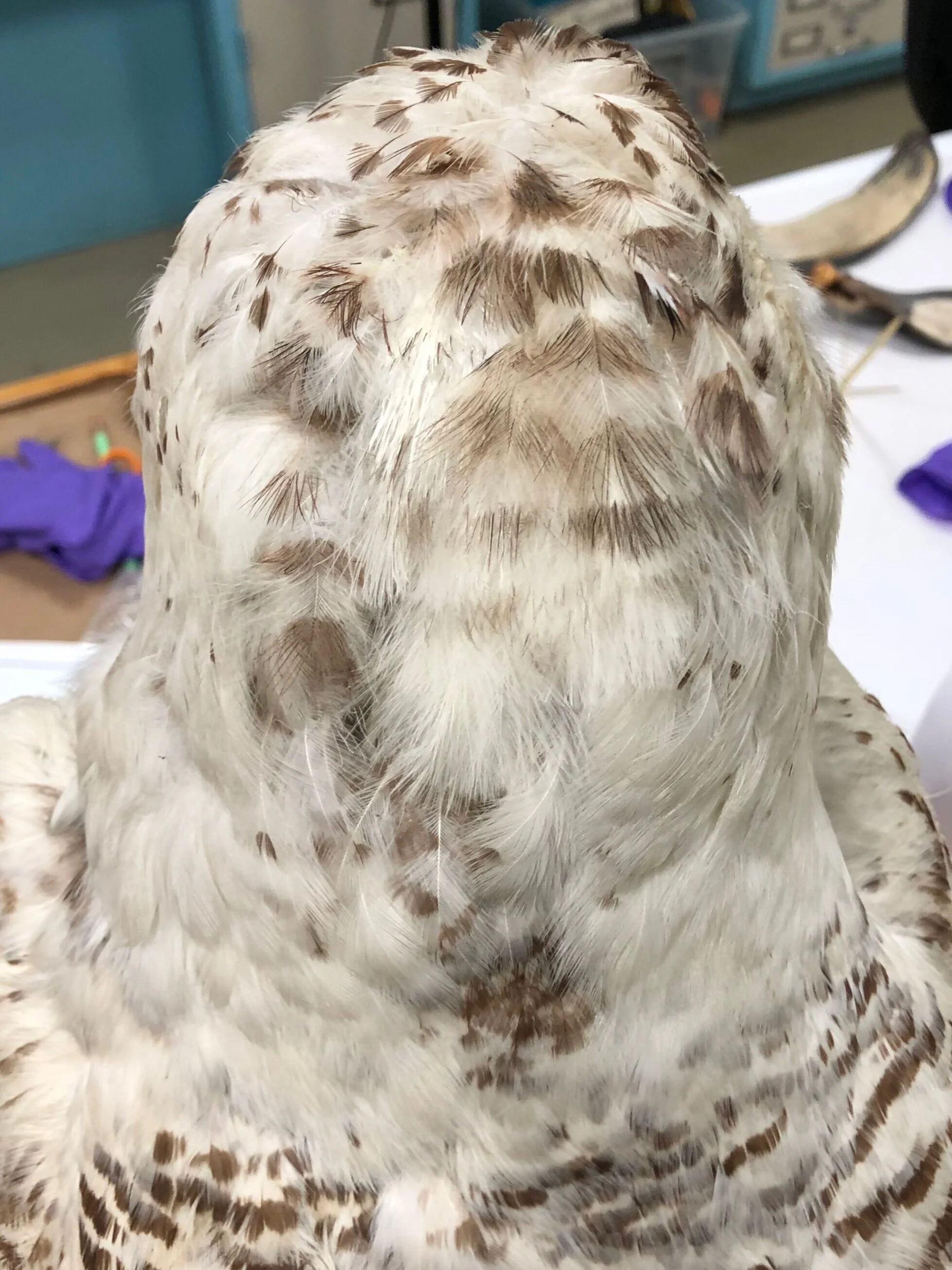
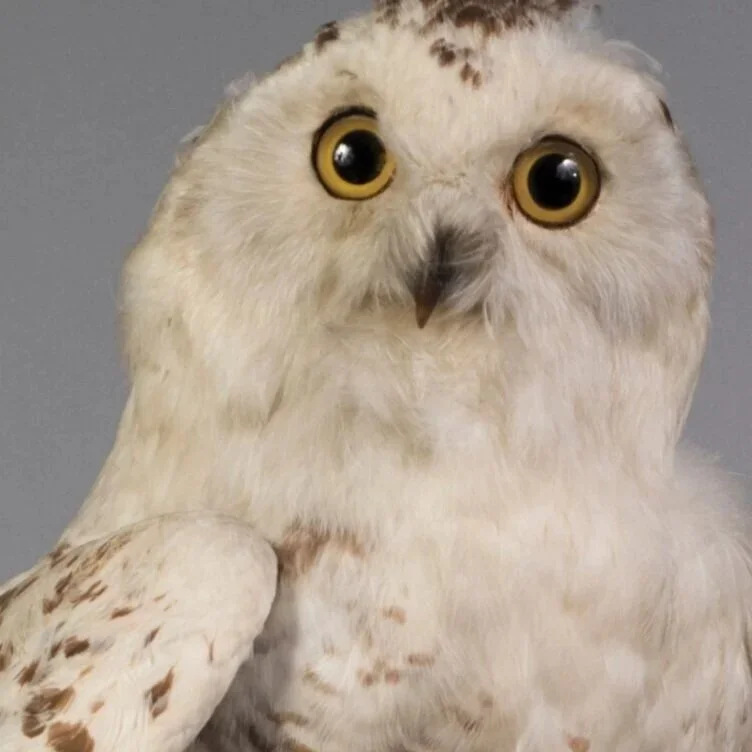
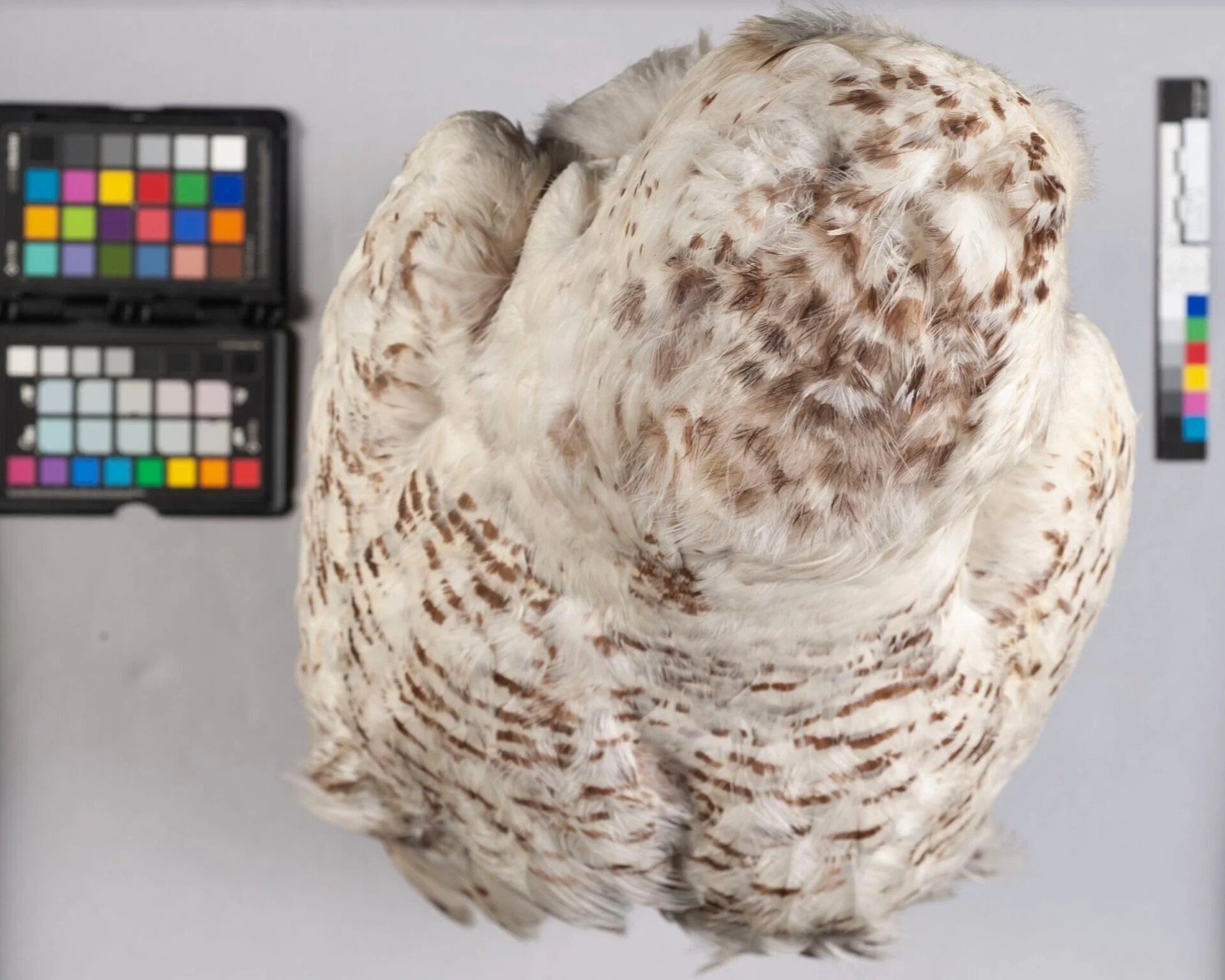
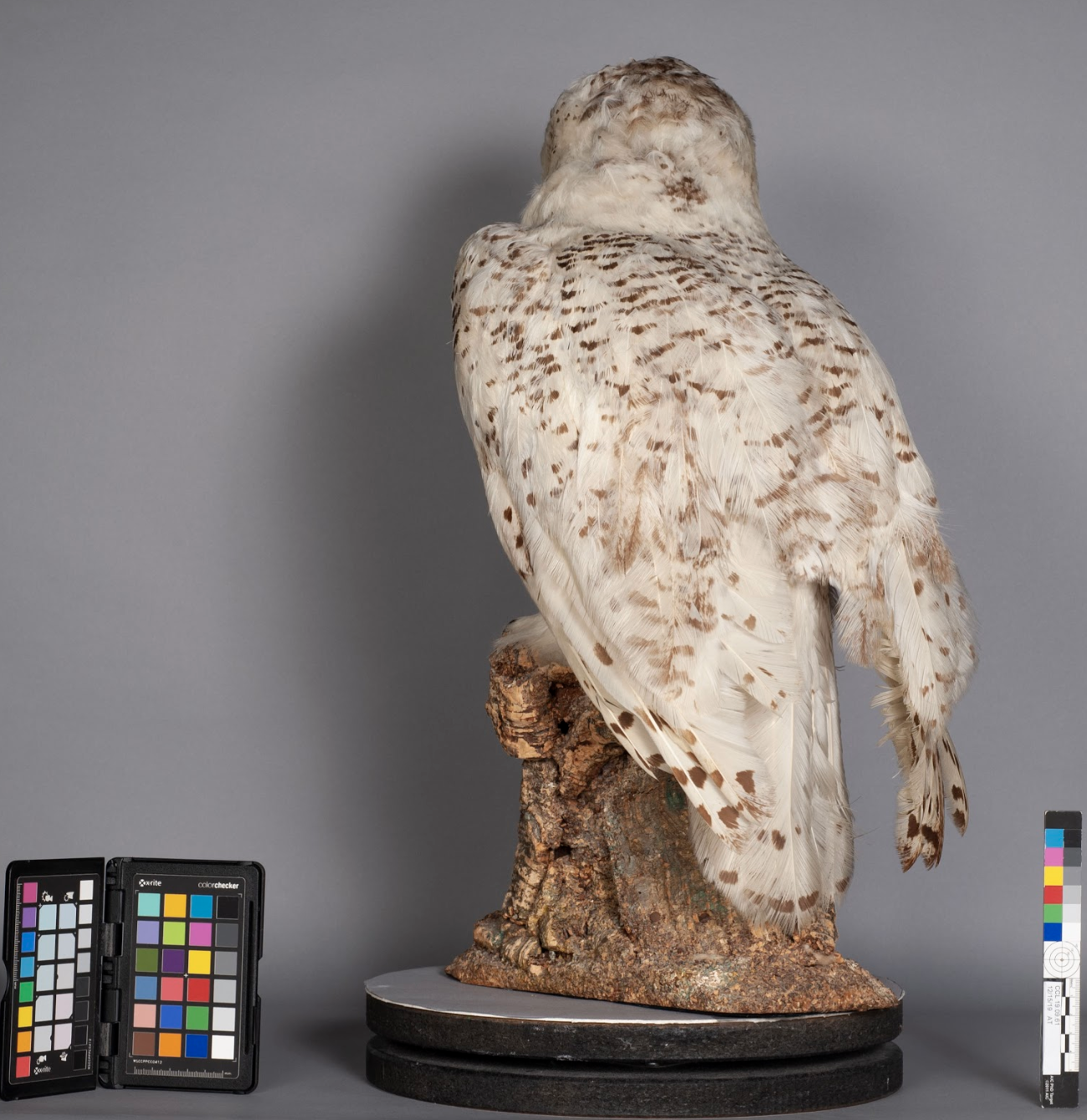
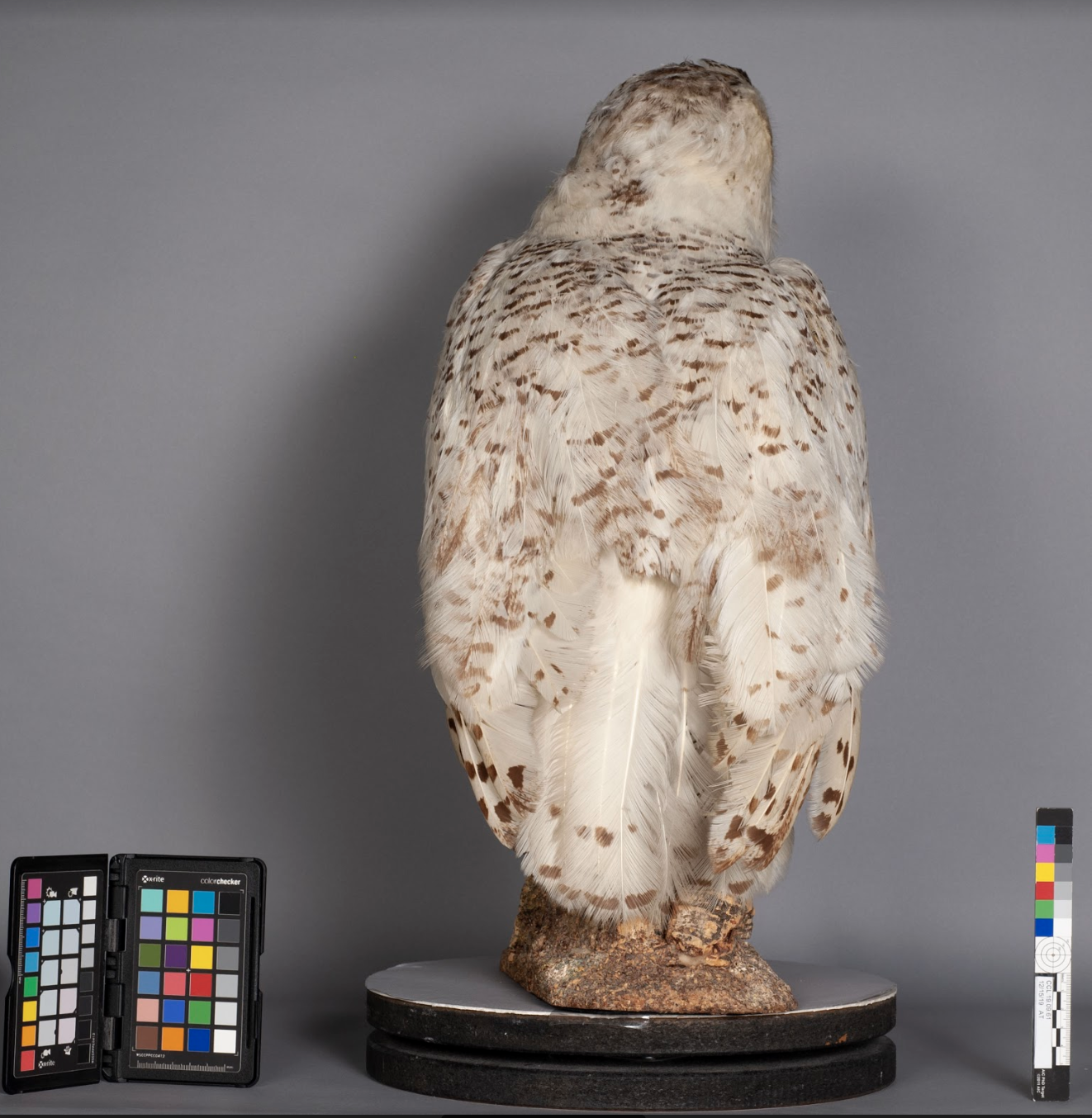
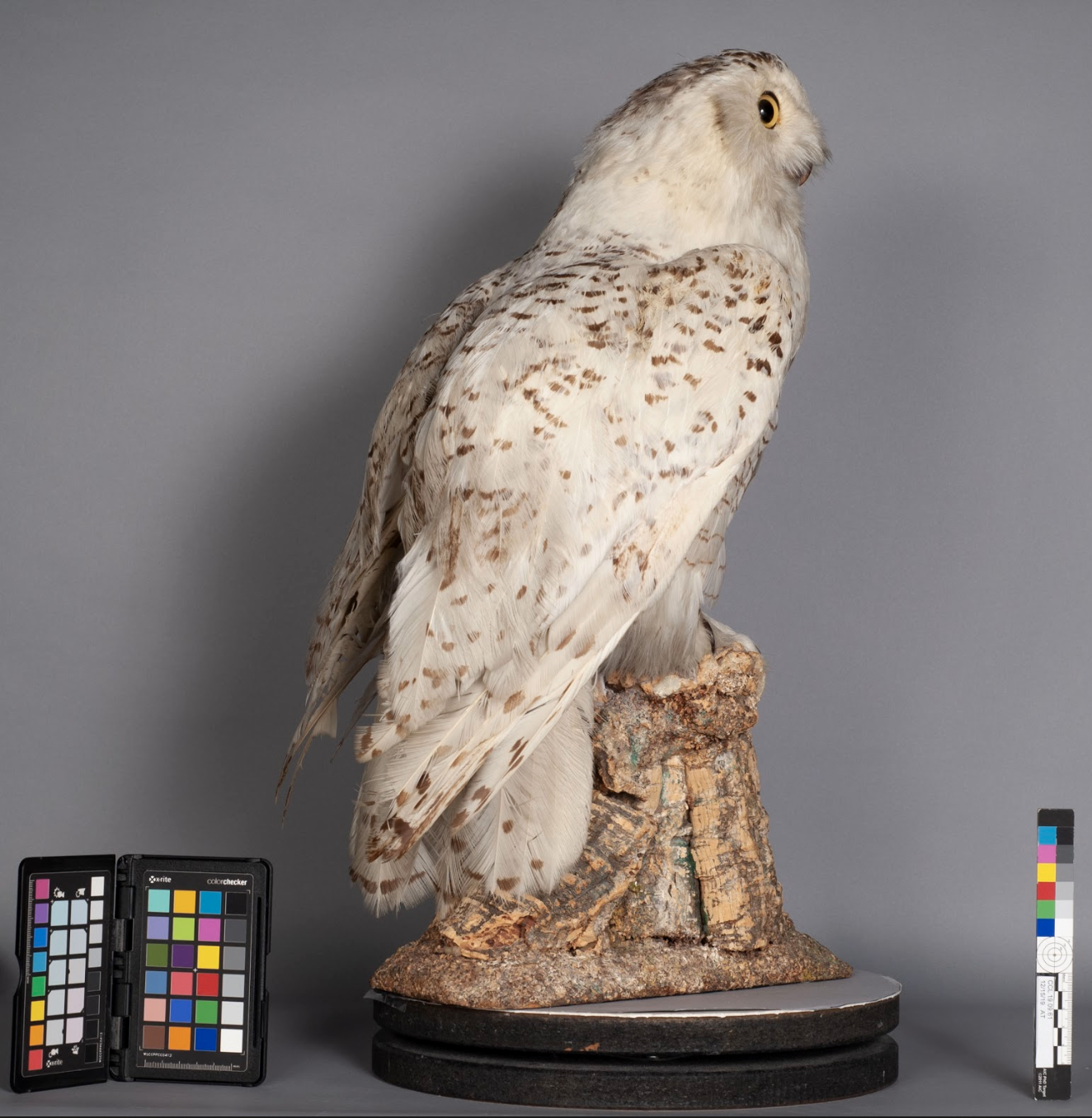
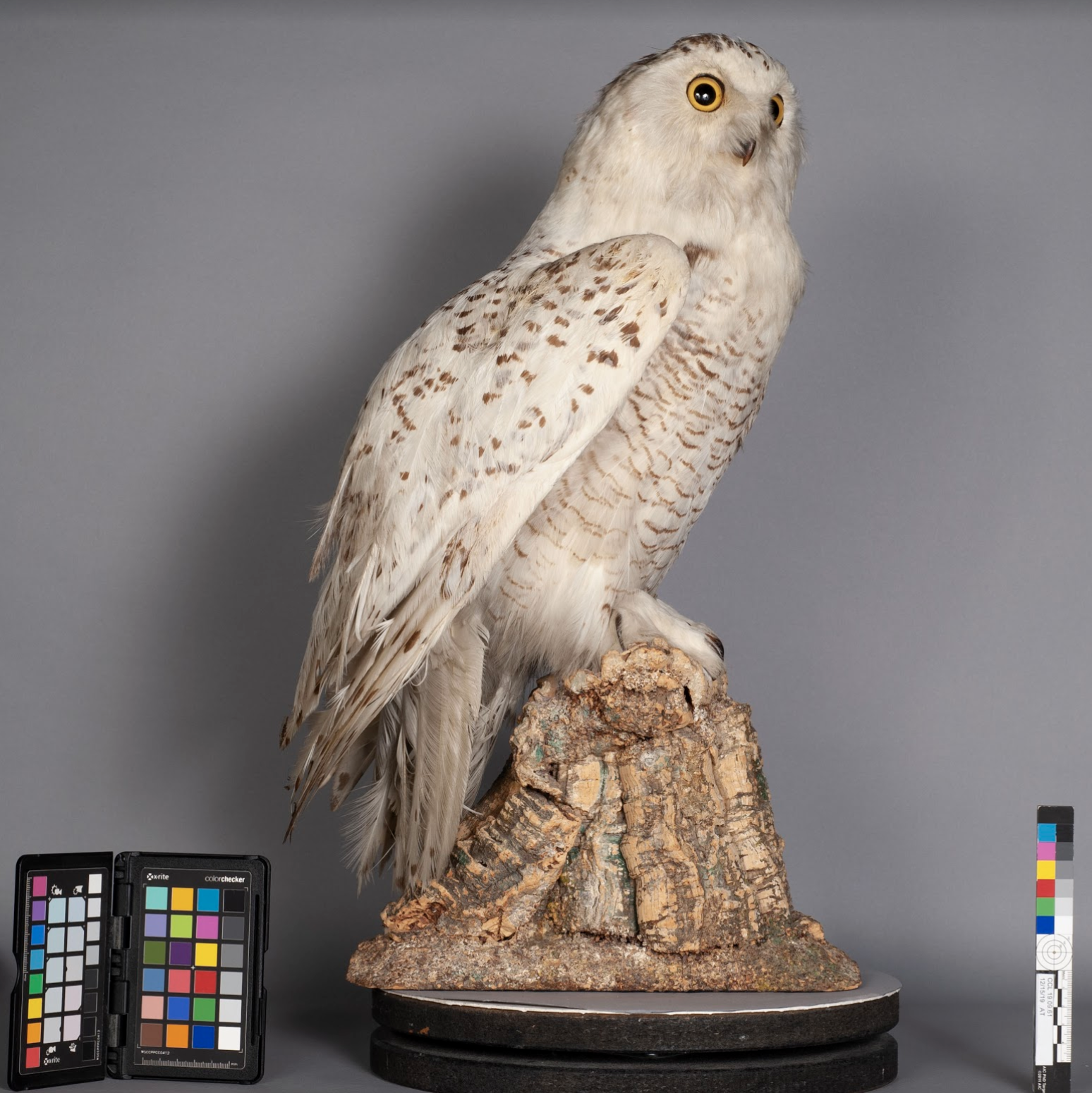
The mount was treated in a course on conservation of natural science collections taught by Conservators Julia Sybalsky from the American Museum of Natural History and Fran Ritchie from the National Parks Service. The mount is a Bubo scandiaca, or Snowy Owl, getting its American name from both the Arctic habitat it resides in and the coloring of the feathers. The owl arrived at the Conservation Center with missing feathers on the crown of the head, along with grease stains from preparation of the skin and yellowing of the feathers. Treatment involved creating a feather “toupee” to cover loss in the head, along with cleaning, and consolidation.
before treatment
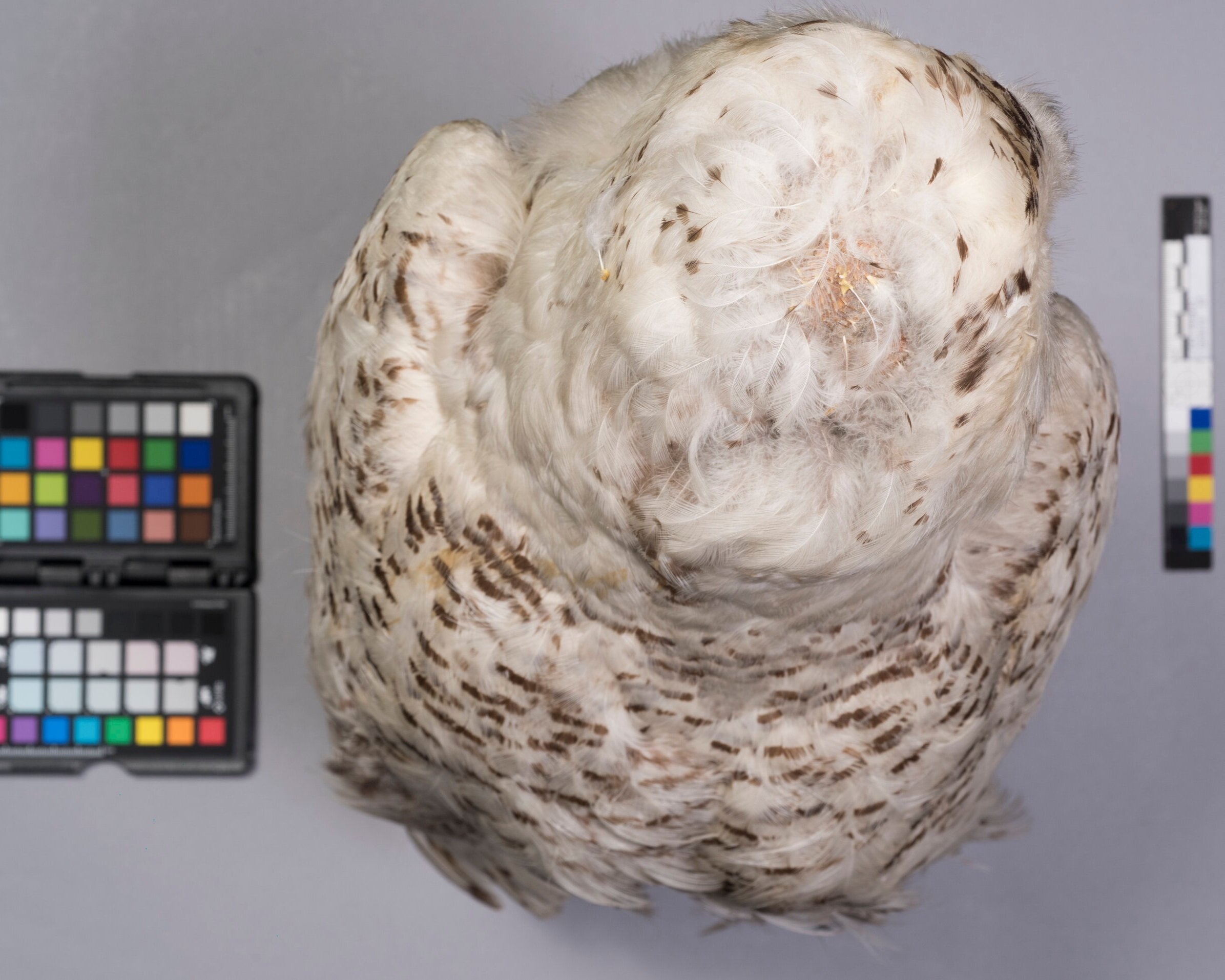
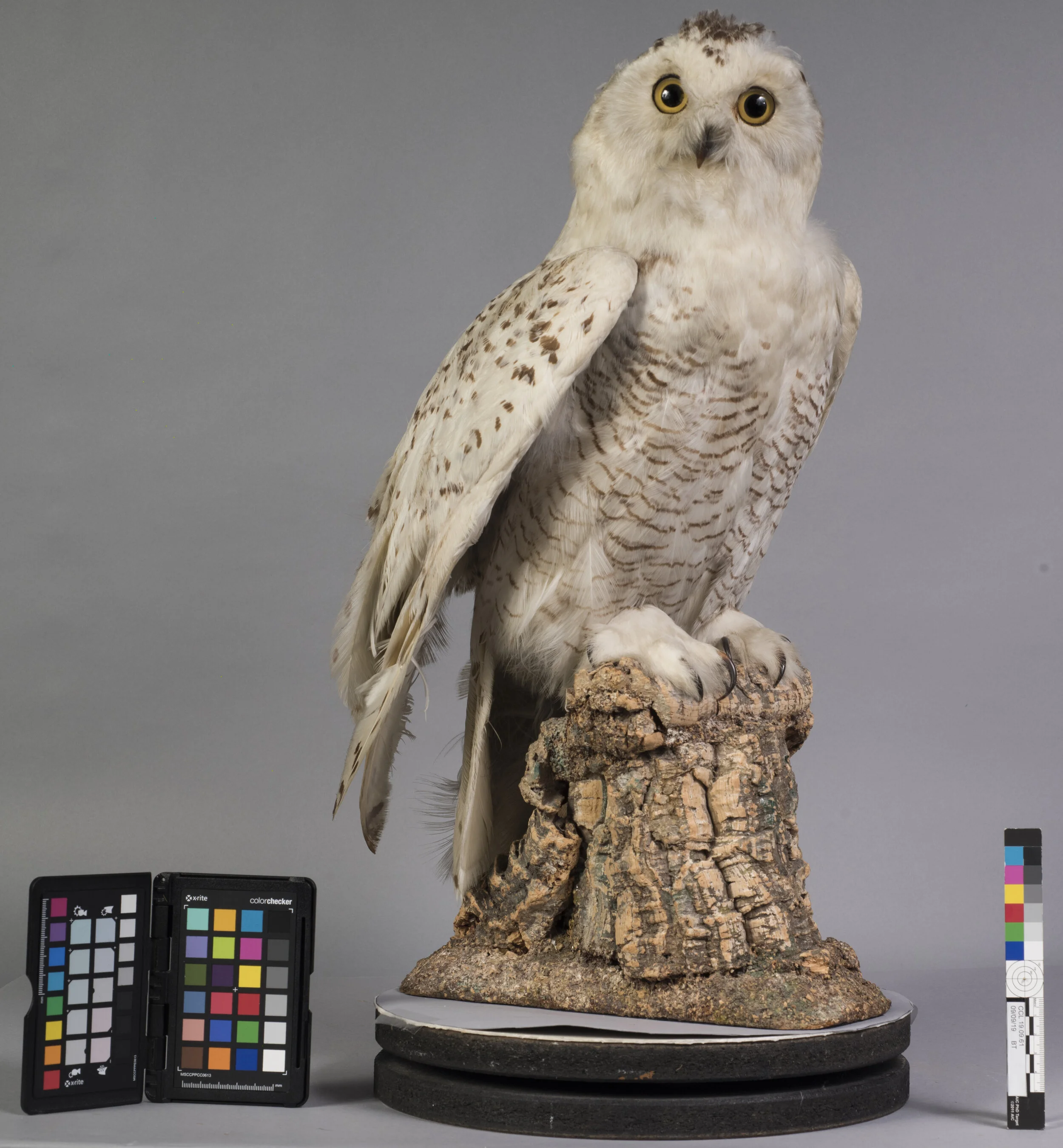
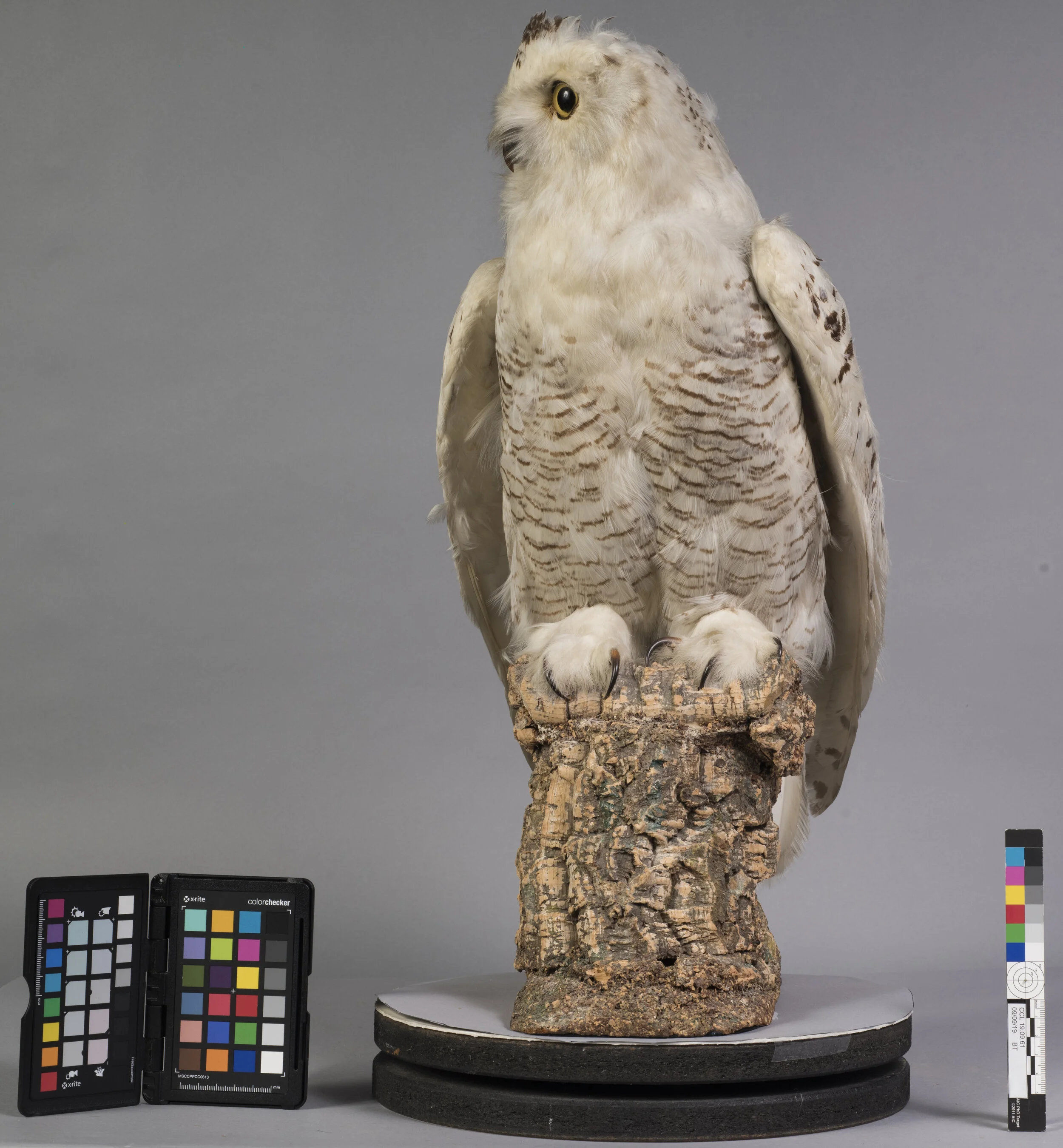
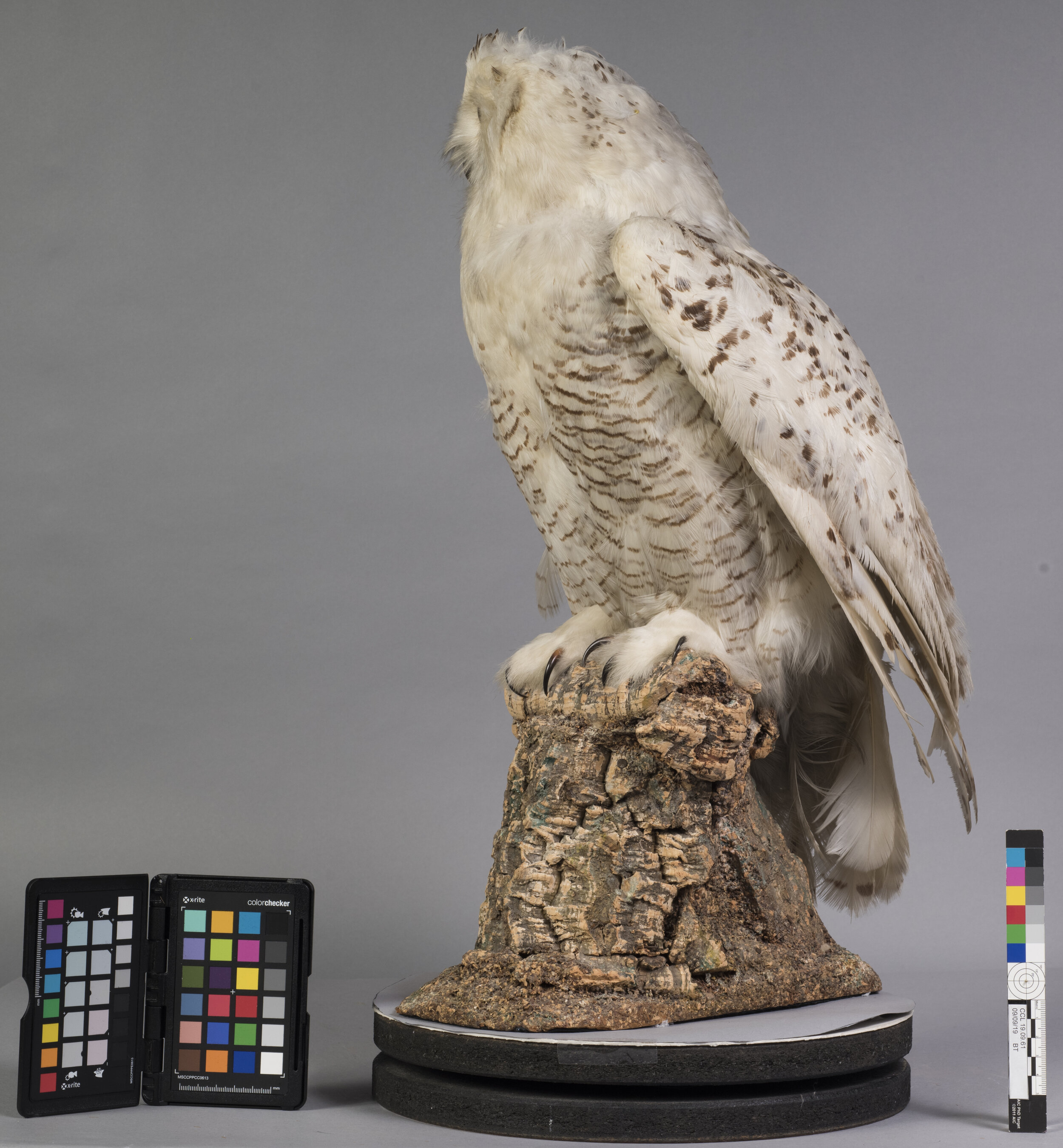
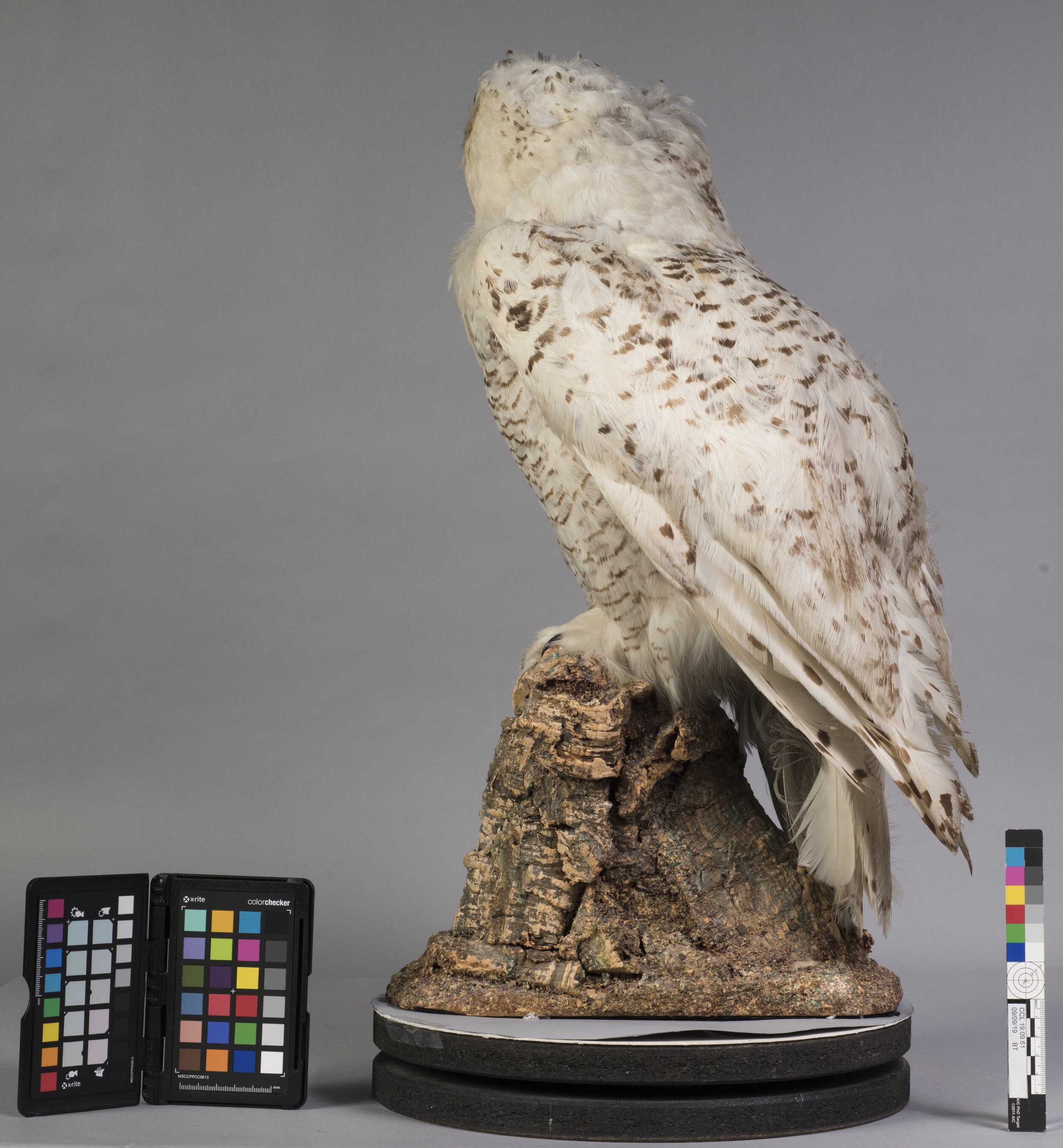
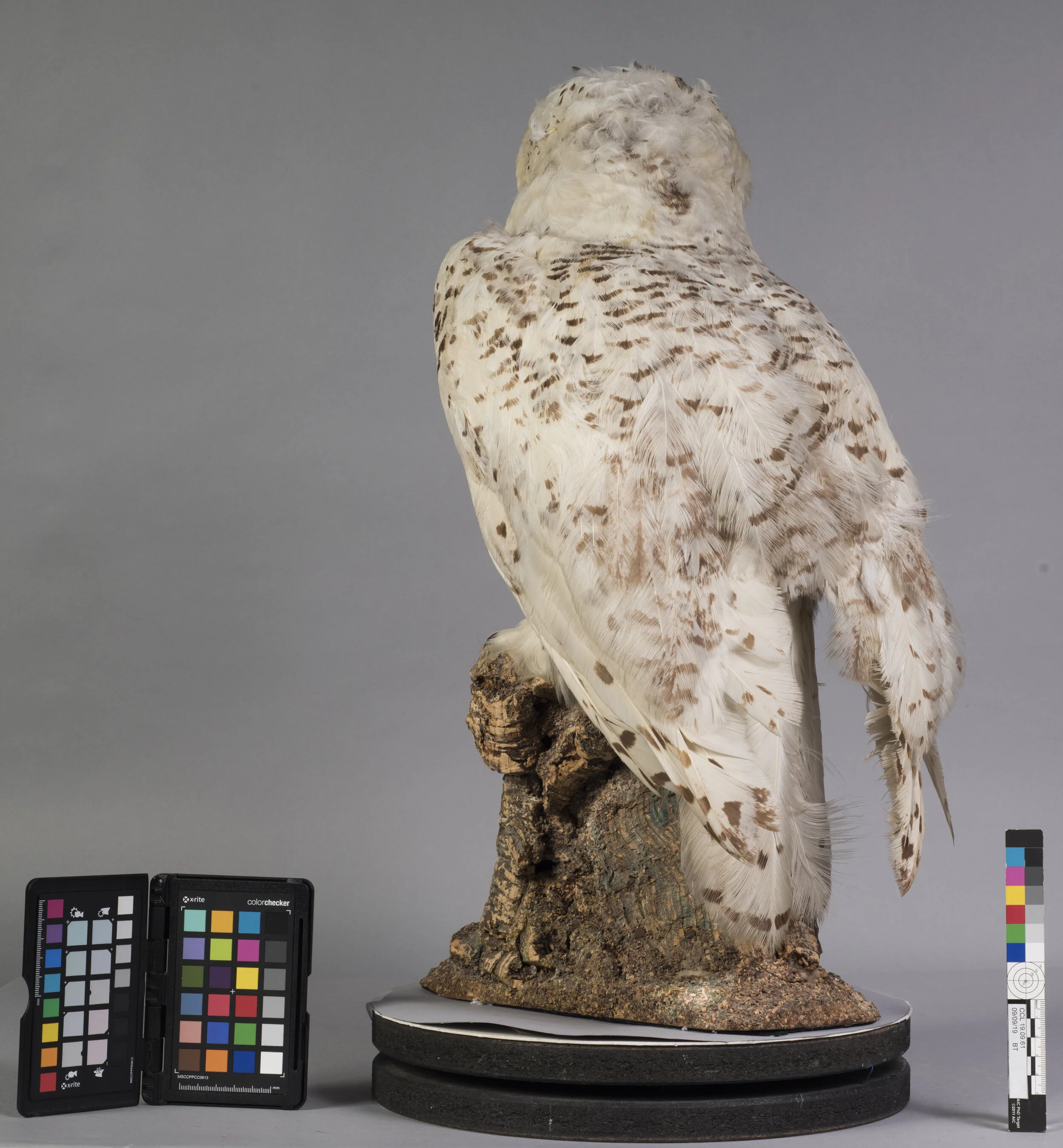
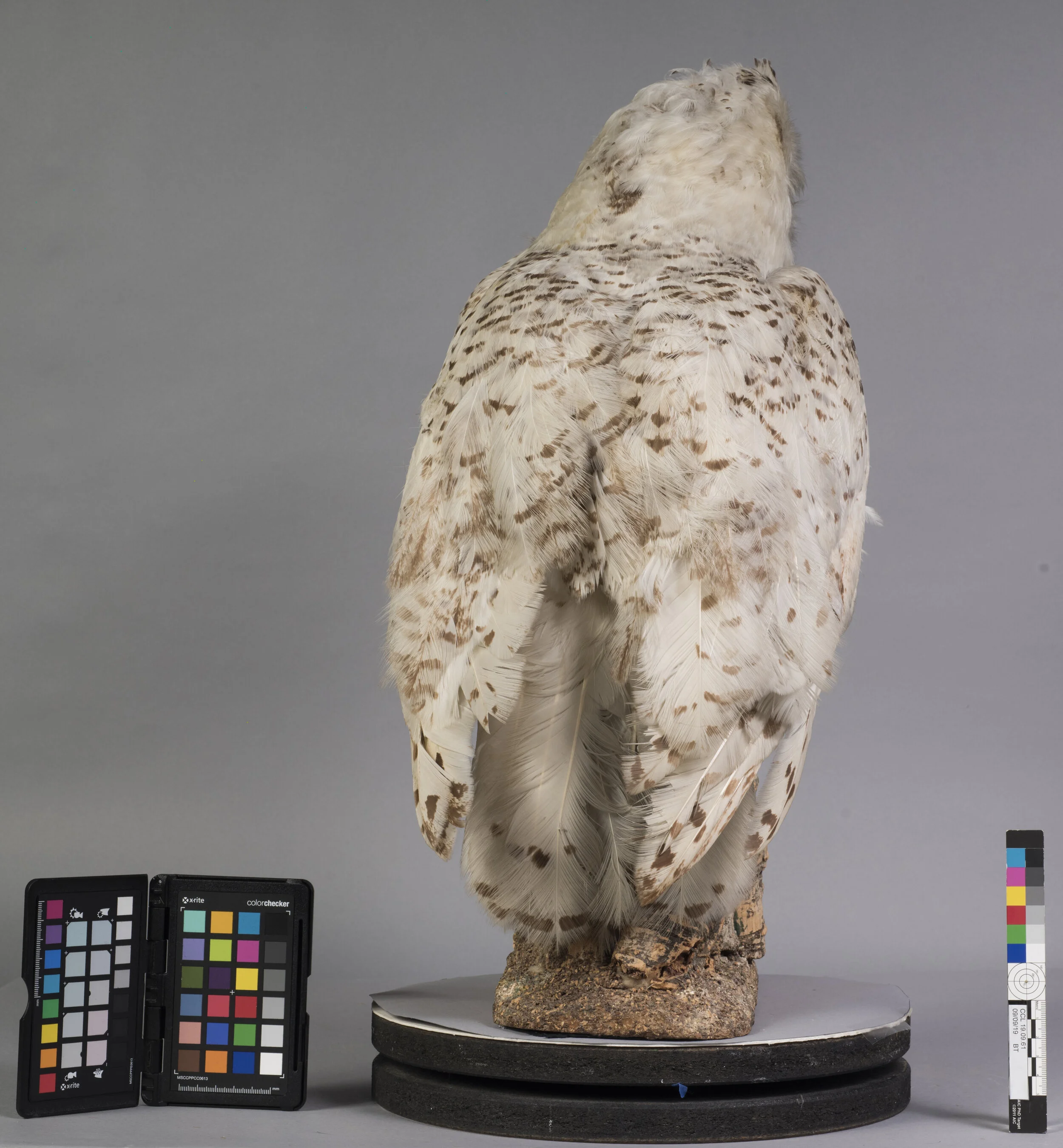
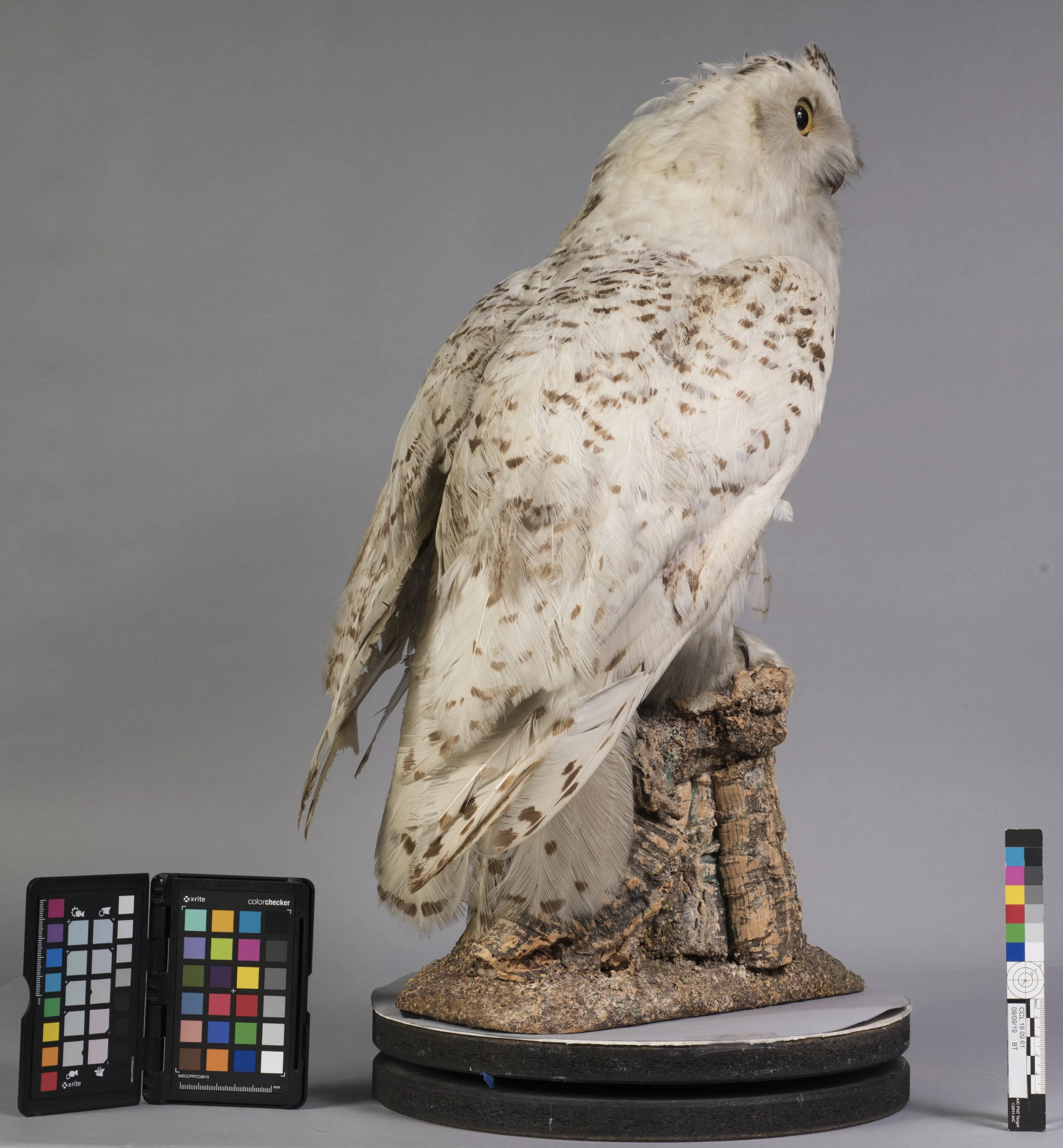
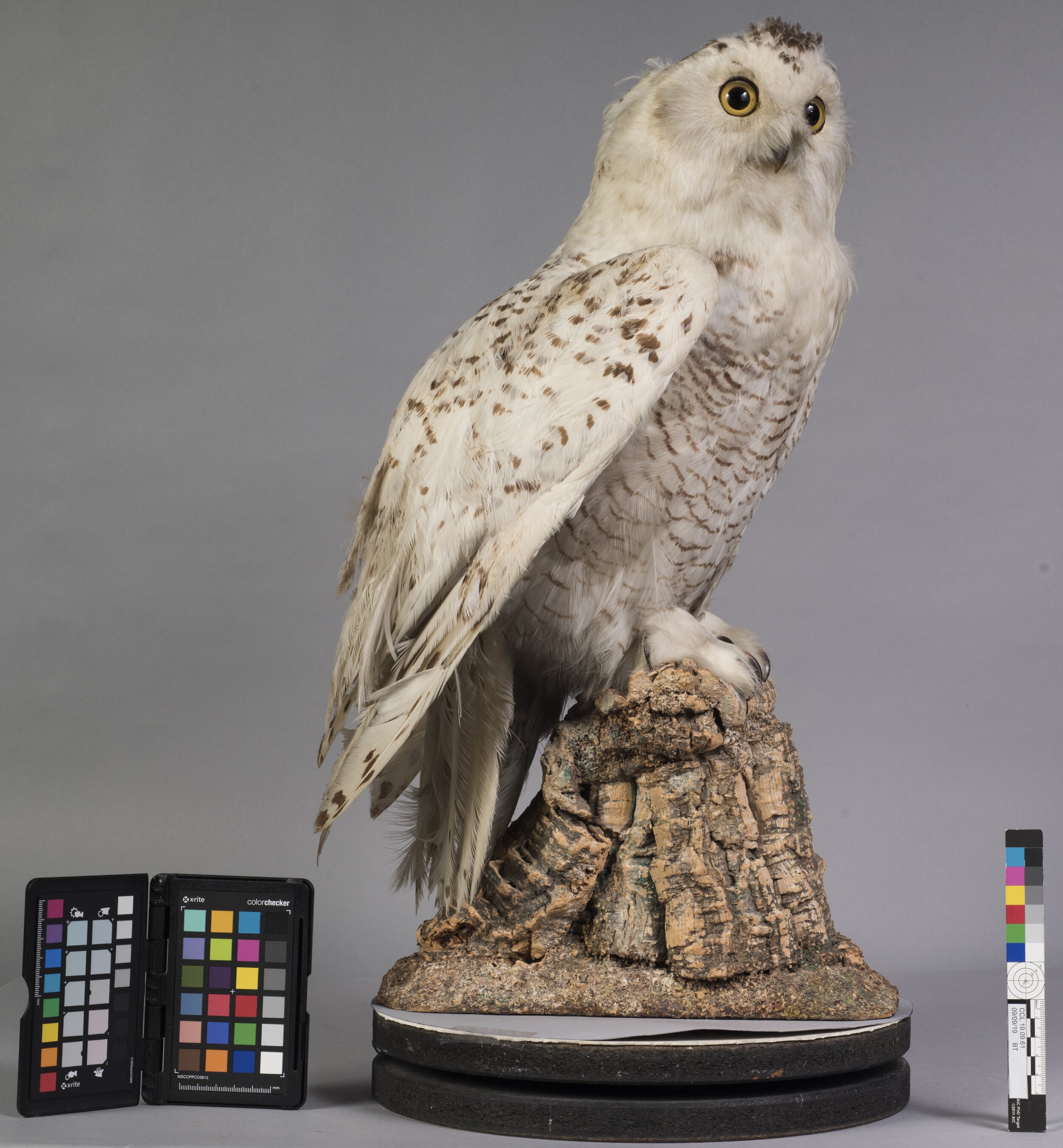
after treatment
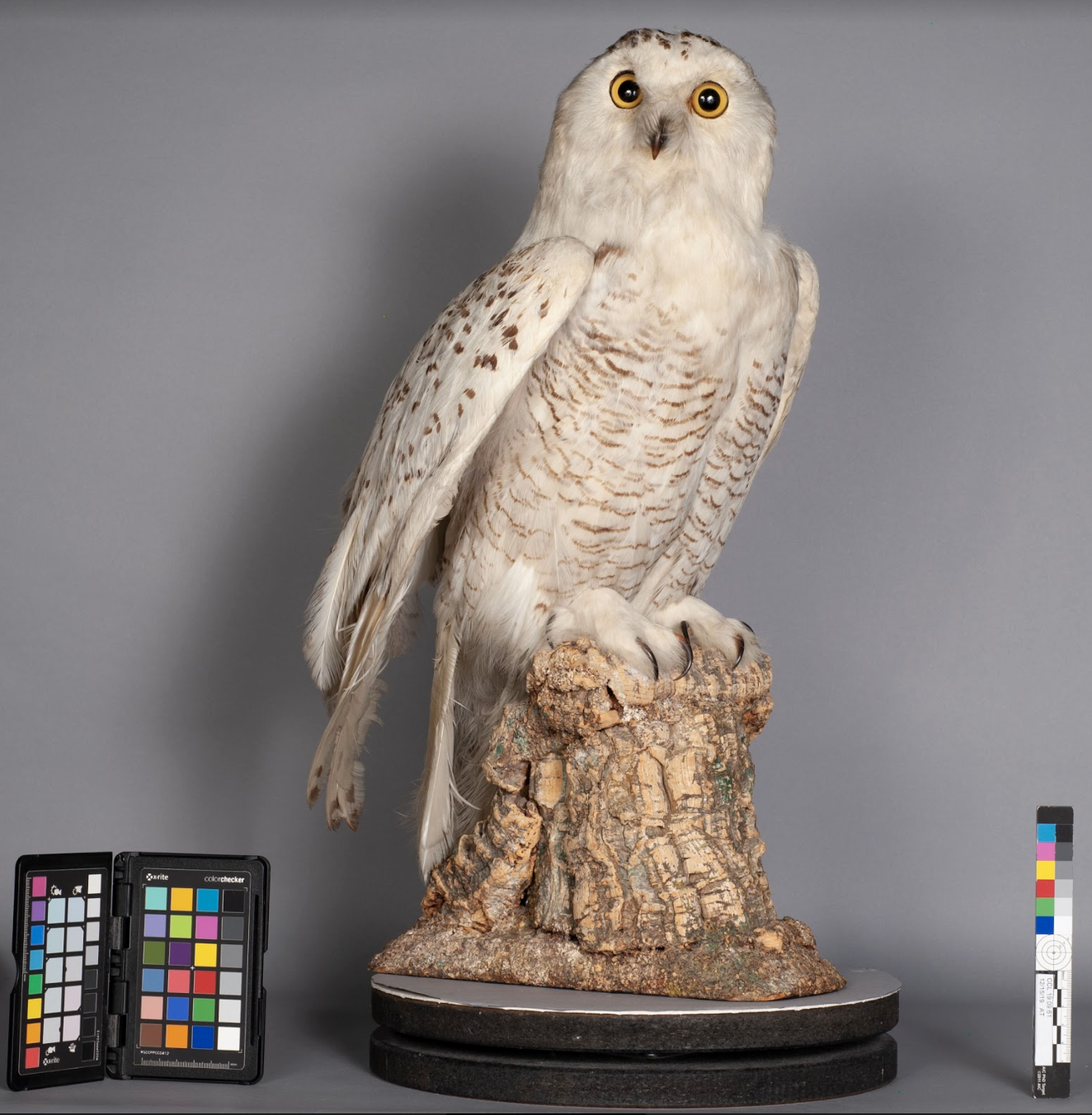
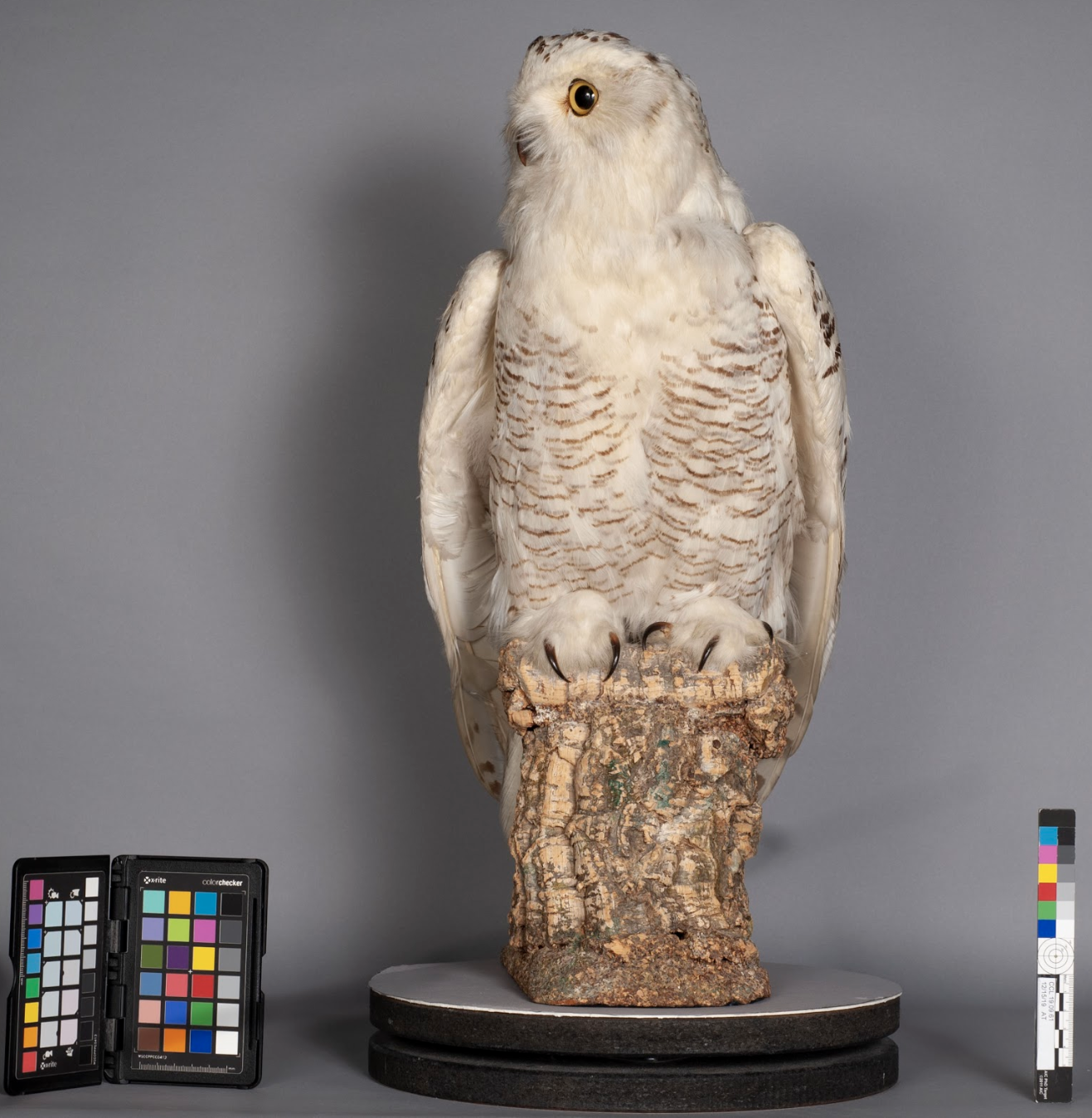
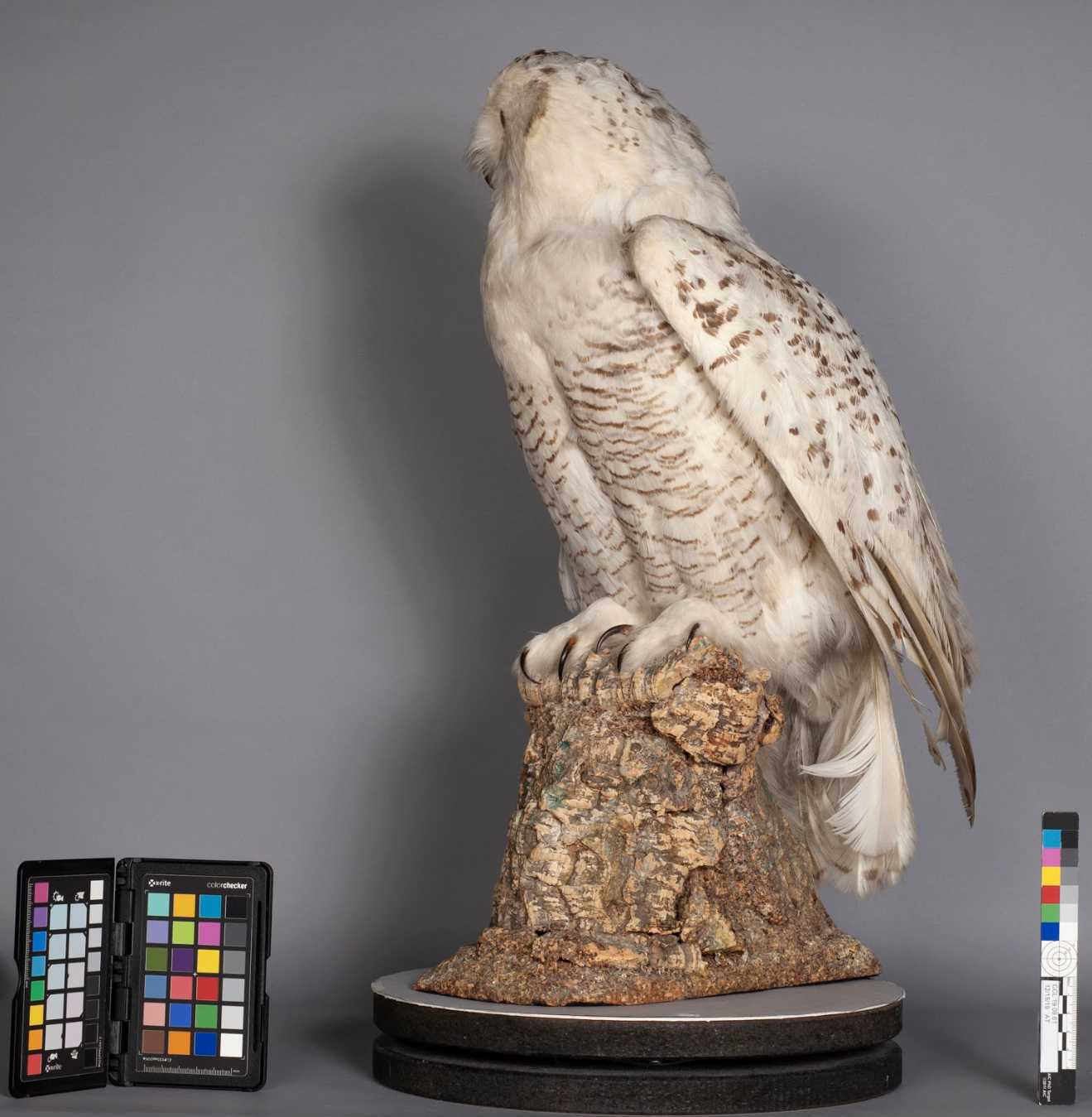
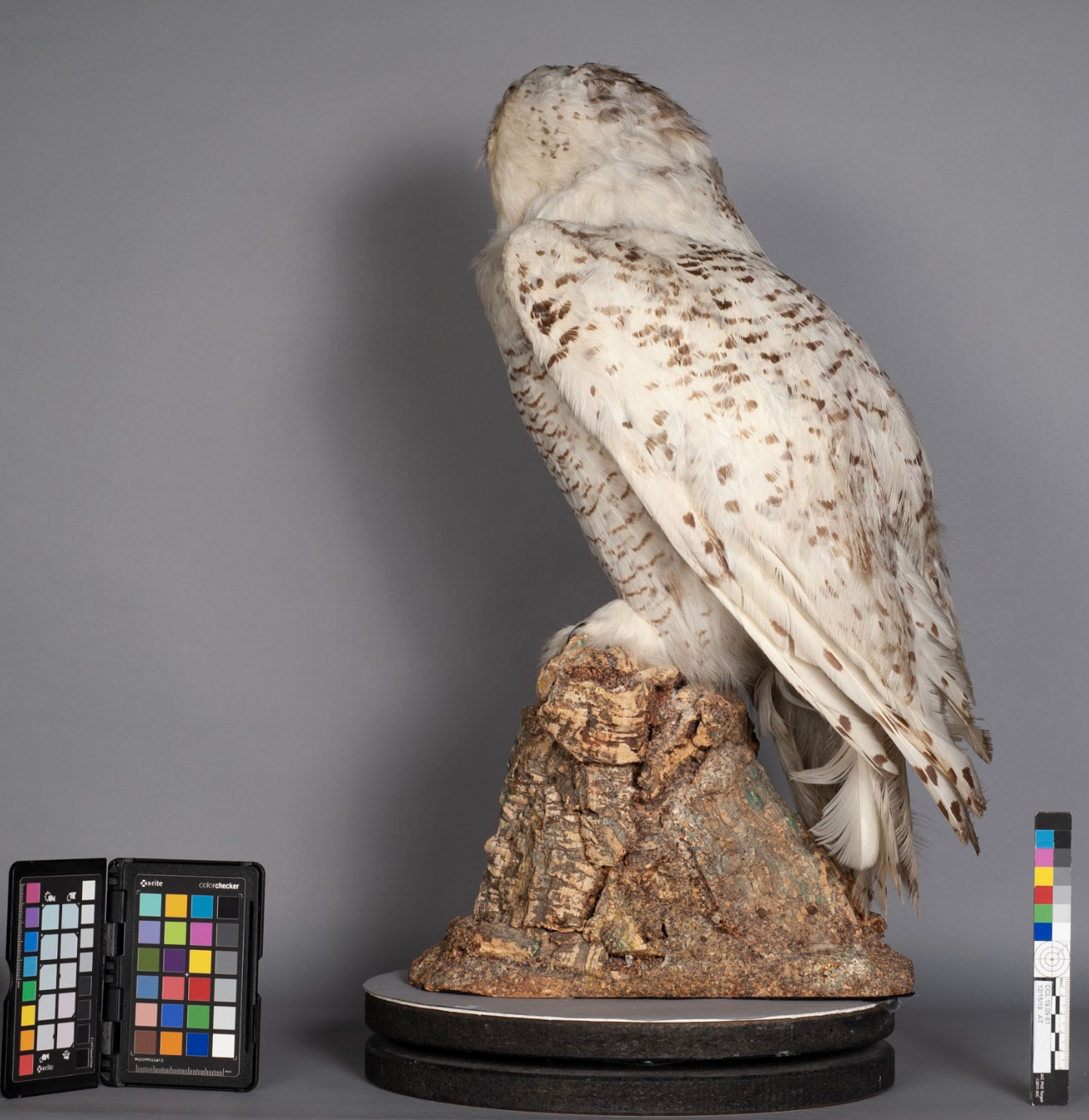
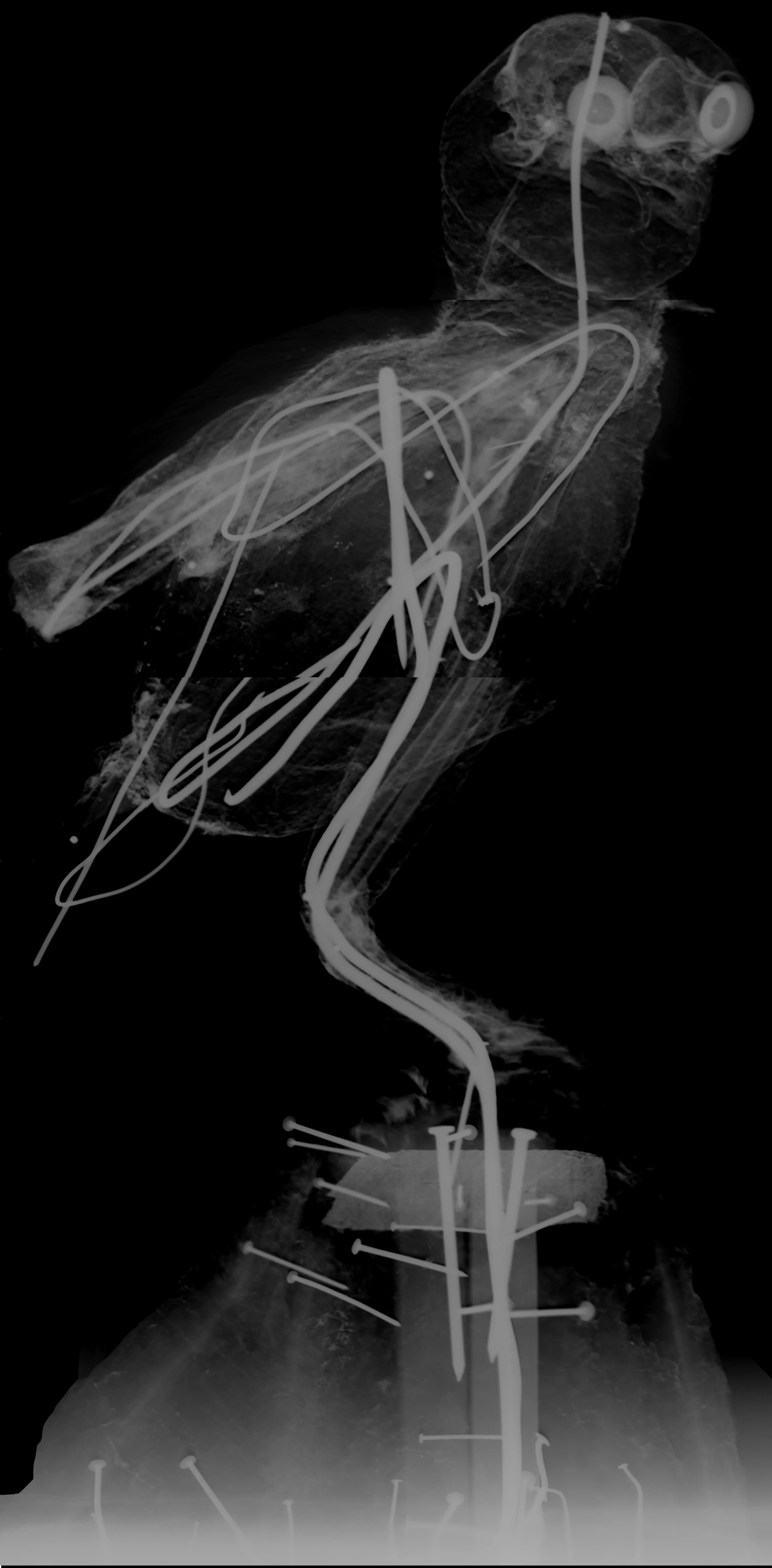
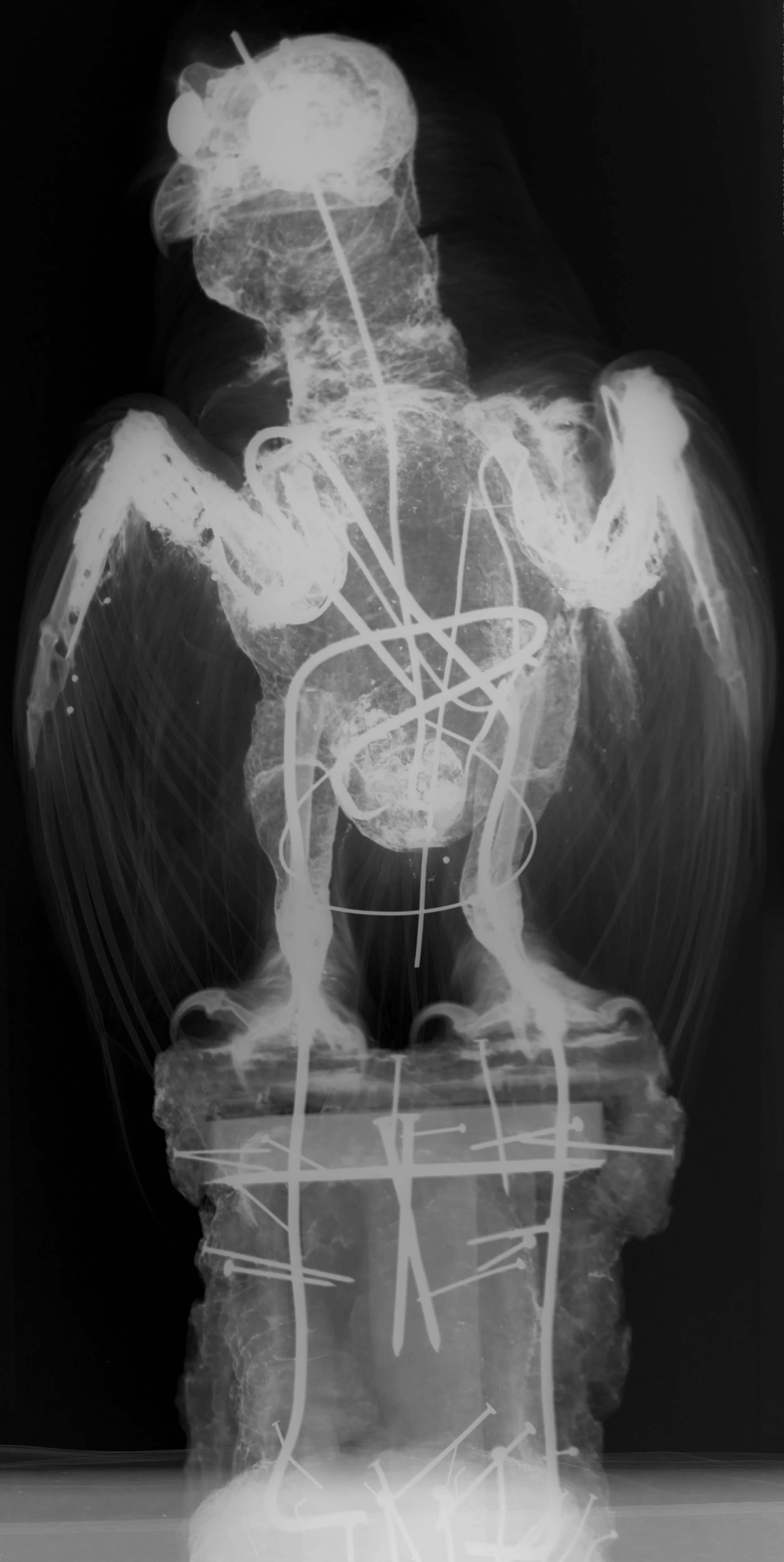
Construction
X-radiography was performed at two settings on the mount to better understand the internal armature and its connection to the skin. A long thick twisted wire comes downward from each talon of the owl, extending through the base and bending at a 90-degree angle inward at the bottom. The thick wire going through the proper right talons, extends up the leg, and then angles downward to support the proximal end. The wire from the proper left talons extend up the leg to the top of the skin under the wing. Several thinner wires are wrapped and bent around the two thick wires to support the tail, head and wings. The thin wire in the wings wraps around the bone for support. The stuffing material for the mount is unknown but probably wood wool and/or cotton. There are small opaque spheres visible in the x-ray images from the frontal and profile view, suggesting bird shot.