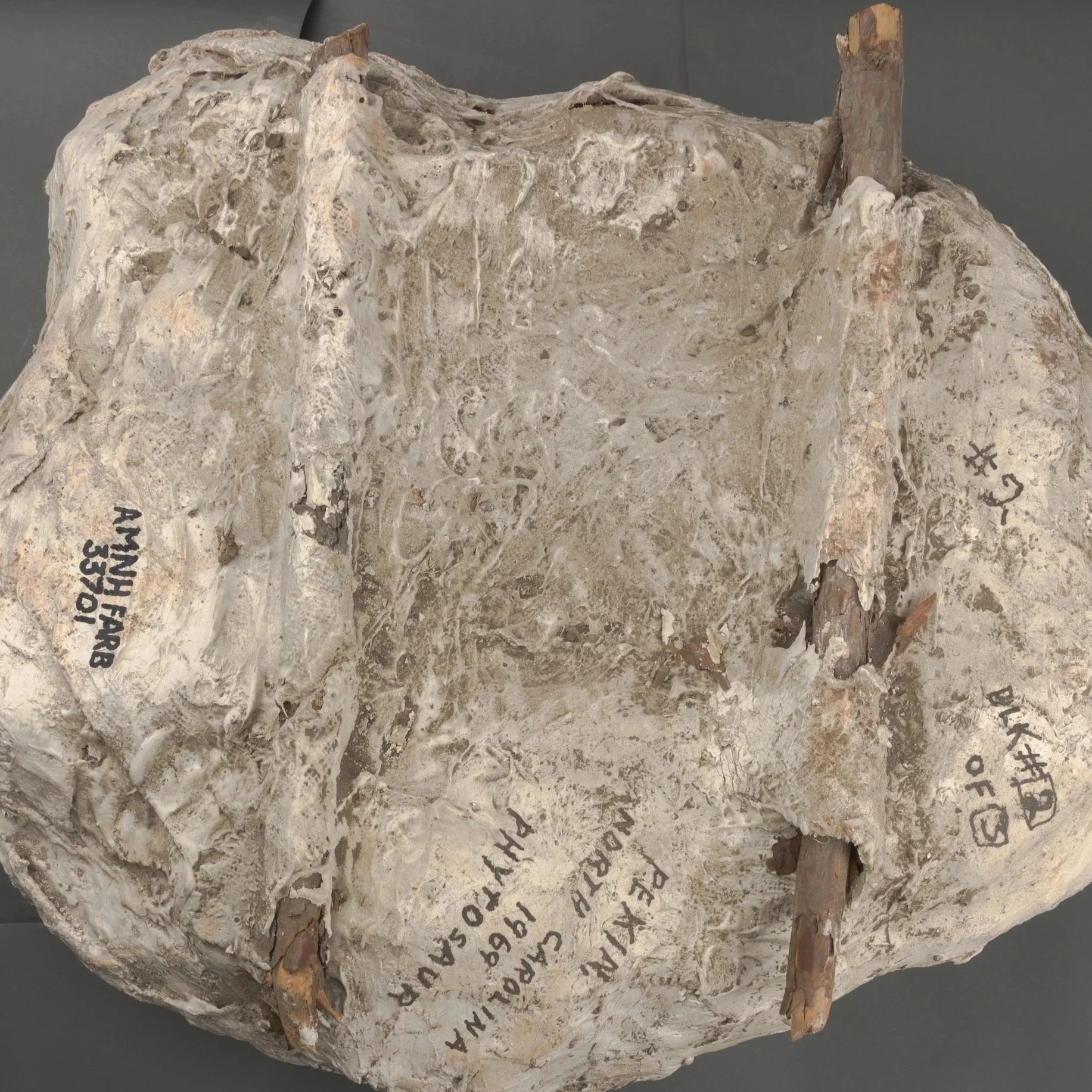
Jacketed Fossil Specimen
Closed jacketed fossils were conserved in 2022 before being placed on display at the Richard Gilder Center at the American Museum of Natural History. While museum fossil halls typically display fully prepared specimens, this exhibit is unusual in that it focuses on the process of collecting fossils rather than the fully prepared fossil itself. The display features specimens that remain partially or fully enclosed in their field jackets, protective plaster shells applied during excavation to stabilize fossils and the surrounding rock. Because the specimens remain in these jackets rather than being fully prepared, their conservation required a different approach, presenting unique challenges for their stabilization, handling, and display.
To read the related article I wrote for the American Museum of Natural History website, click here!
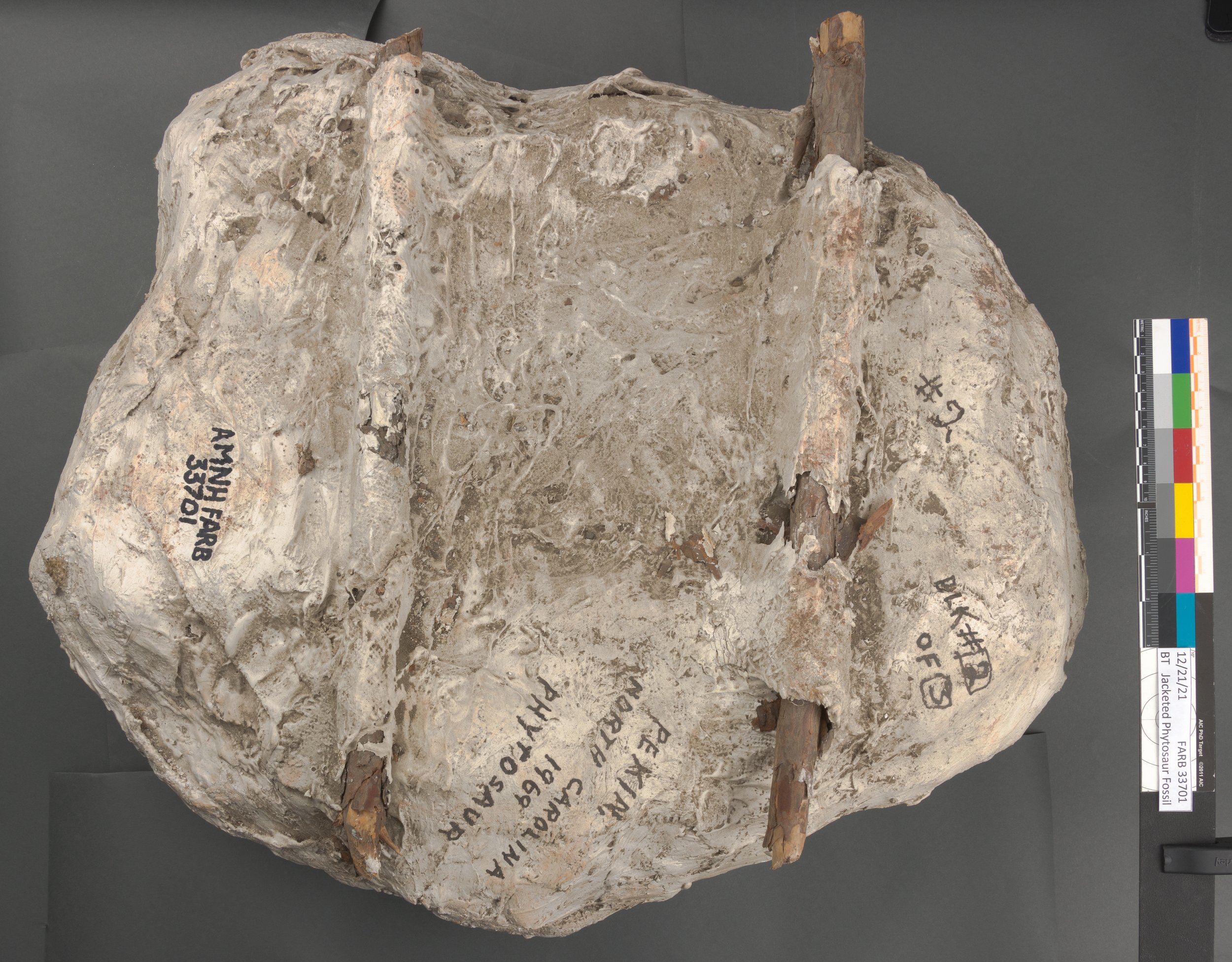
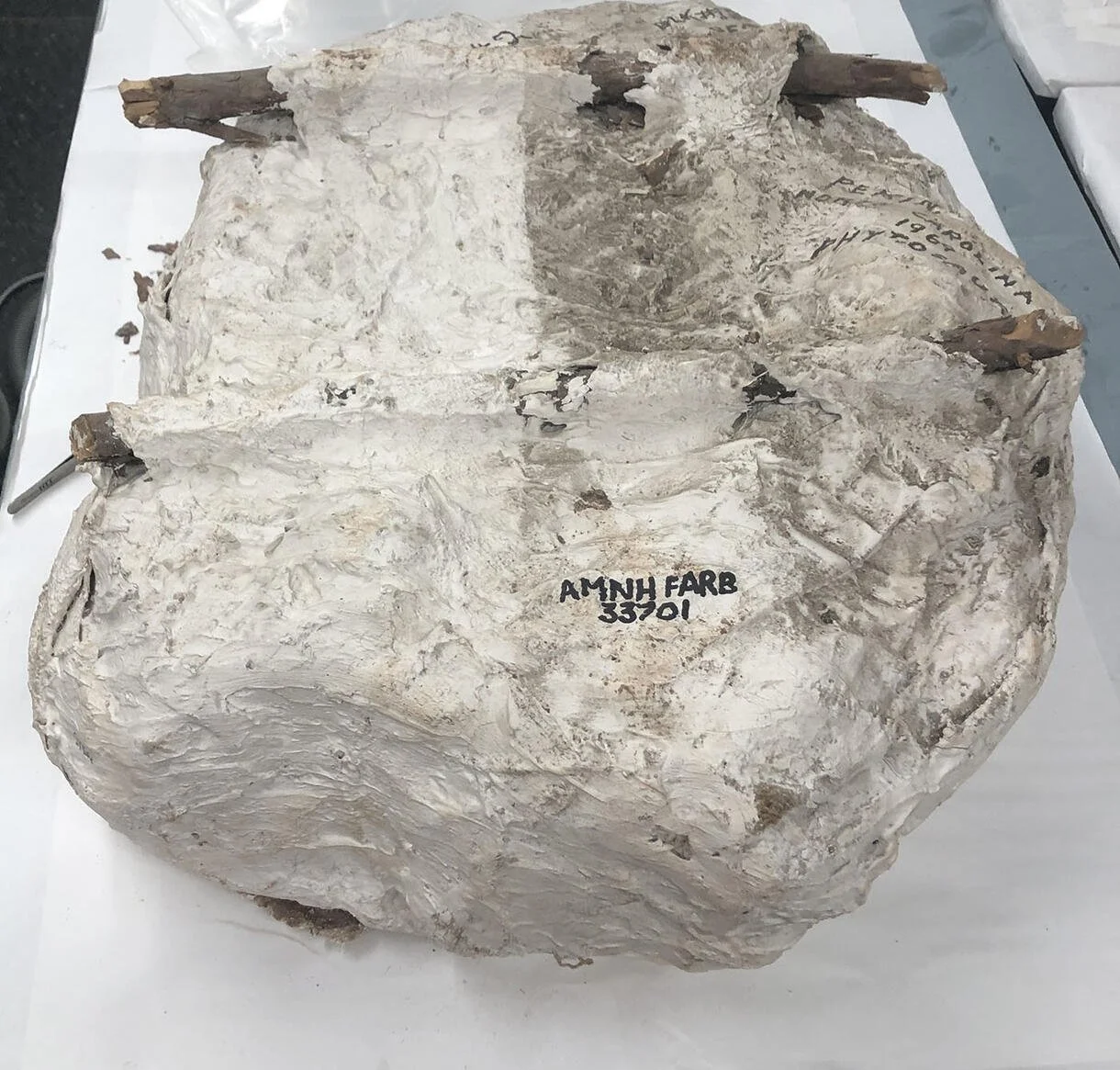
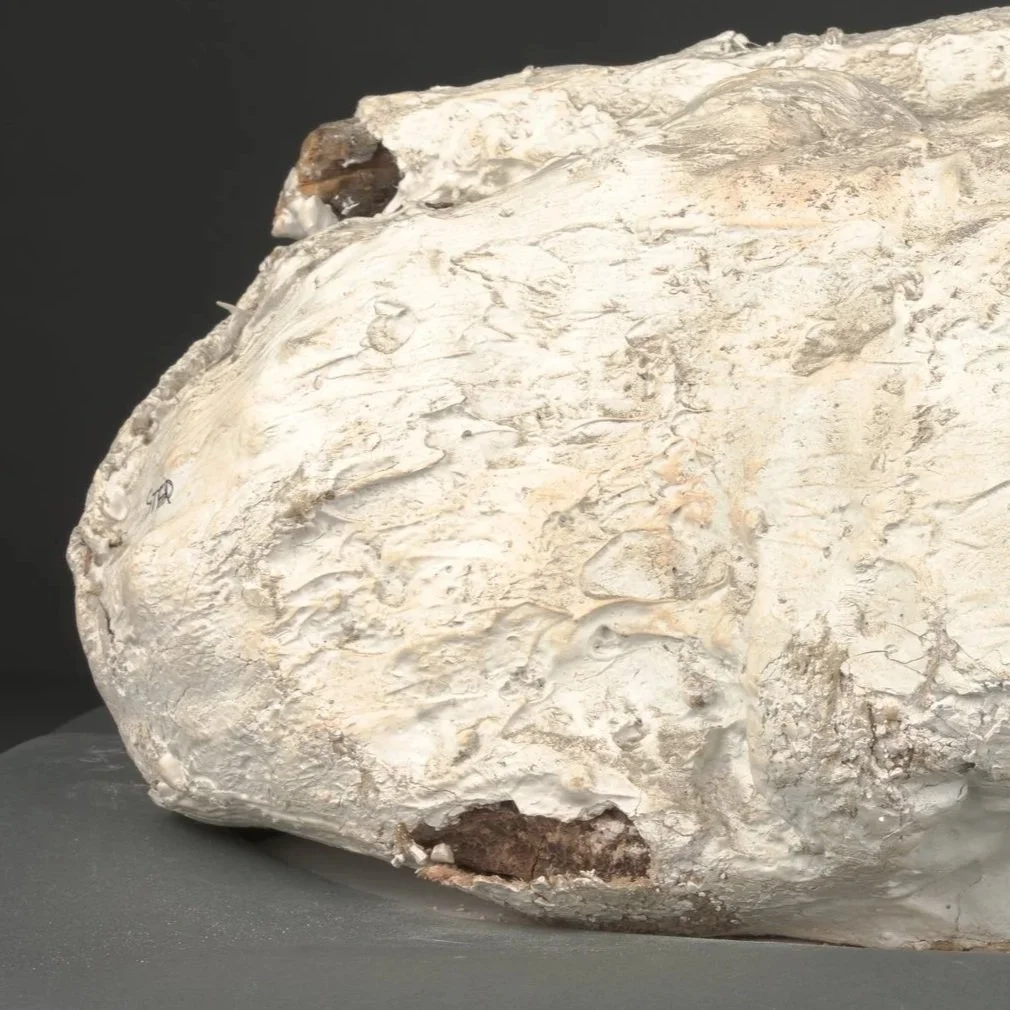
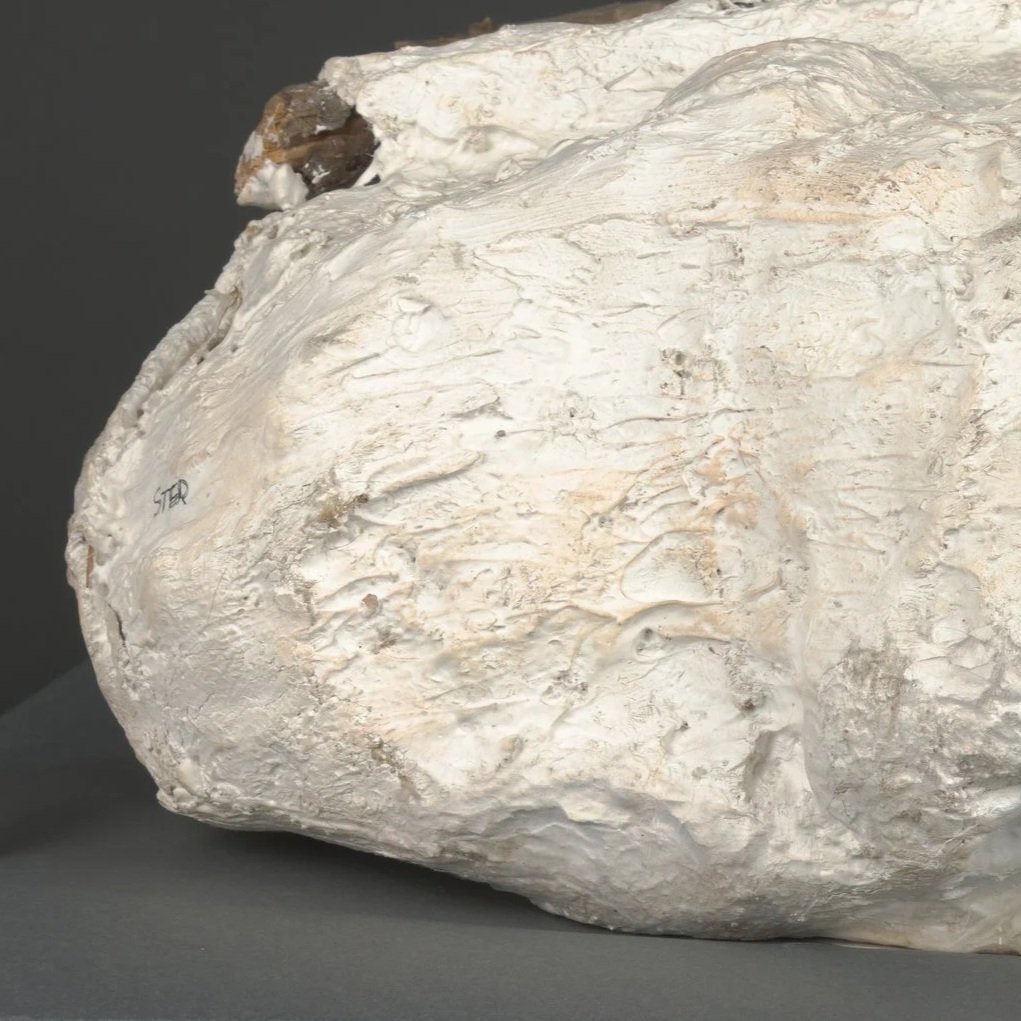
This object is a phytosaur fossil collected in 1969 from Pekin, North Carolina, preserved within a reddish-brown rock matrix and enclosed in a plaster and textile field jacket. Two wooden branches embedded along one side likely served as handles to help carry the block from the quarry, suggesting that side originally faced downward during excavation.
Like many fossil jackets in museum storage, this specimen has remained closed since collection, awaiting preparation. While many prepared fossils are displayed in the museum’s fossil halls, this object highlights the plaster jacket itself as an important step in the excavation and recovery process.
Conservation treated the jacket as a museum object, assessing its condition and preparing it for display. A thick layer of dust was removed using brushes, a vacuum, and cosmetic sponges. A tear along the lower edge exposed the rock matrix and unstable plaster. This area was stabilized with thin Japanese tissue and a reversible adhesive, providing support while keeping the repair distinguishable and reversible—an approach that differs from the quicker plaster-gauze repairs often used during excavation or preparation.