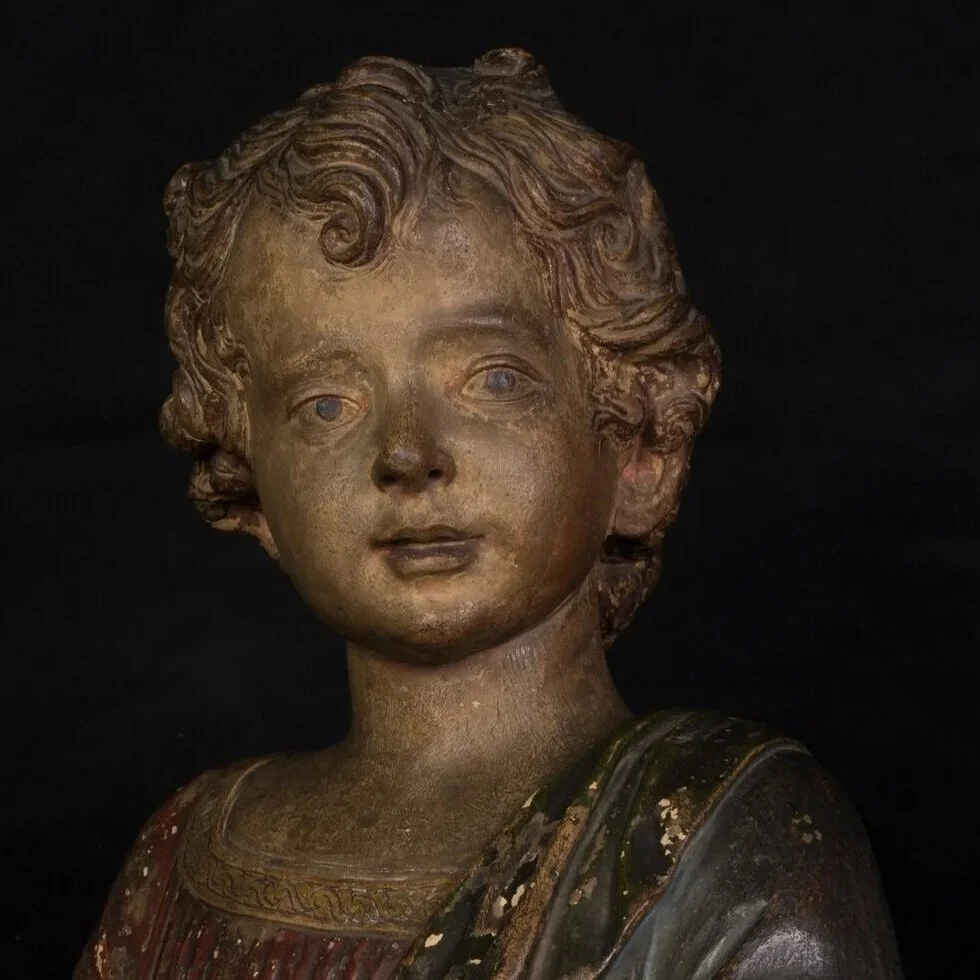
Authentication Study on the Bust of the Christ Child
The Bust of the Christ Child, owned by the Morgan Library and Museum and purchased by J. Pierpont Morgan in 1906, has never been authenticated as a 15th/16th century Florentine bust. Its provenance can only be traced back as far as Florence, 19th century, when Jules Porgès purchased the bust from the Demidov family in Palazzo San Donato in Florence. There have been questions regarding its authenticity, and during a course taught by Michele Marincola, and with the assistance of conservators and conservation scientists at the Metropolitan Museum of Art, I was able to perform a technical analysis of the bust. This included thermoluminescence dating, multispectral imaging, Raman spectroscopy, surface enhanced Raman spectroscopy, x-ray fluorescence spectroscopy, cross section microscopy, and scanning electron microscopy with energy dispersive spectroscopy.
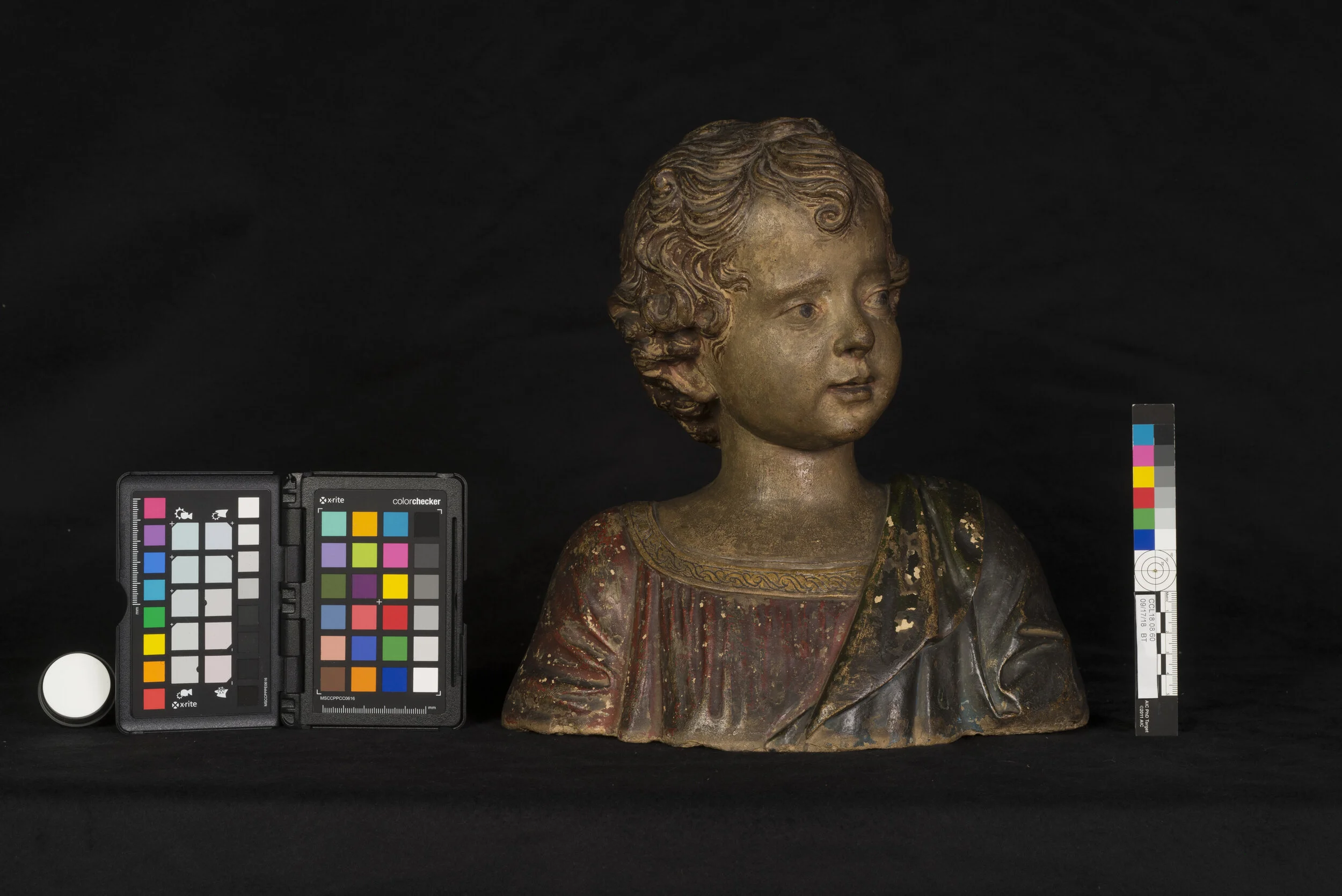
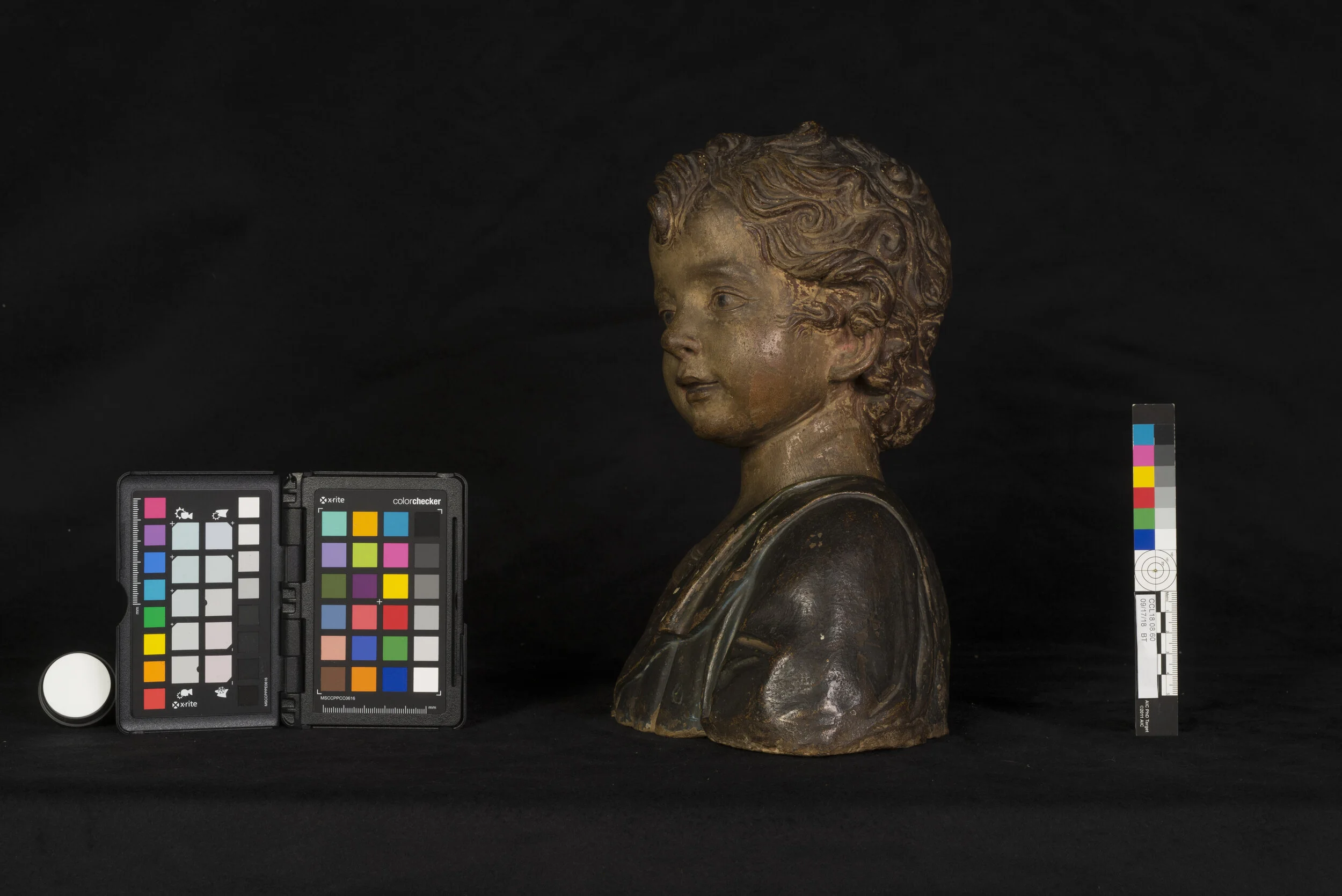
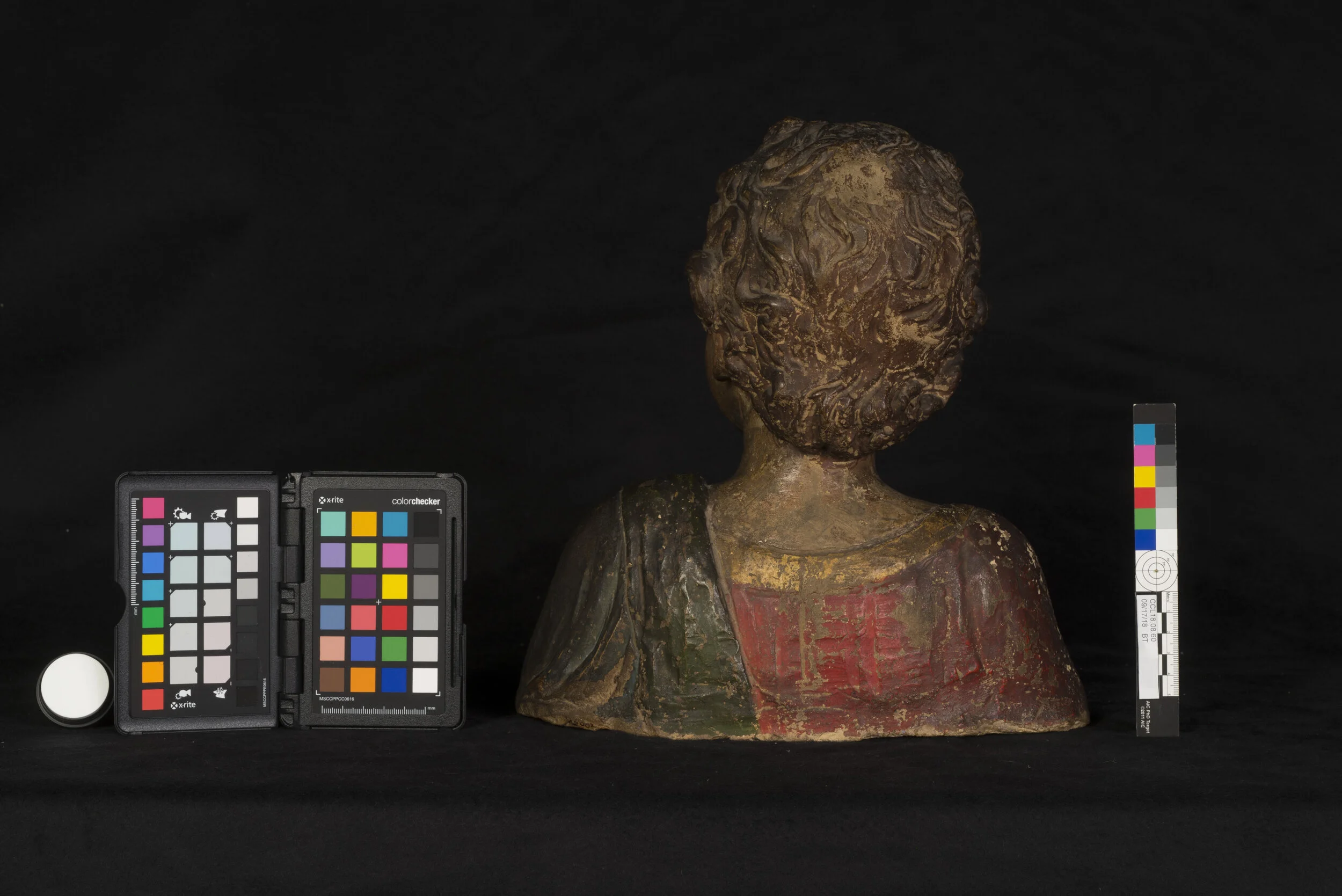
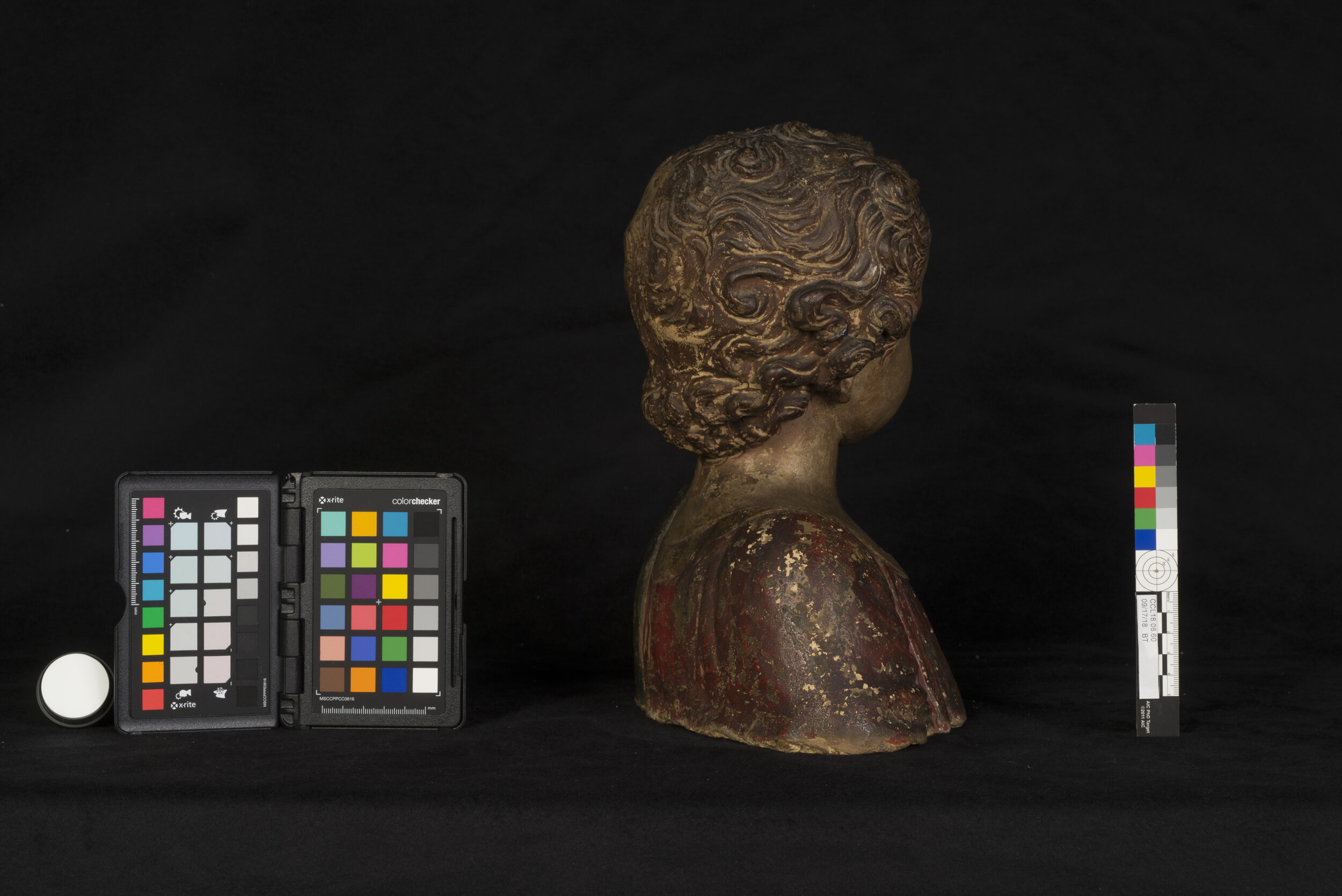
Visible Light Imaging
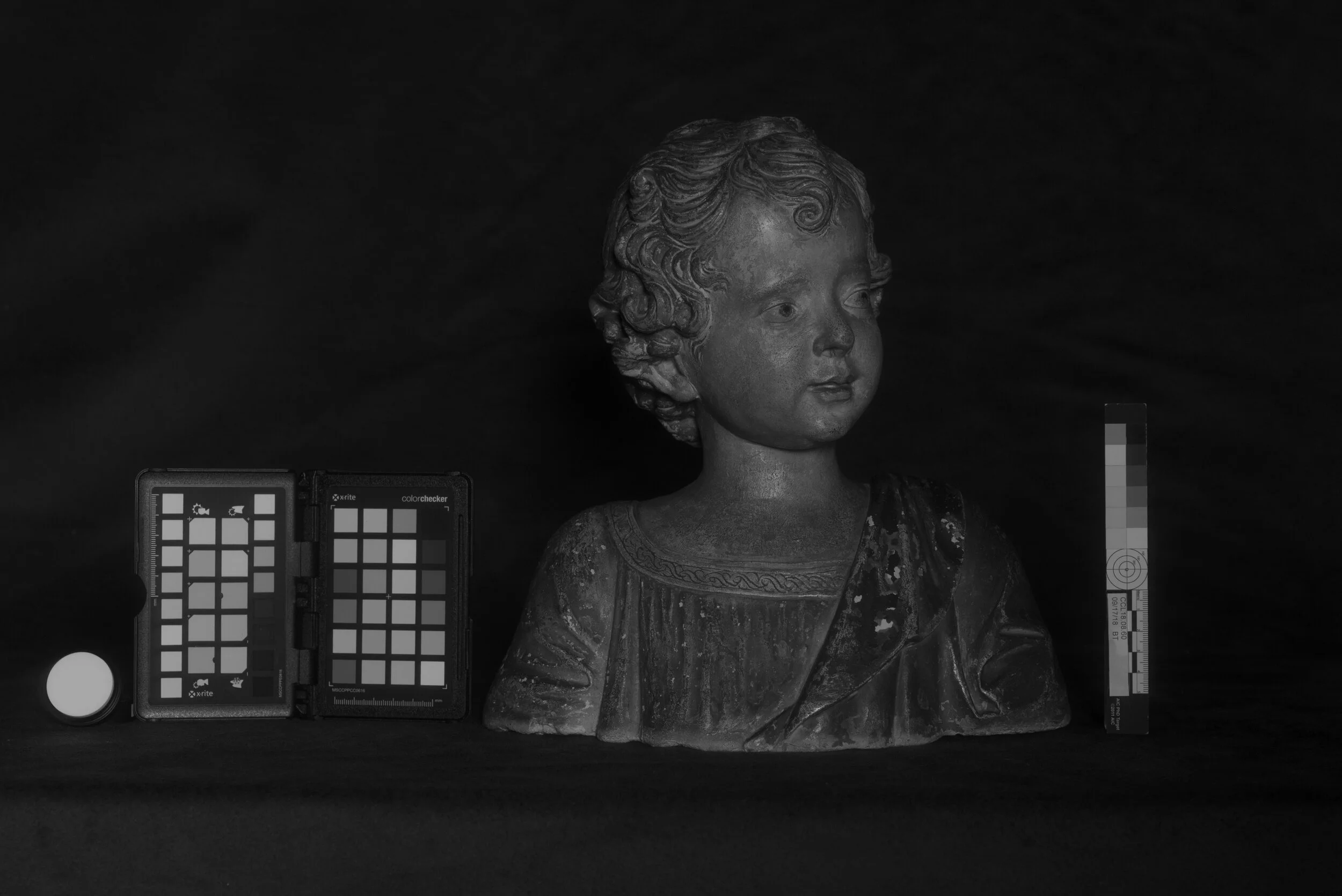
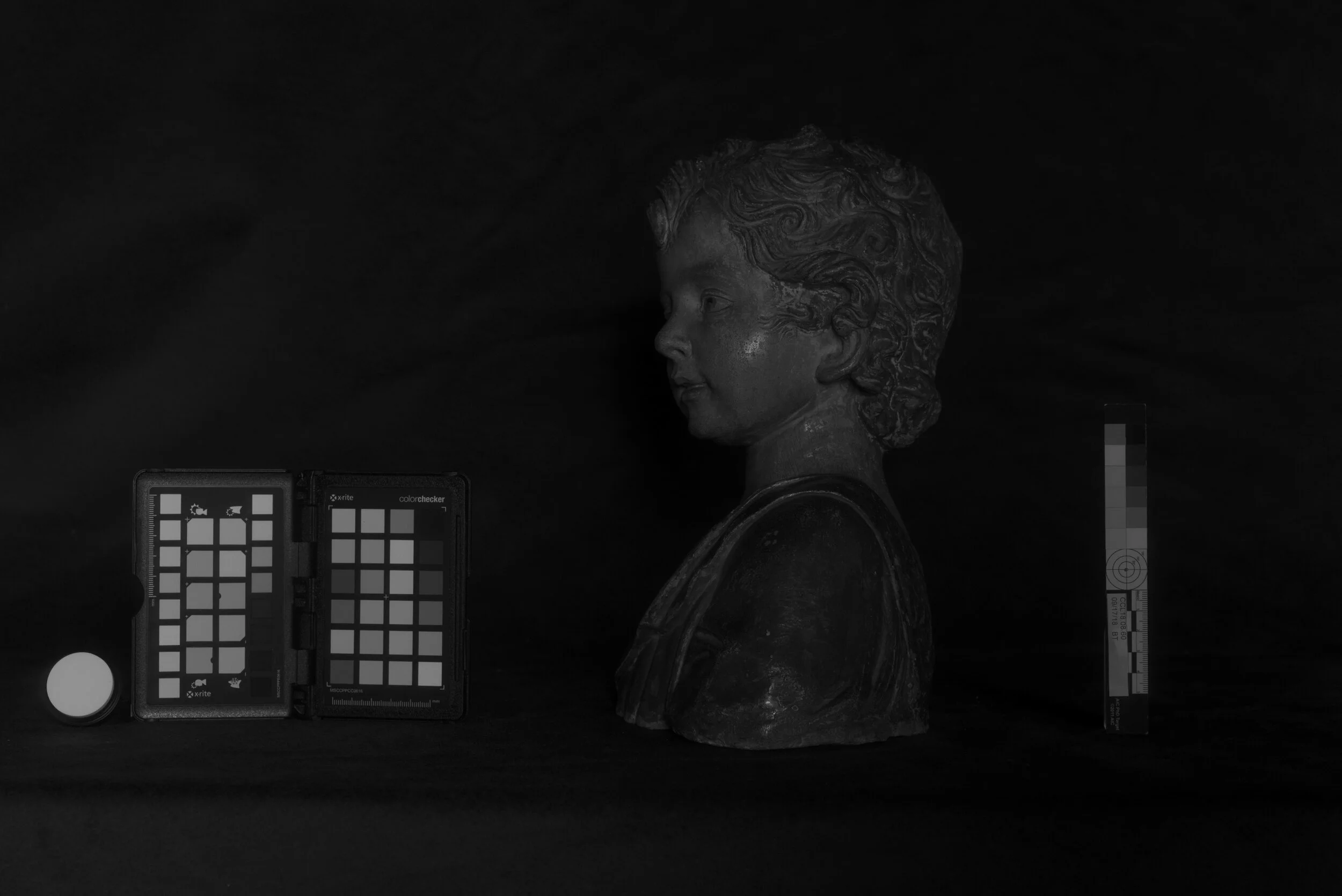
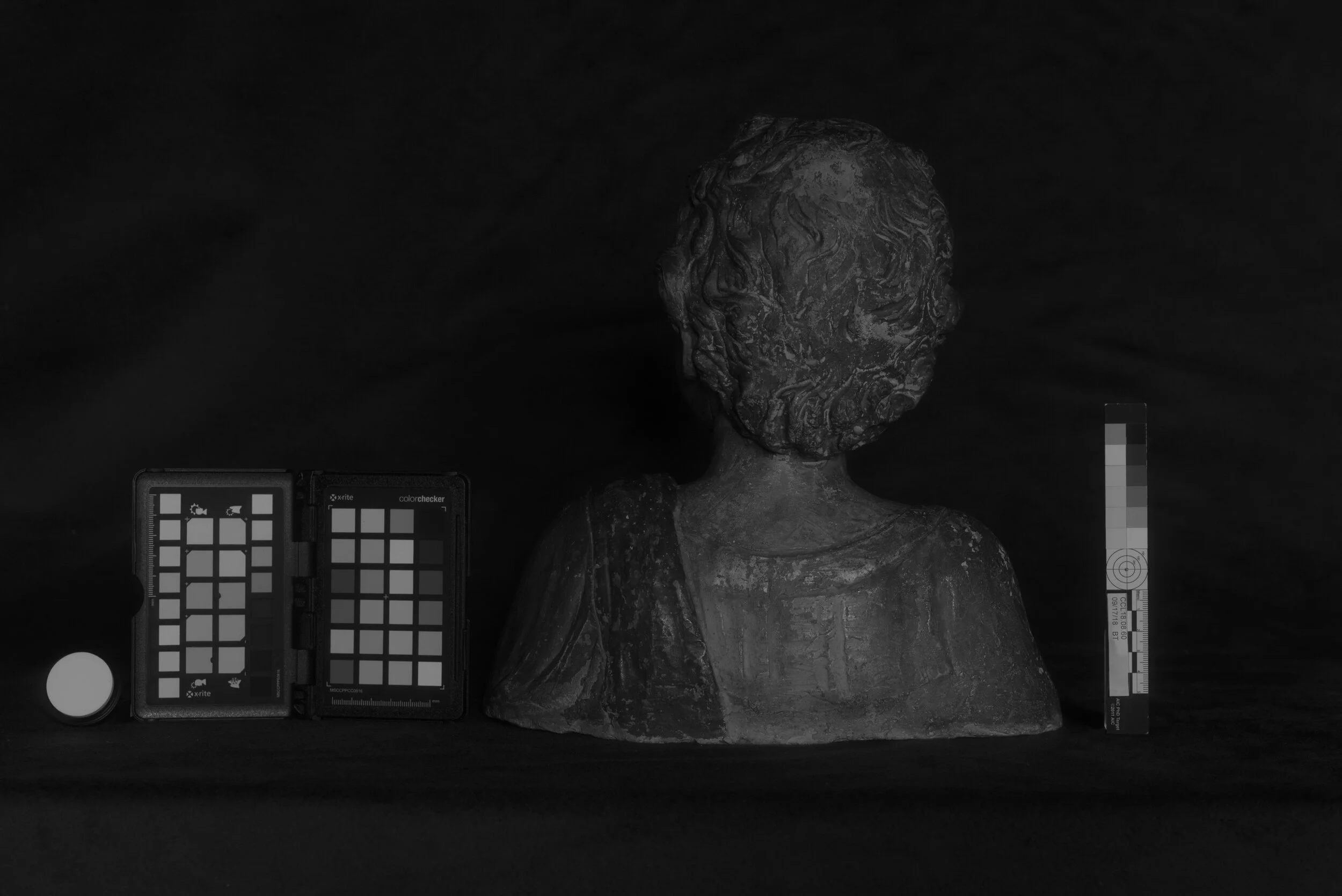
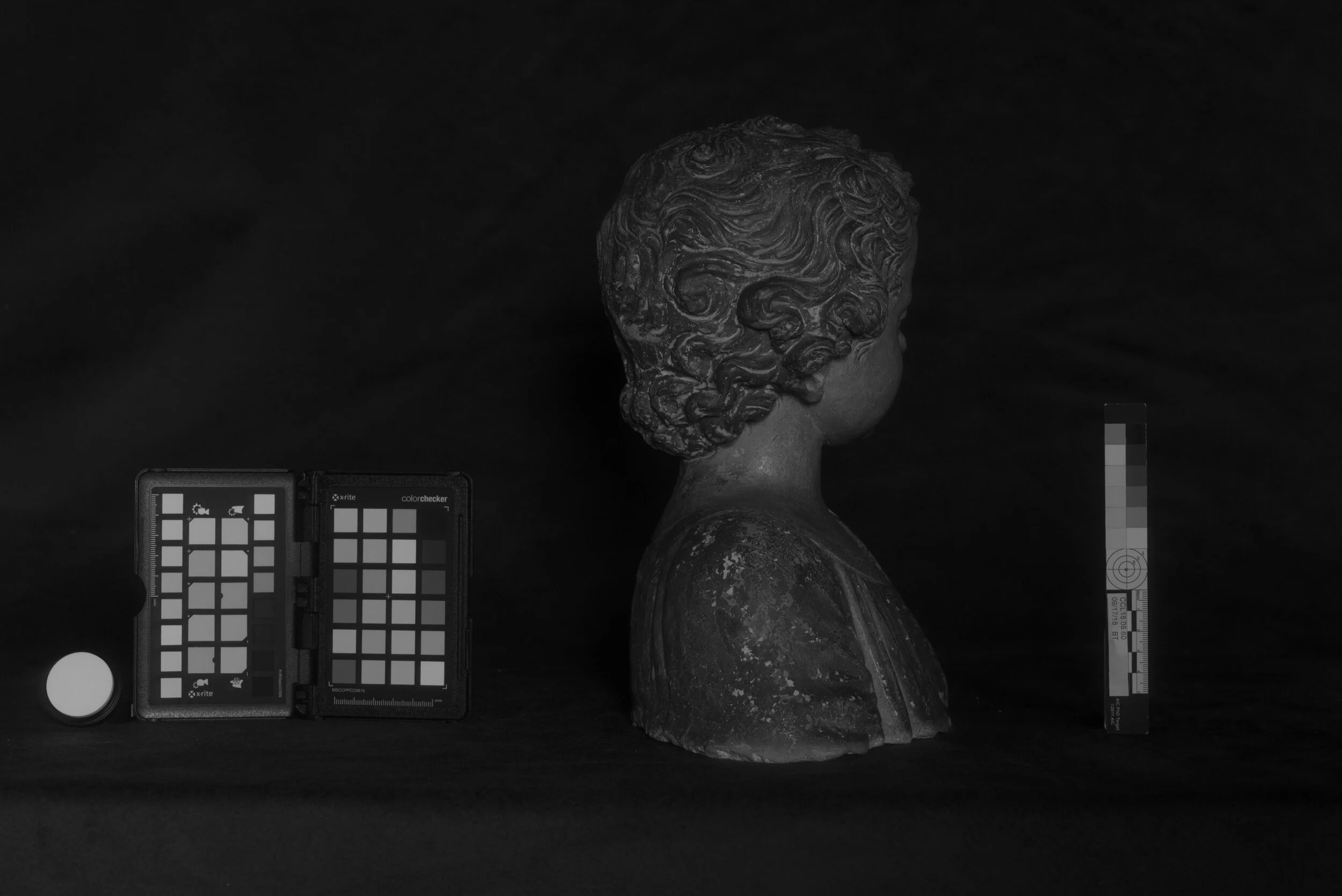
Infrared Imaging
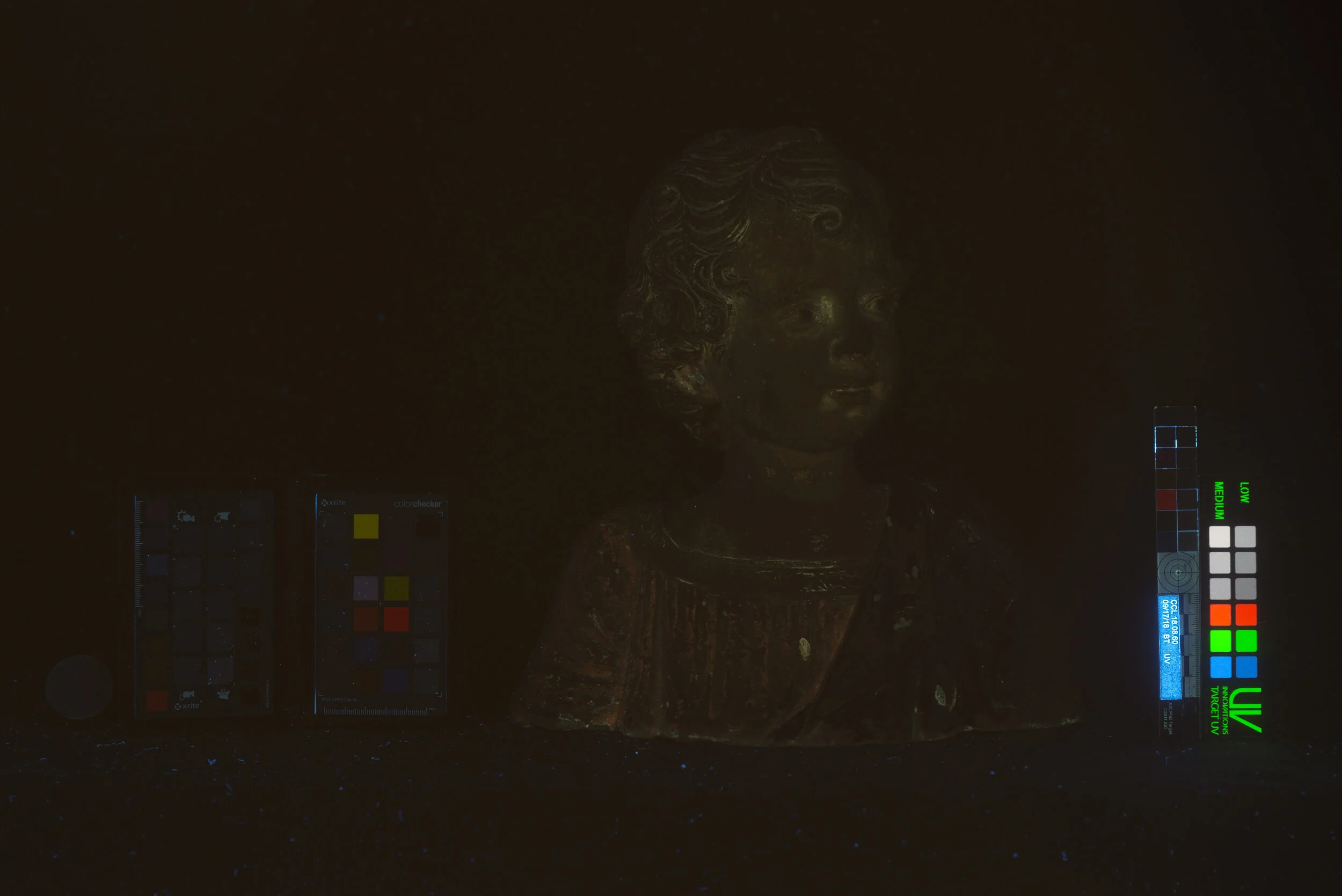
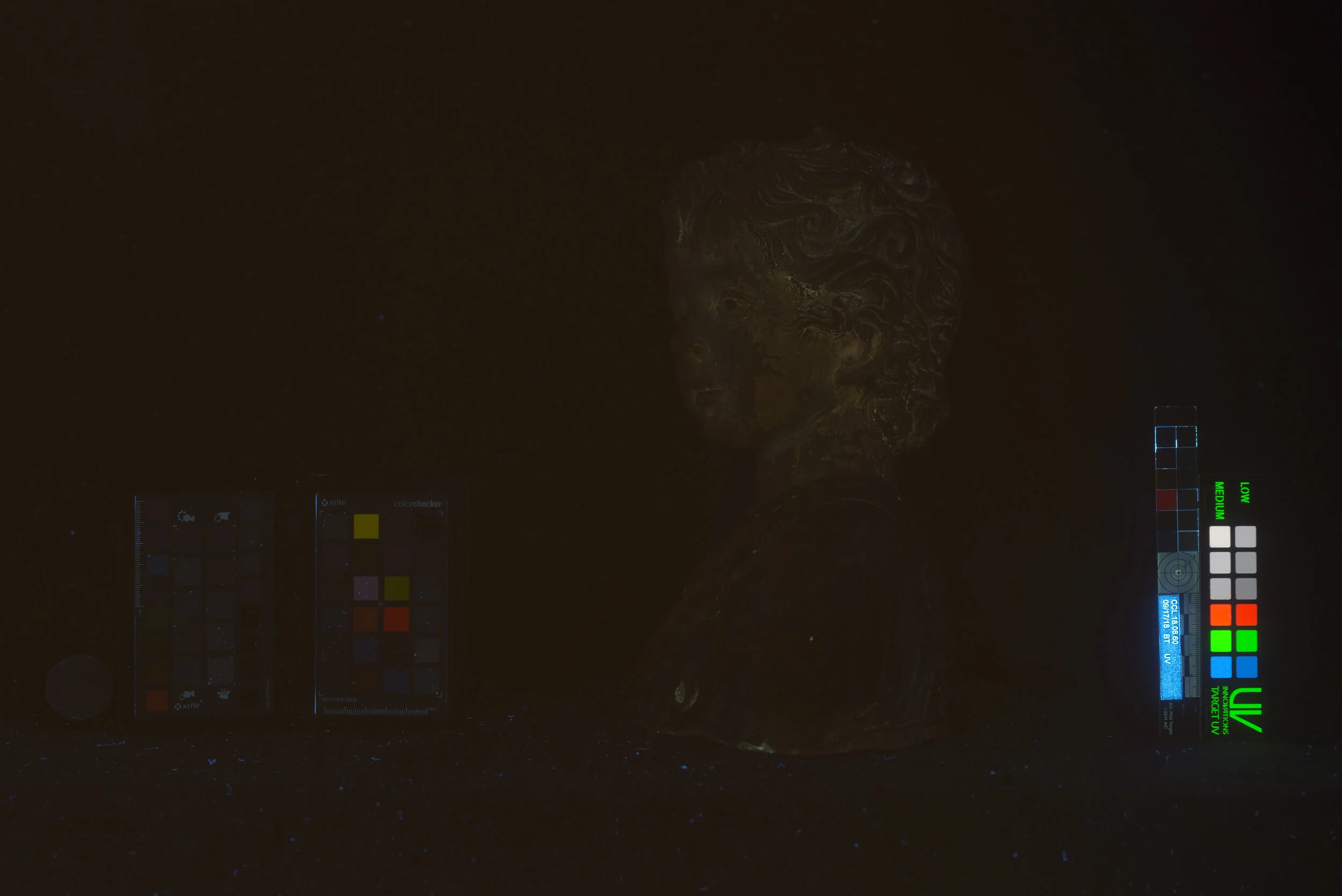
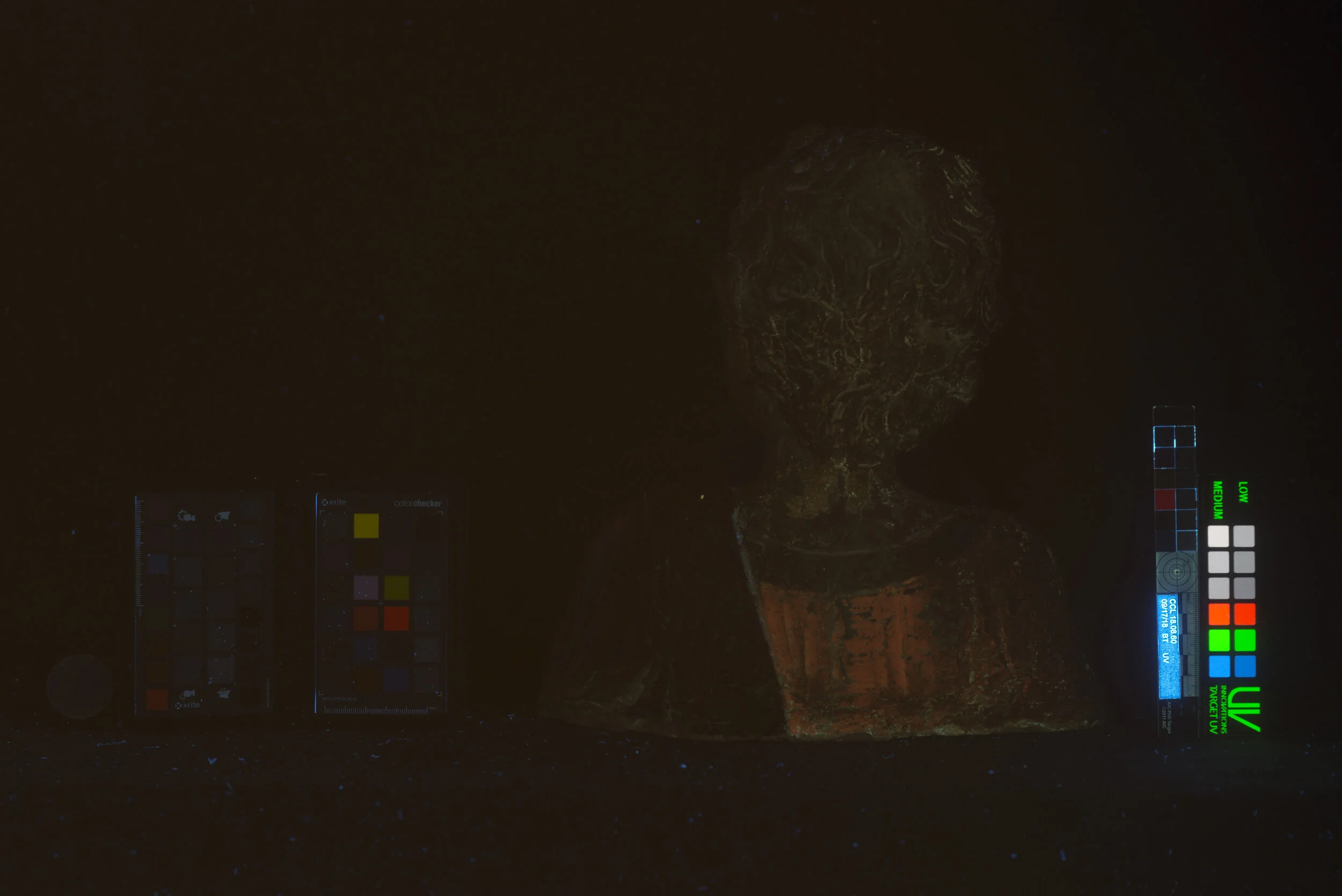
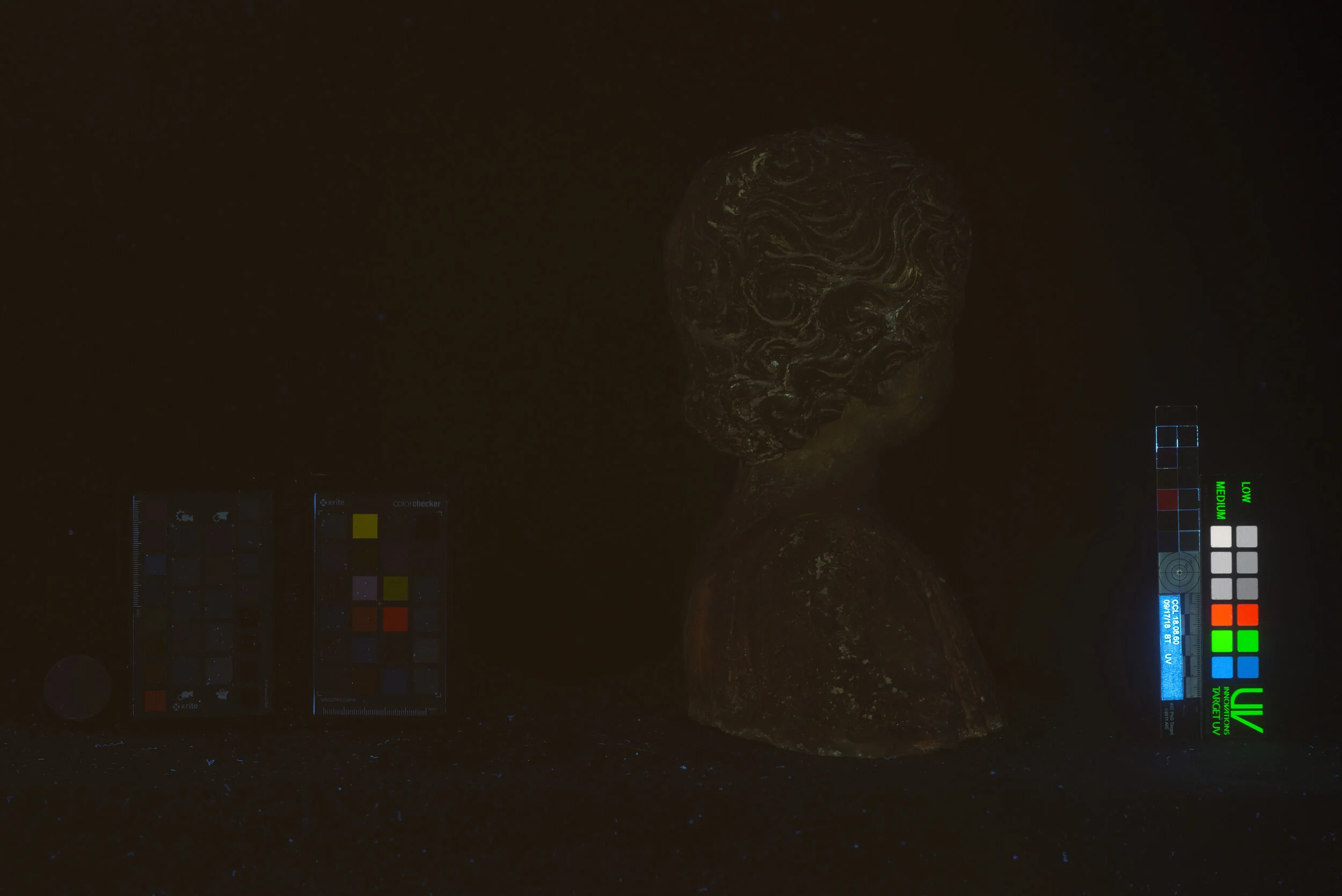
UV-induced Visible Luminescence Imaging
Thermoluminescence dating
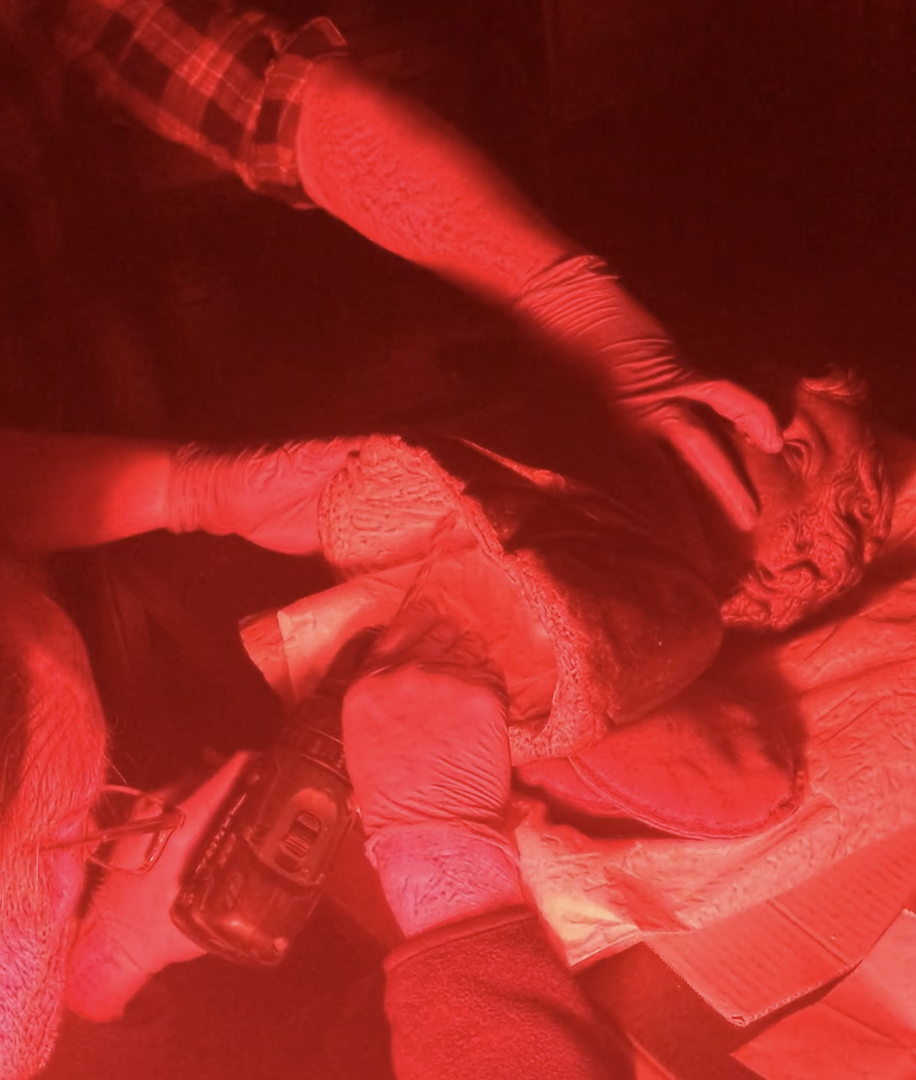
Two samples were collected by Met Conservator, Jean-Francois de Lapérouse and sent to Oxford Authentication Labs. The first sample showed evidence of reheating, around 180-200 °C, which affected the signal of the glow curve. Results from the second sample suggested an age between 300-600 years old, which fell nicely with the proposed date of late 15th century, perhaps early 16th century. However, results from a corresponding bust with the same clay material from the Morgan Library and Museum, the Bust of St. John the Baptist, gave a date earlier than the 15th century. Oxford Authentication was unable to explain these results. At this time, the TL dating may be considered inconclusive.
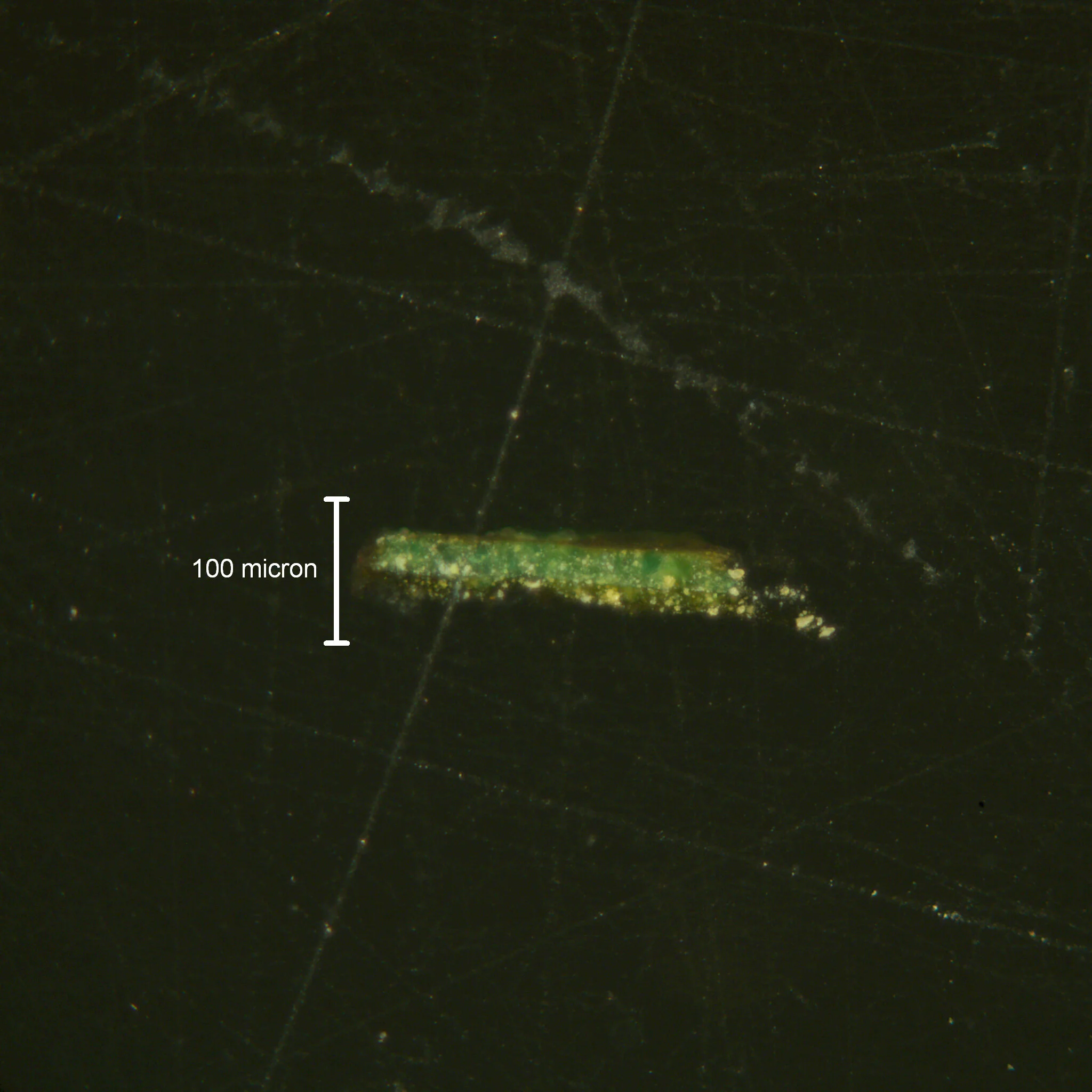
Lead tin yellow
The large white/yellow particles showed tin and lead associated together, and Raman spectroscopy confirmed lead-tin yellow type I. While this pigment was in frequent use in Europe before the mid 18th century, it was not used again until its rediscovery in the 1940s, after the bust entered the collection at the Morgan. This confirms that the bust is not a 19th or 20th century reproduction.