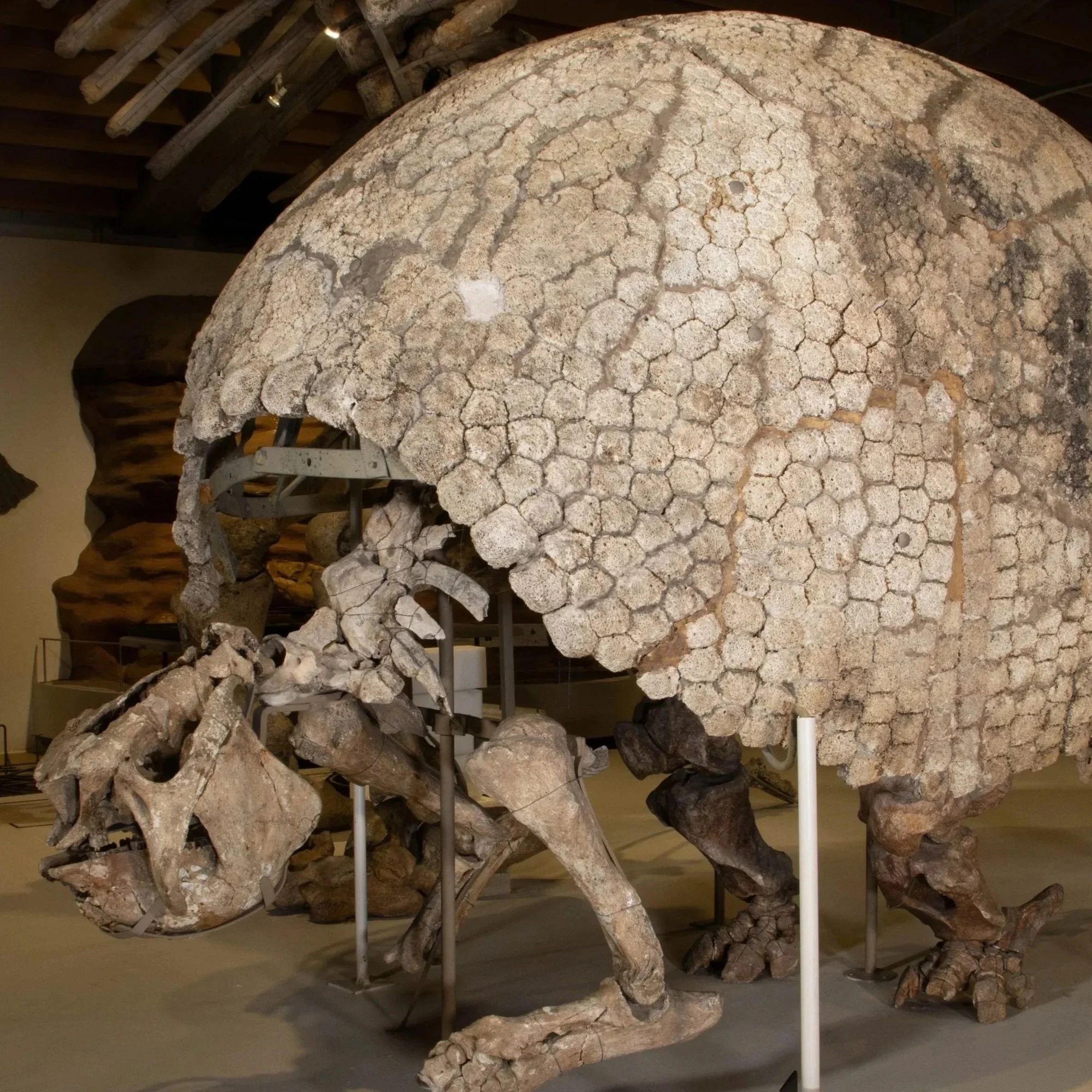
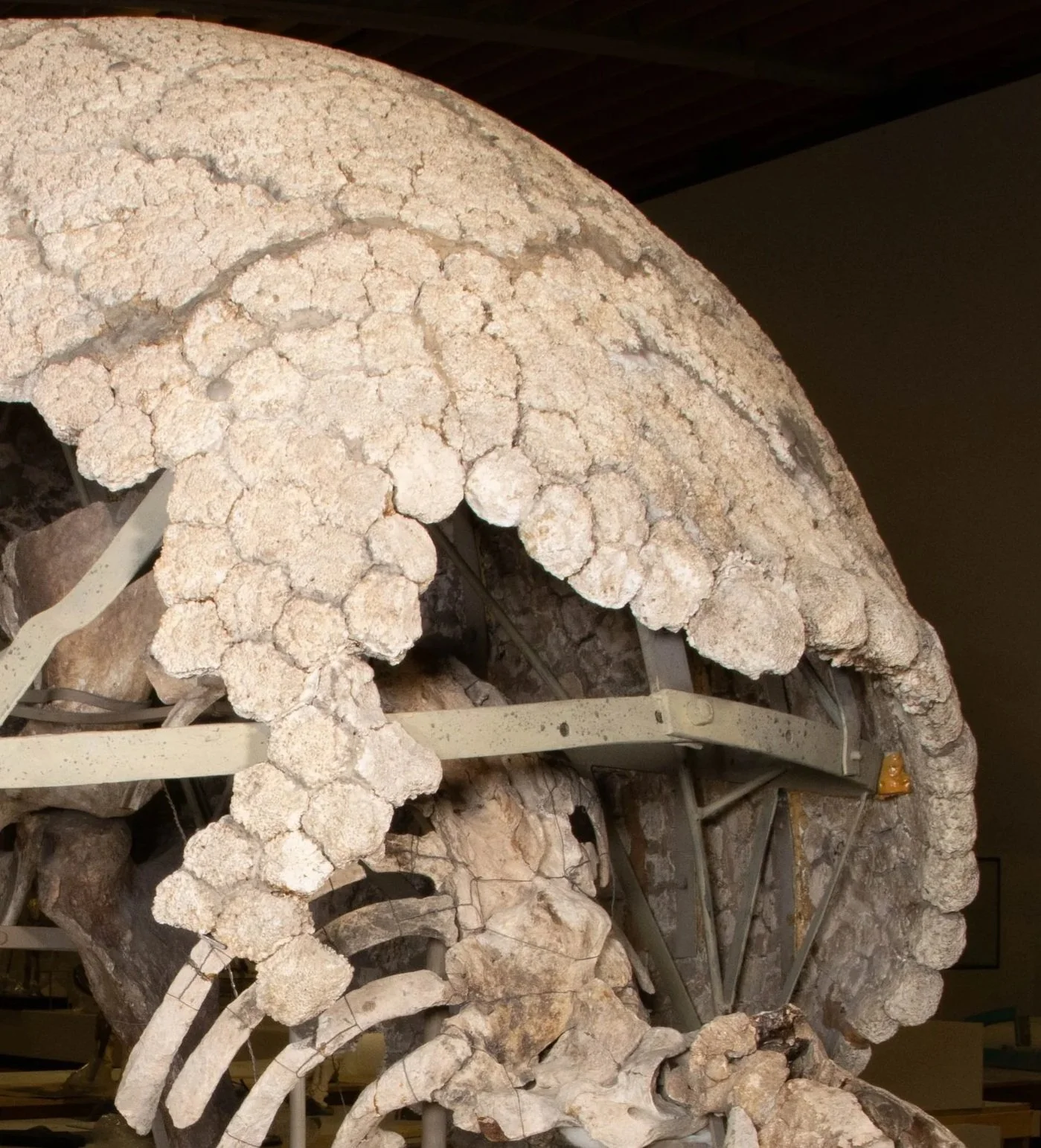
Glyptodon fossilized skeleton
The relocation of a Glyptodon at the Natural History Museum of Denmark, Copenhagen, combined conservation with the challenges of moving a large, complex specimen. From carefully planning its deinstallation to ensuring a safe reinstallation in a new space, the project balanced logistics with hands-on treatment.
Condition
Although the specimen was overall in good and structurally stable condition, closer inspection revealed the traces of its history, cracking and separation in old fills, brittle mounting materials, and scattered adhesive residue. The skeleton, largely secured, showed subtle movement, including a single loose vertebra and areas of improvised padding. Across the surface, flaking restoration paint, uneven coatings, and a layer of accumulated grime softened its original appearance.
Treatment
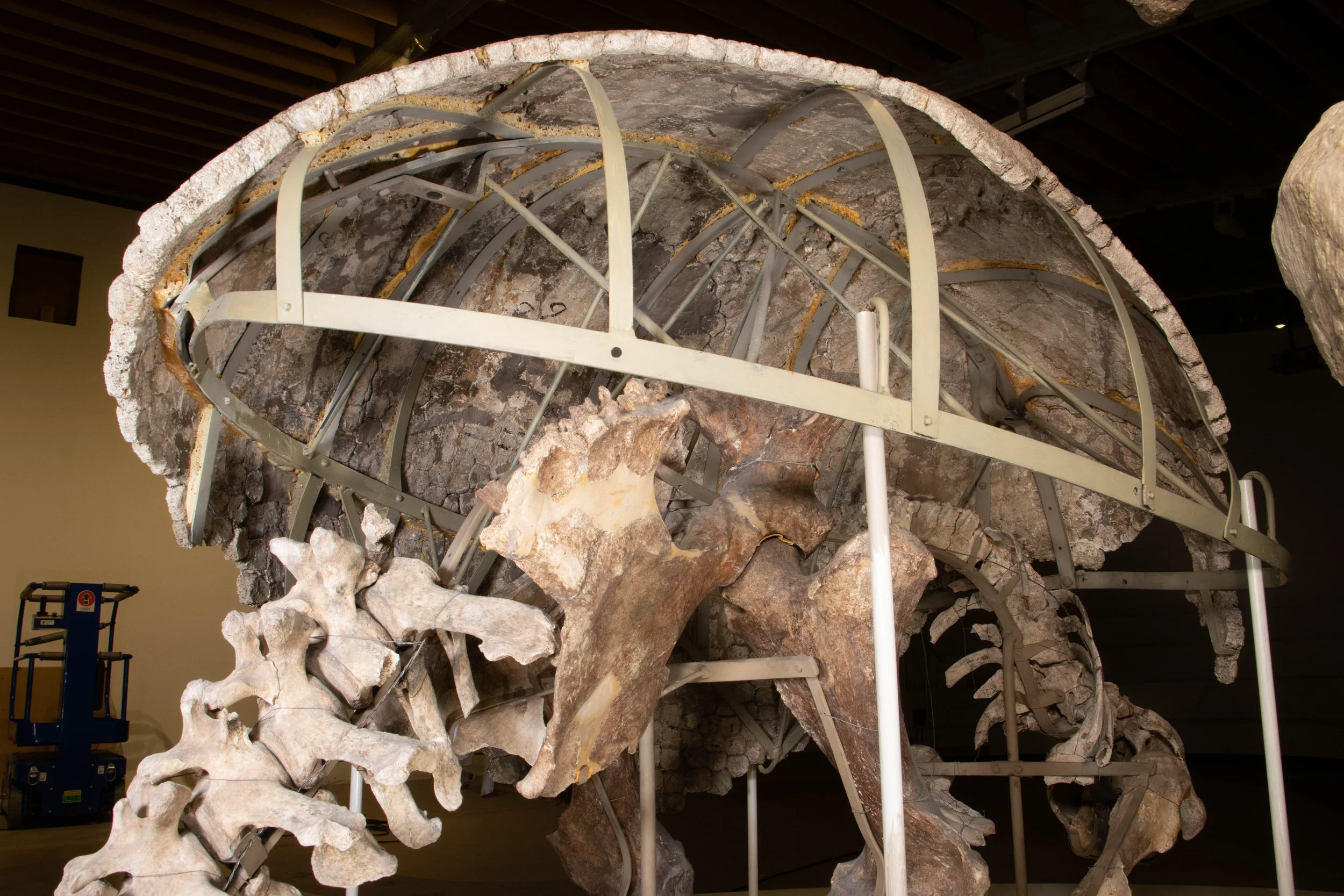
My work centered on preparing the specimen for its next journey in the new museum. To begin, the carapace and skeleton were carefully separated, allowing better access for treatment and ensuring safer transport.
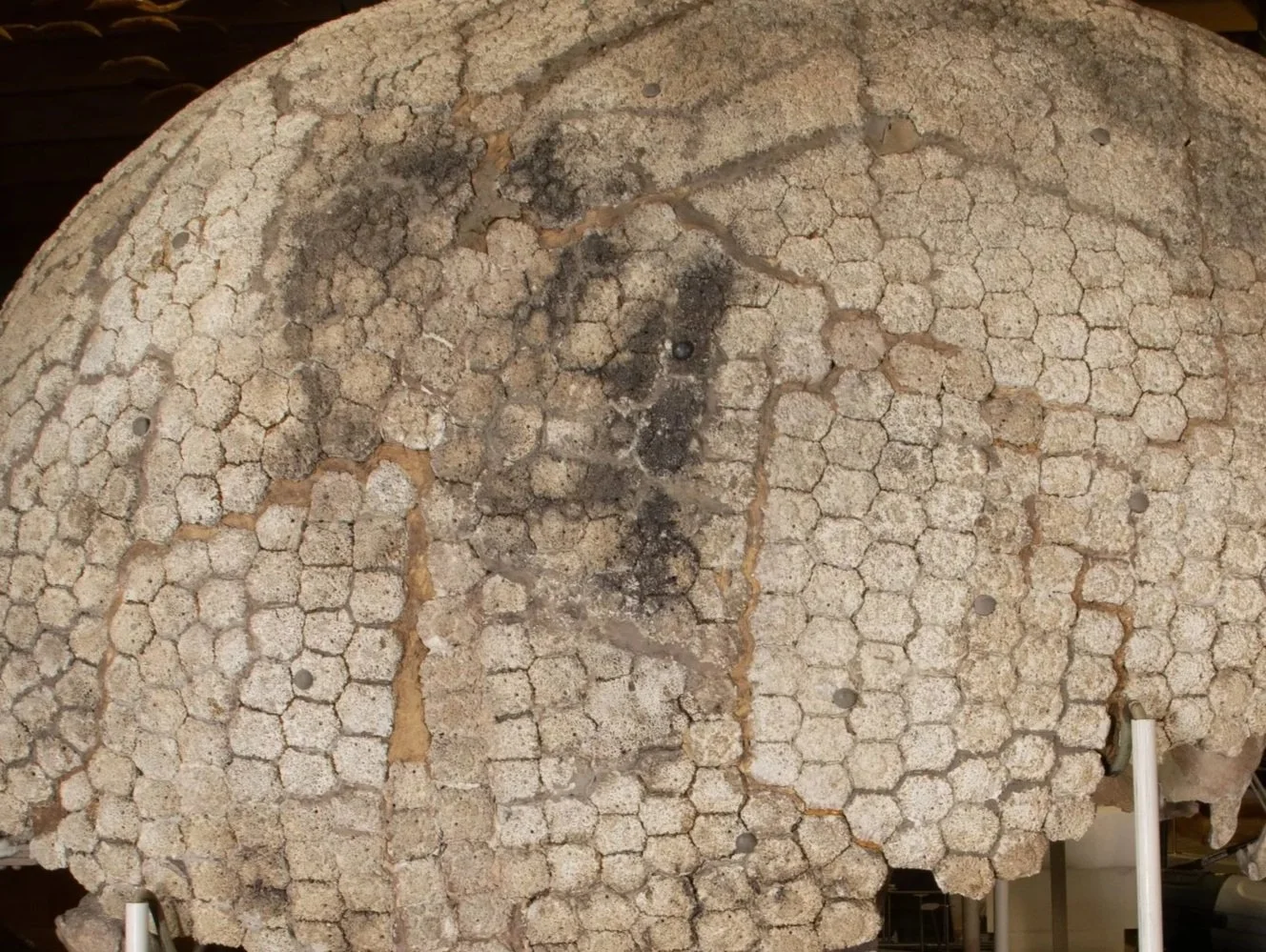
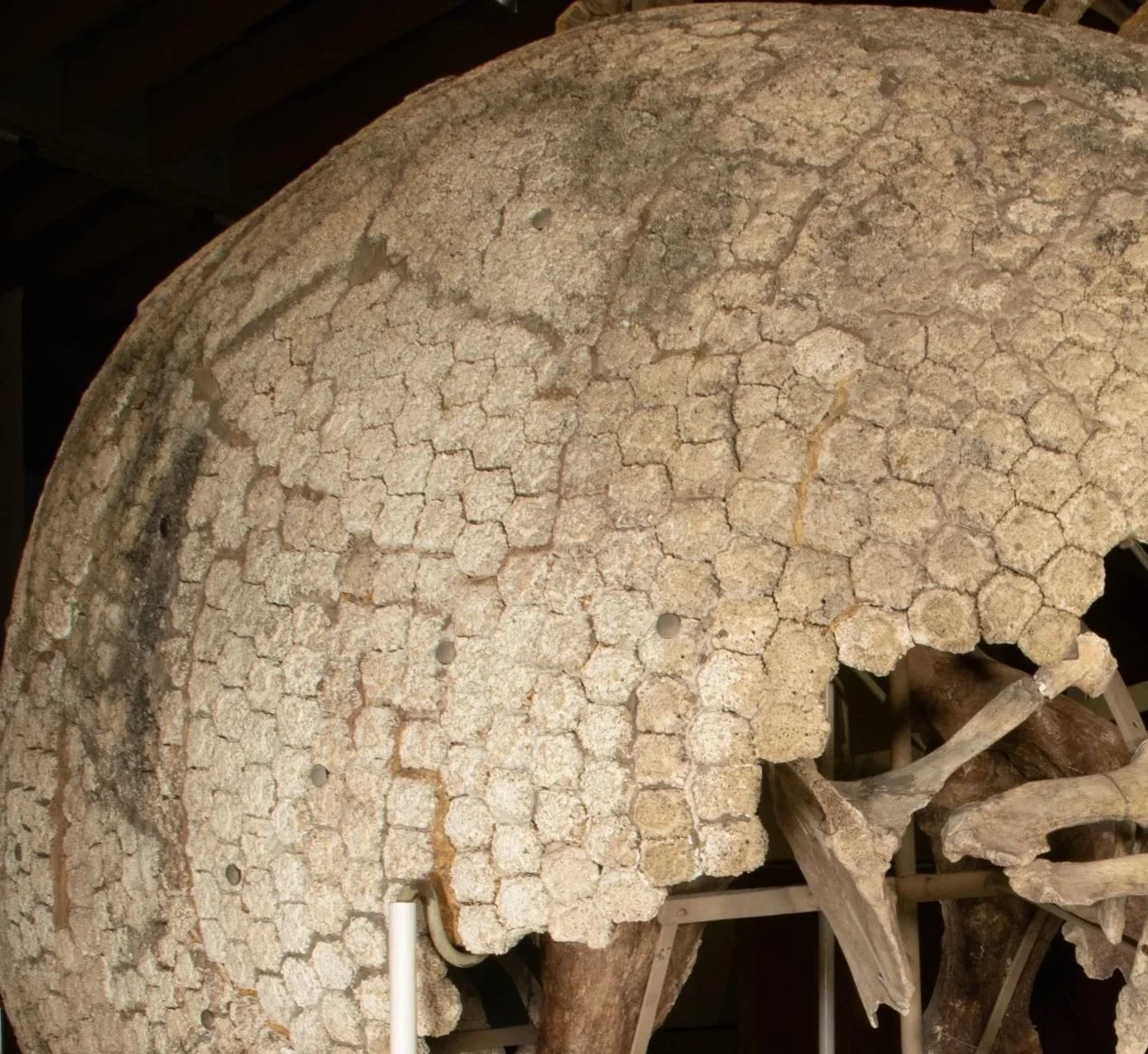
With the carapace fully accessible, I turned to the aging fills that visually disrupted the carapace surface. These were stabilized using Japanese tissue and adhesive, forming protective “bandages” over the most vulnerable and visually distracting areas. Once secured, I inpainted these sections, allowing them to blend in with the surrounding surface, bringing the carapace back to a more unified and coherent whole.
Japanese tissue paper “bandages” over old fill material
Inpainted “bandages” to blend into the background of the carapace