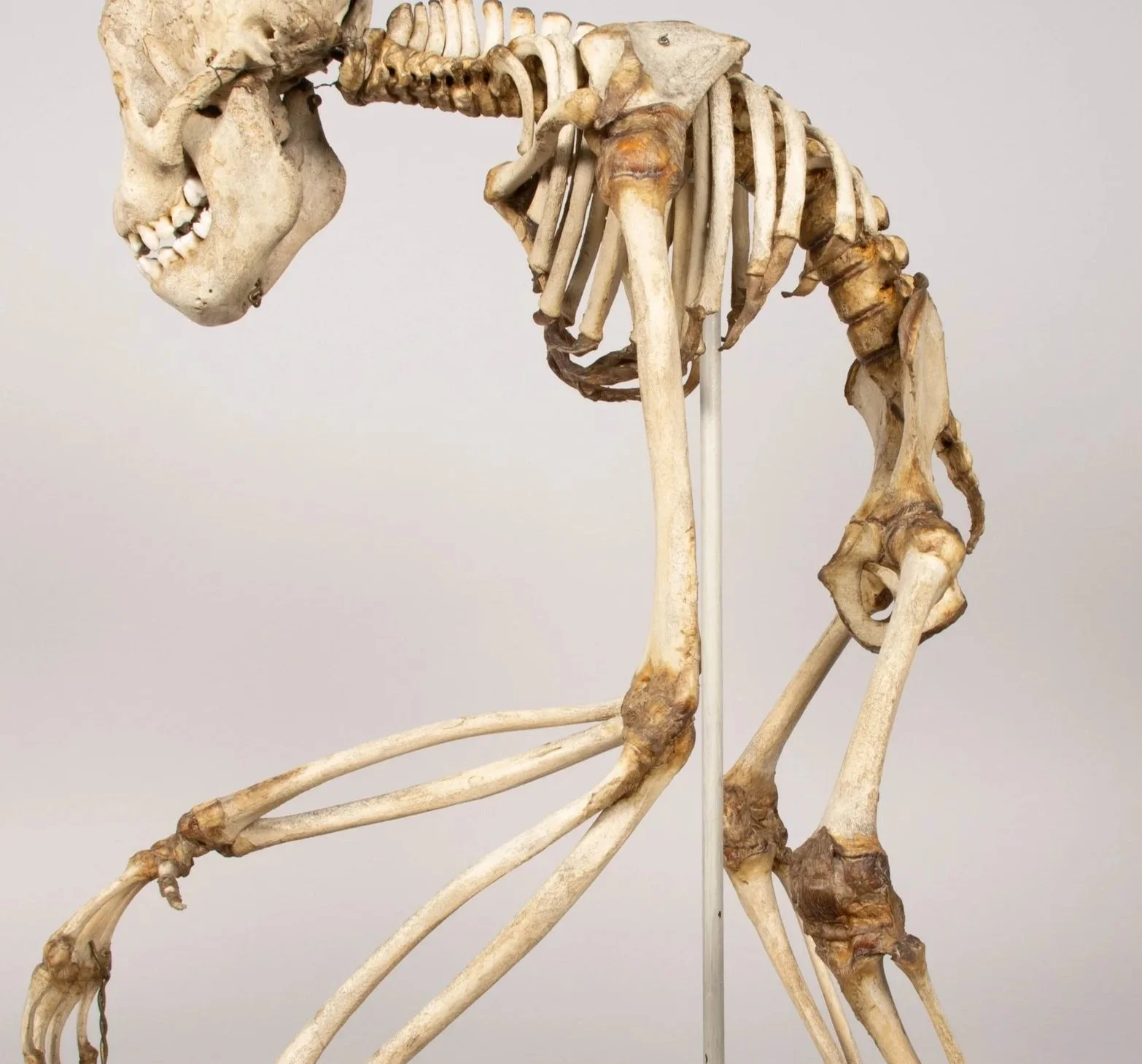
Orangutan Articulated Skeleton
An articulated orangutan skeleton was selected for display in the new museum at the Natural History Museum of Denmarkk in Copenhagen. As part of its preparation, the specimen was carefully examined and treated to ensure it could be safely presented to the public while preserving its material integrity.
Conservation work centered on stabilizing vulnerable areas, reducing surface soiling, and visually reintegrating minor losses so that the skeleton could be read clearly as a whole. Throughout the process, the aim was not to restore the specimen to a “like-new” state, but to respect its history while preparing it for a new context. The result is a balance between preservation and presentation, allowing the orangutan skeleton to continue its role as both a scientific specimen and a museum object within a contemporary display.
Creating Fake Bones
The orangutan skeleton was largely stable and intact, with minor losses in the feet and one upper incisor missing. Paint splatters, surface dust, and darkened cartilage reflected the age and past display conditions.
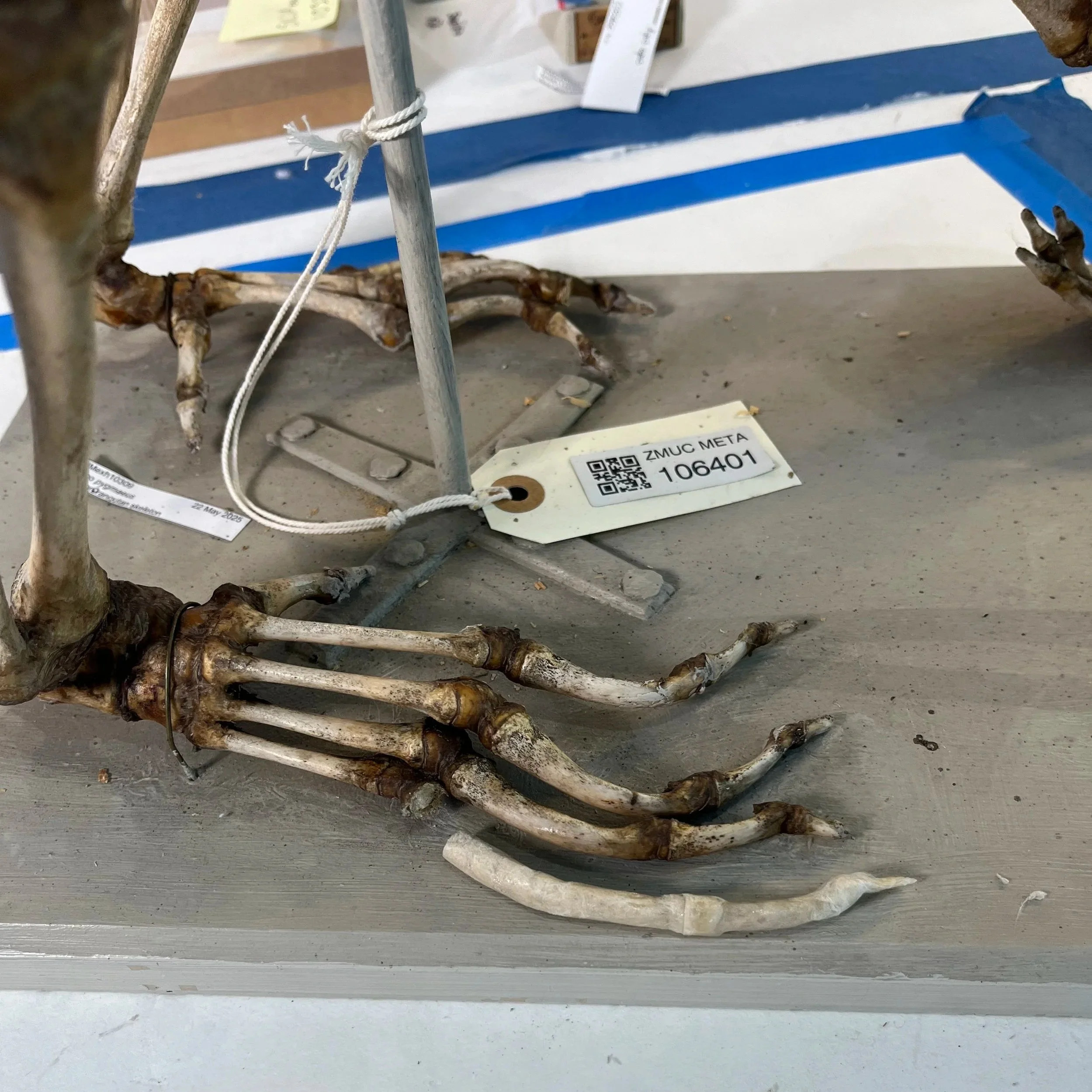
One of the most rewarding aspects of this treatment was addressing the missing phalanges in the orangutan’s feet. To reintegrate them, I constructed new phalanges using lightweight, reversible conservation methods. Japanese tissue paper was shaped, layered, and set with conservation-grade adhesive to gradually form the structure of each phalanx. Once dry, the surfaces were refined and smoothed, and then toned to blend with the surrounding bone. Reconstructing these small elements brought attention back to the orangutan’s anatomy as a whole, ensuring that the viewer’s focus remains on the specimen rather than its losses.
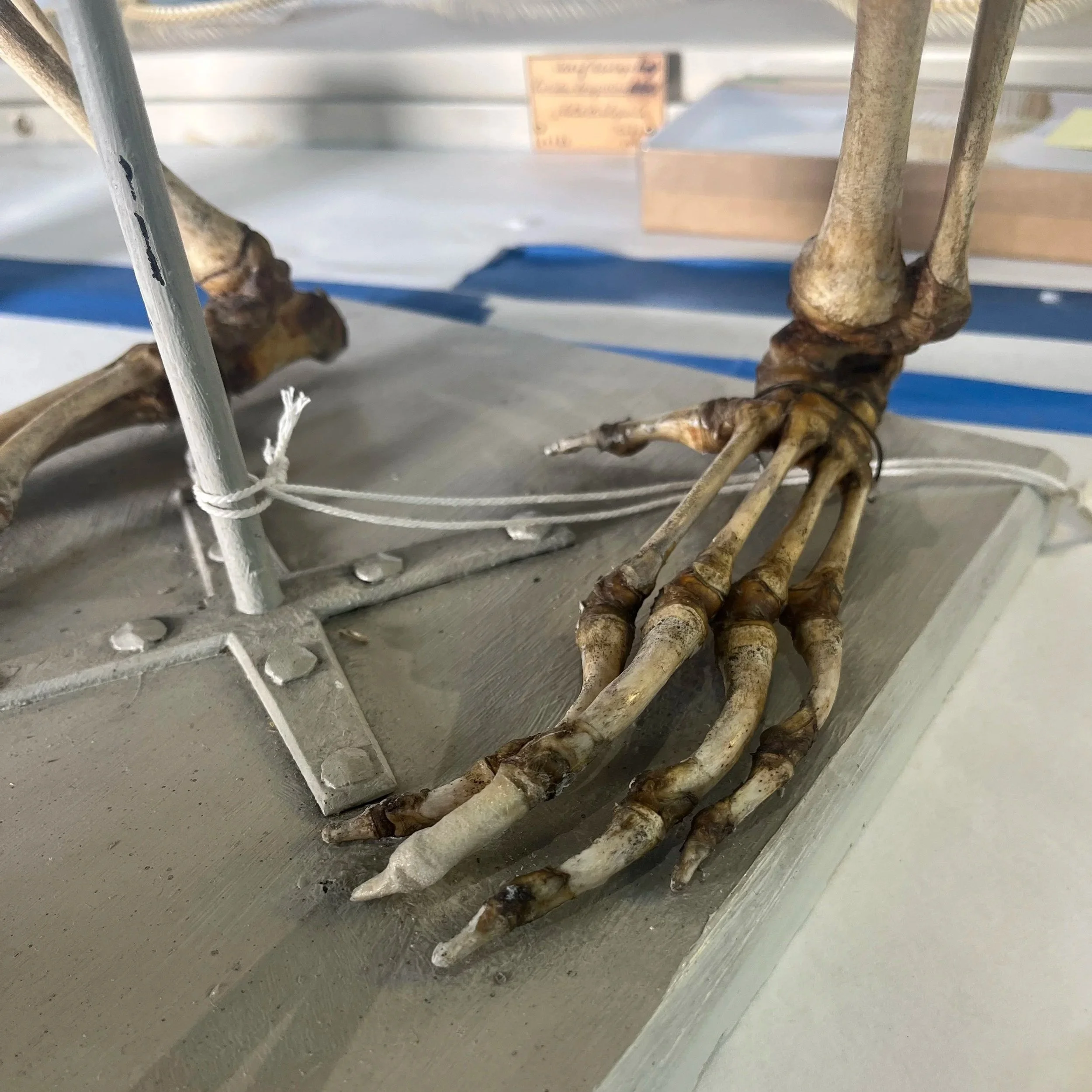
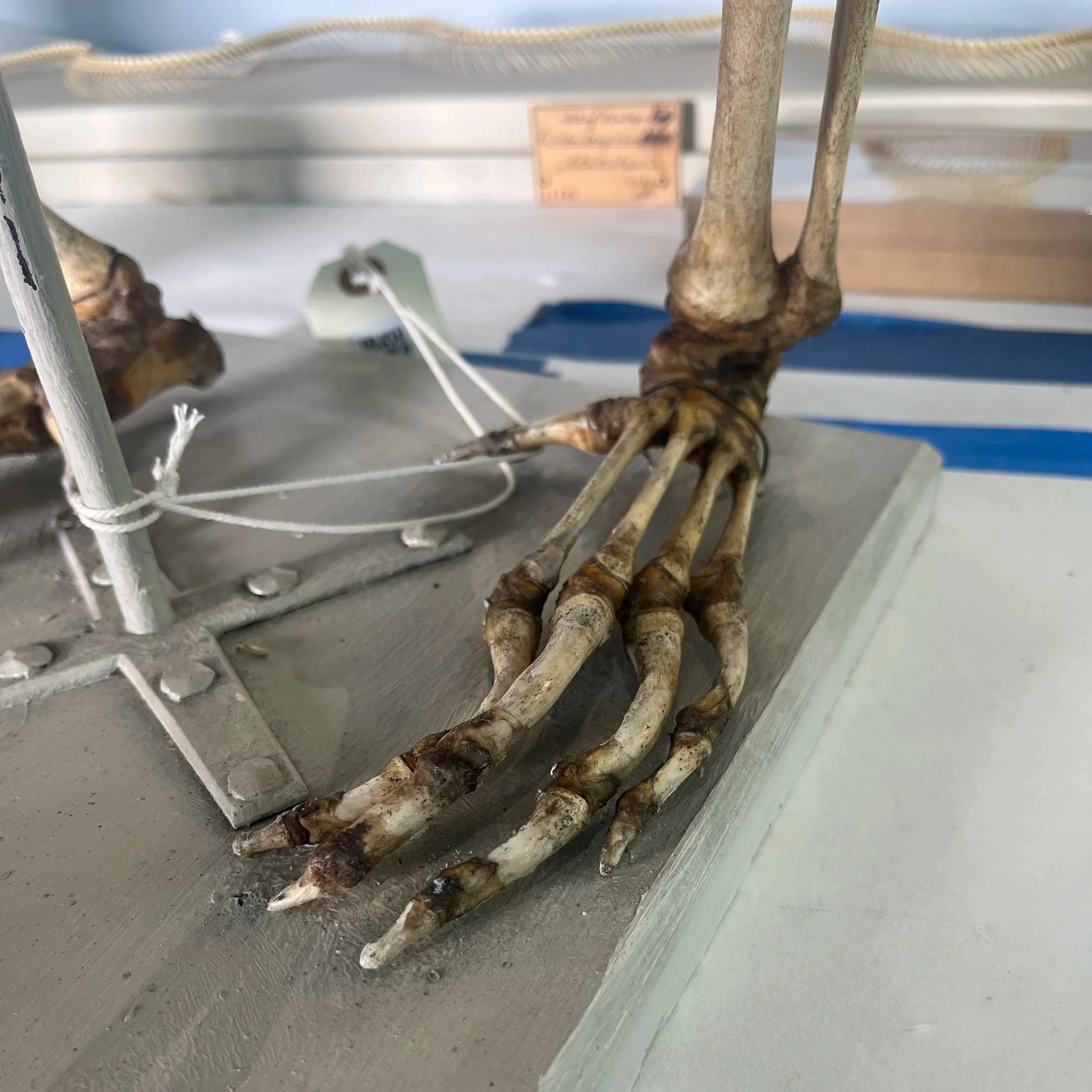
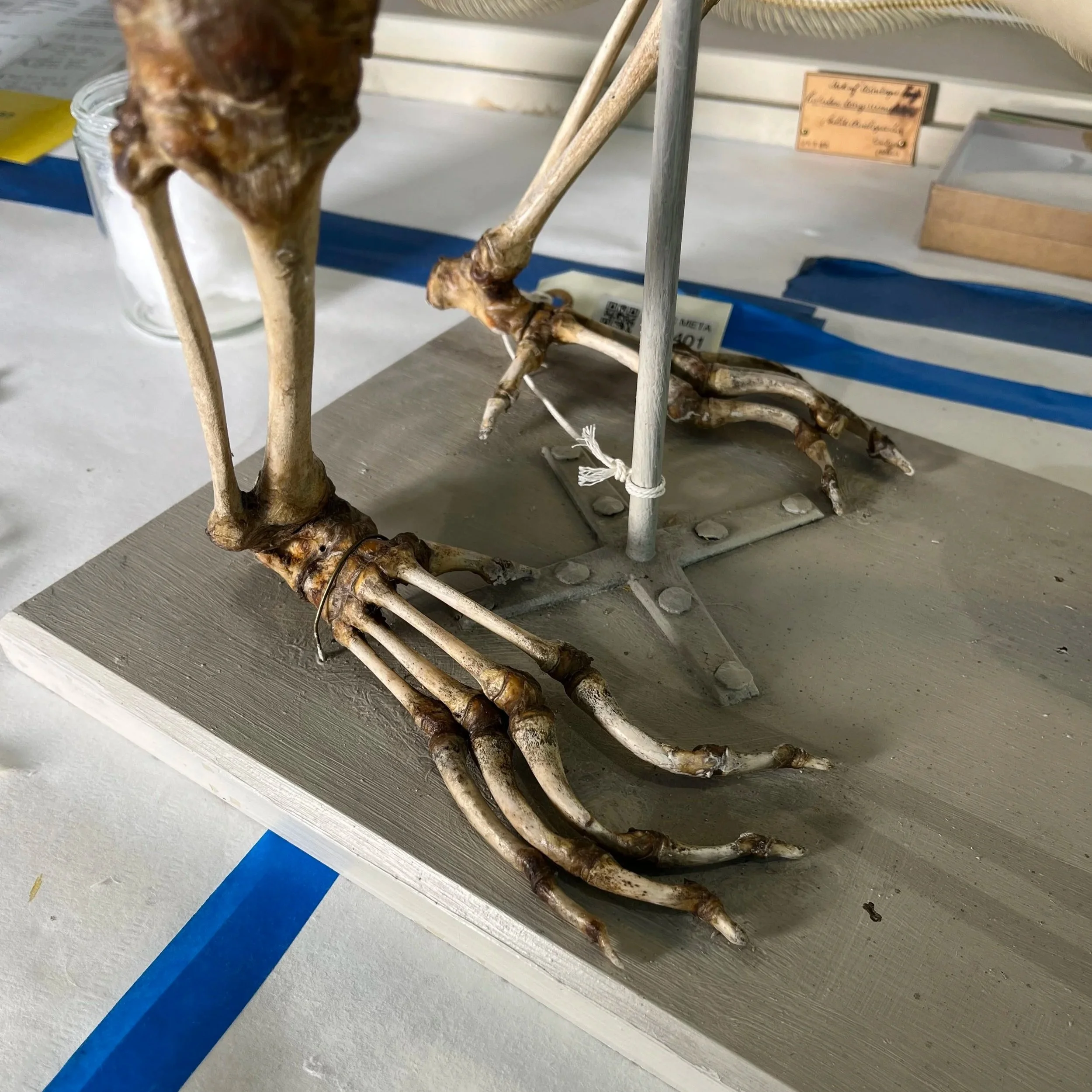
Before Treatment
After Treatment