Fluids
These fluid preserved specimens have been prepared for display at the new museum site of the Natural History Museum of Denmark in Copenhagen. Each object presented different challenges, requiring mounting solutions that support the specimens securely while also allowing them to be clearly seen.
Across the projects, I used a range of materials and methods to adapt each specimen for display. This included selecting or modifying jars, creating internal supports, and developing simple but effective mounting systems suited to the shape and condition of each object.
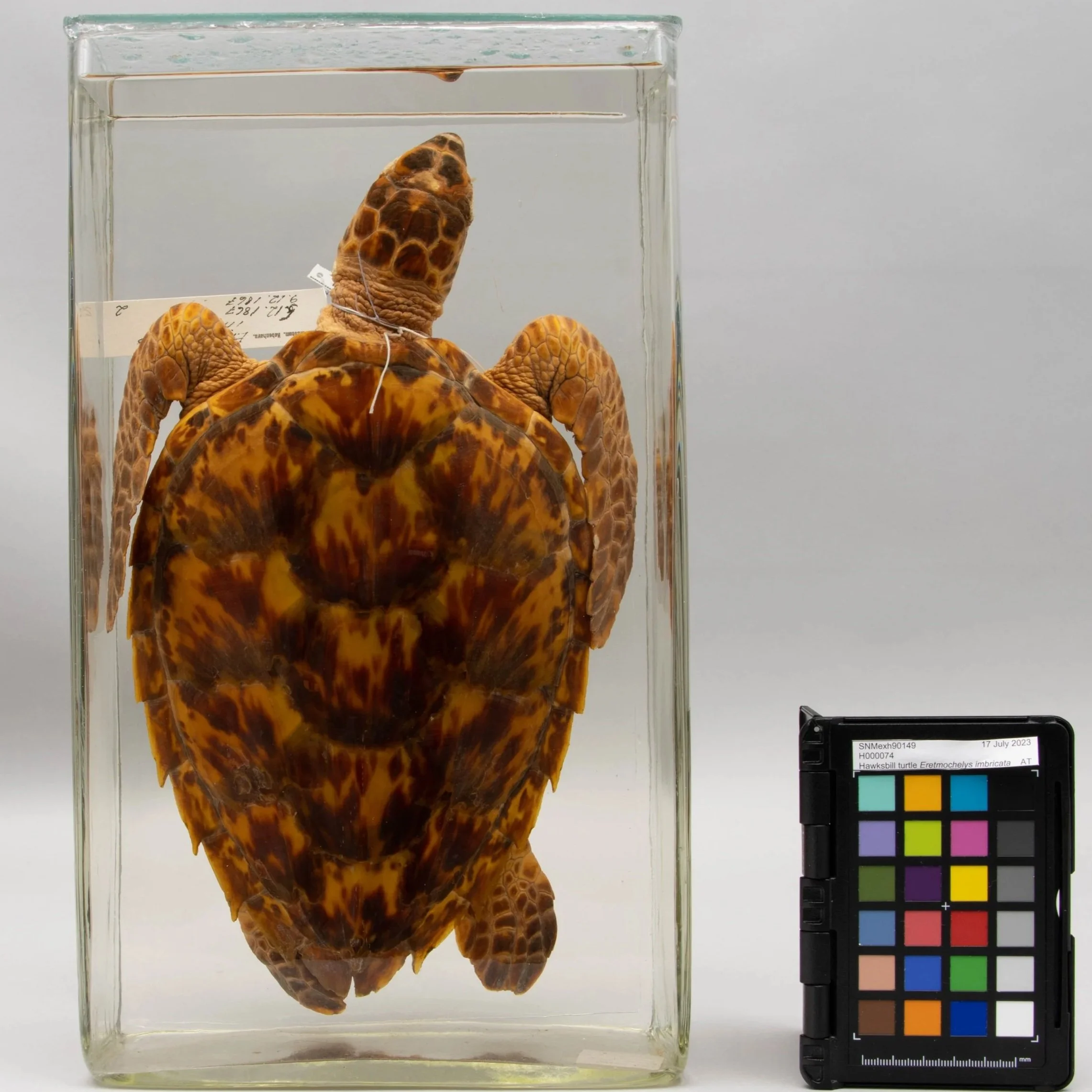
Nylon thread and glass plate mounting - Hawksbill Turtle
The specimen arrived in the lab stored inside a white barrel. The specimen was too large for its container, causing the head to bend at an awkward angle, and it was not fully immersed in alcohol, with only about 95% covered.
To prepare it for display, I first made a custom glass mounting system: I cut the glass plate to size and carefully drilled holes to thread clear 0.30 mm nylon, securing the specimen in place. This approach allowed the specimen to be displayed in a visually dynamic, natural pose while keeping the mounting discreet and nearly invisible to the viewer.
Mounting System
red circles show where the holes were created in the glass to secure the specimen
Before Treatment
After Treatment
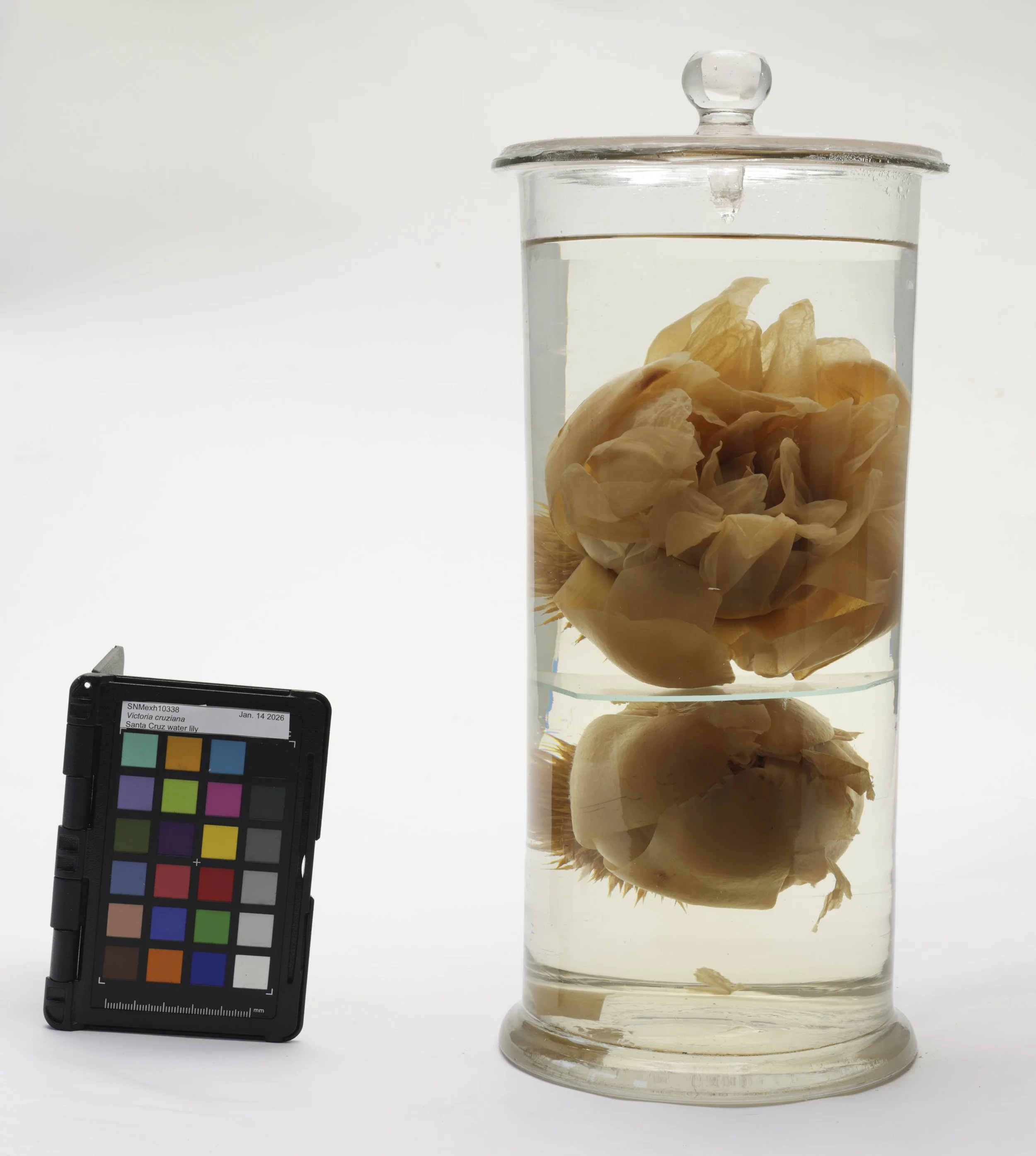
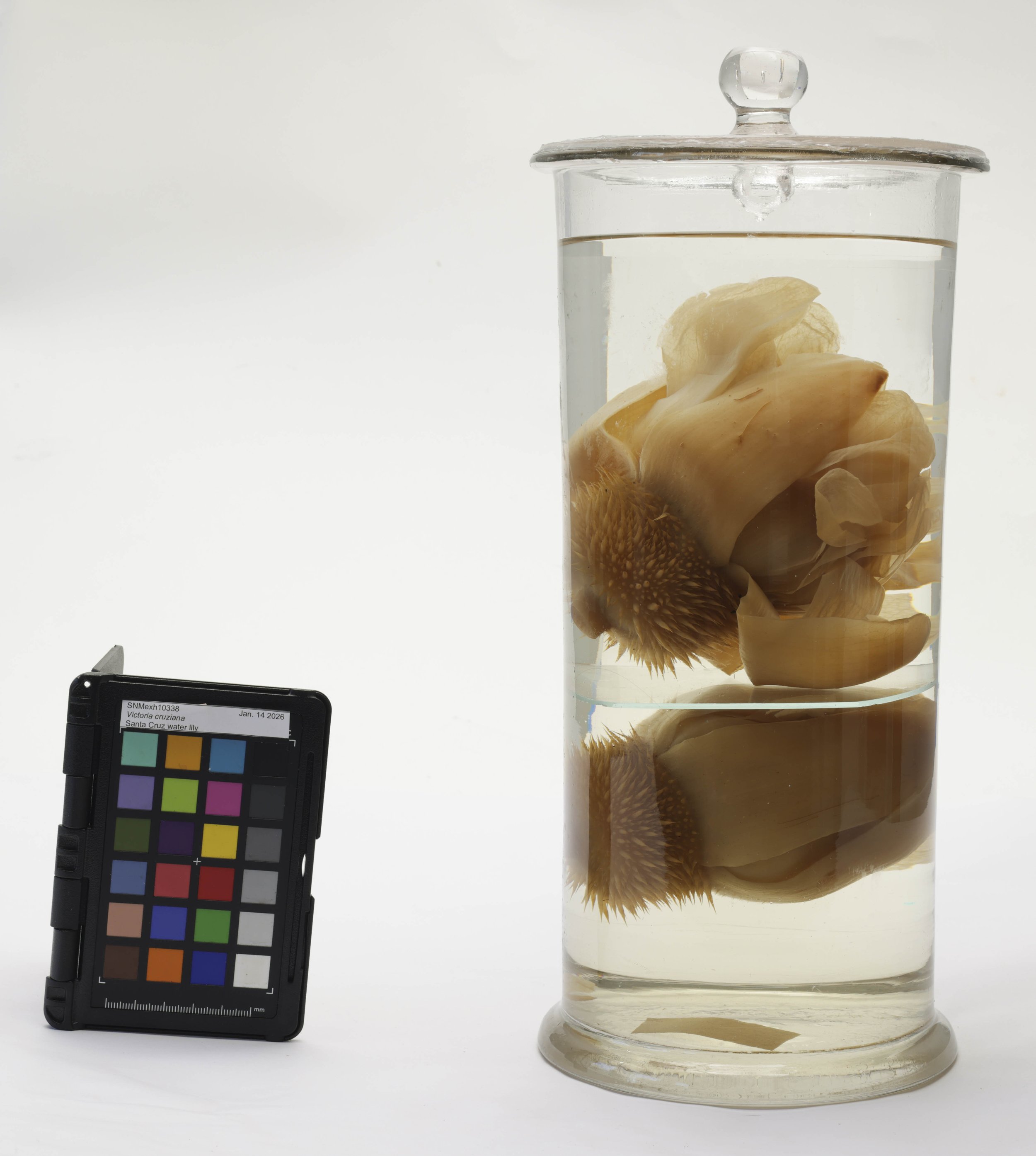
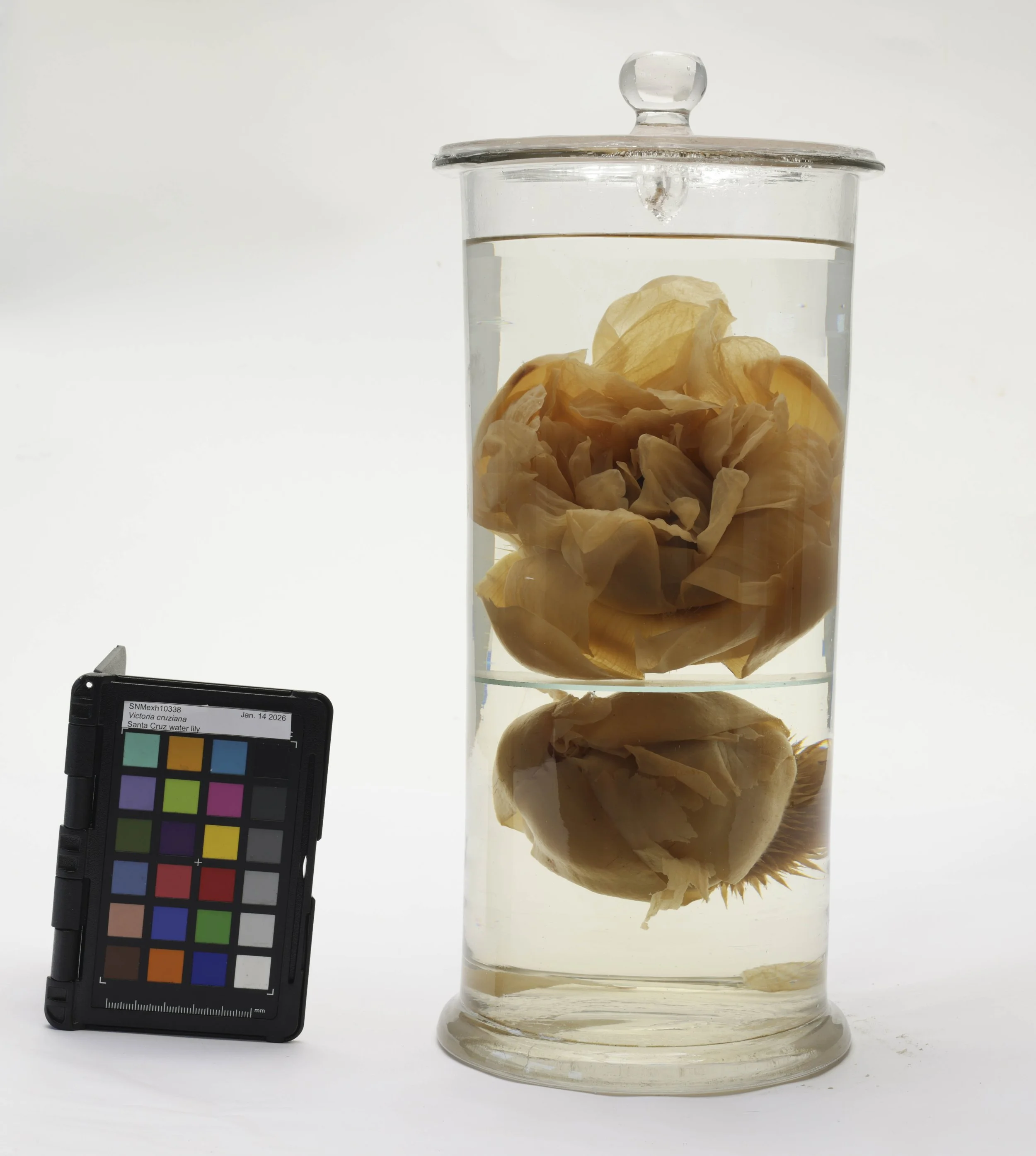
Spacer plate mounting - Giant Water Lilies
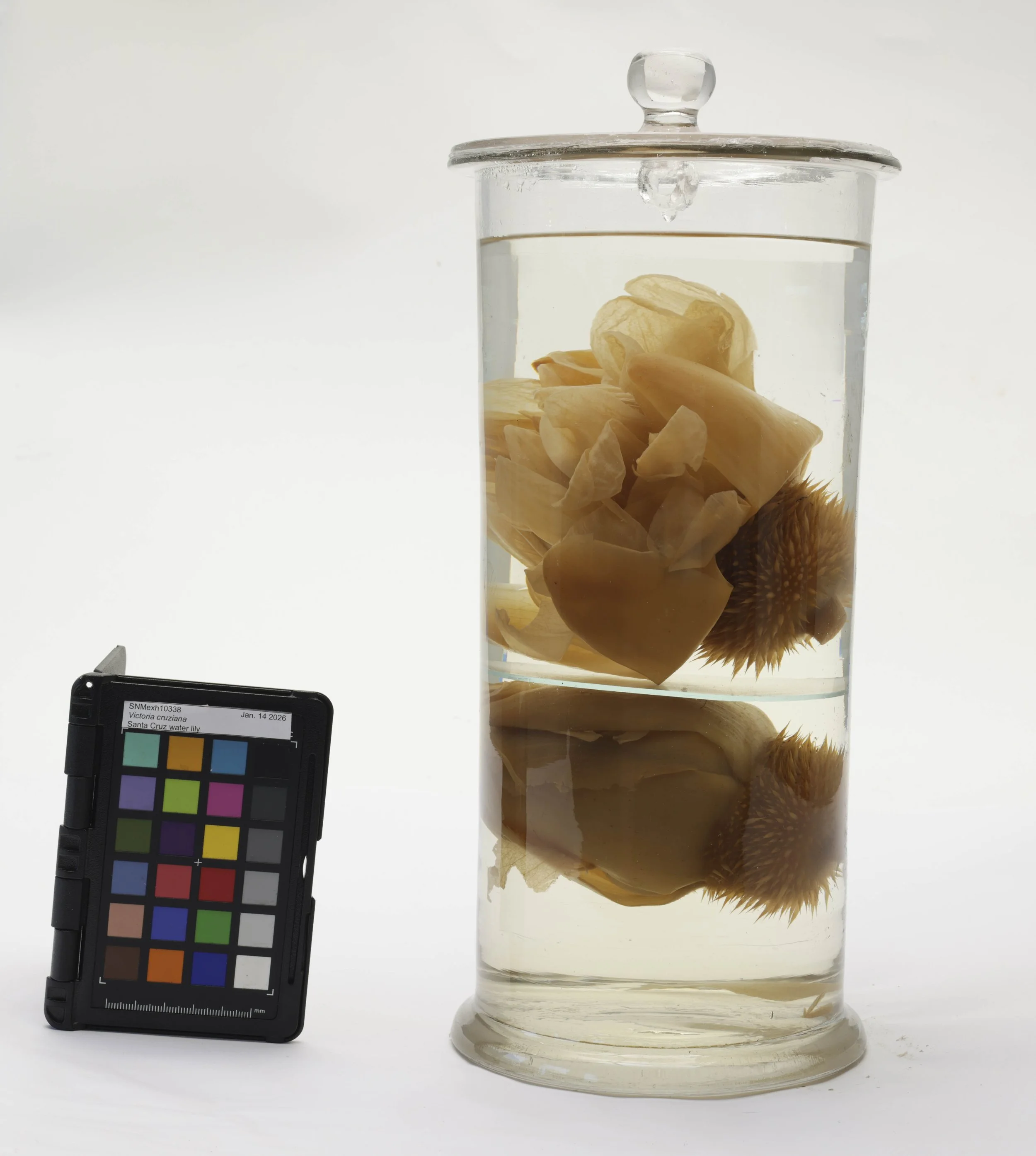
The specimens arrived from the botanical garden stored together in a barrel filled with an ethanol glycerol solution. For display in the new Natural History Museum of Denmark, the goal was to show both water lilies, one with a closed flower and one open, so they could be easily compared while still looking balanced.
To do this, I designed a mounting solution that allowed both specimens to be placed in the same jar. I cut a circular plate to fit inside the jar, creating a divider that separates the two flowers. I also flattened two sides of the plate so it could be easily gripped and adjusted when needed. This solution makes it possible to display both flowers side by side in a clear and simple way.
Thick mylar mounting - Giant Tube Worm
The giant tube worm arrived in the lab in a collections jar, where it had been wrapped to fit inside the container. To better display the specimen, a larger jar was selected so it could be arranged in a more natural, fully extended position.
Instead of using a glass plate, a simpler mounting method was chosen. A thick mylar strip was cut to size, and small slits were made along its length to support the specimen. The worm was carefully removed from the original jar and secured onto the mylar strip, which holds it in place while allowing it to be clearly seen in the new display.
Before Treatment
After Treatment