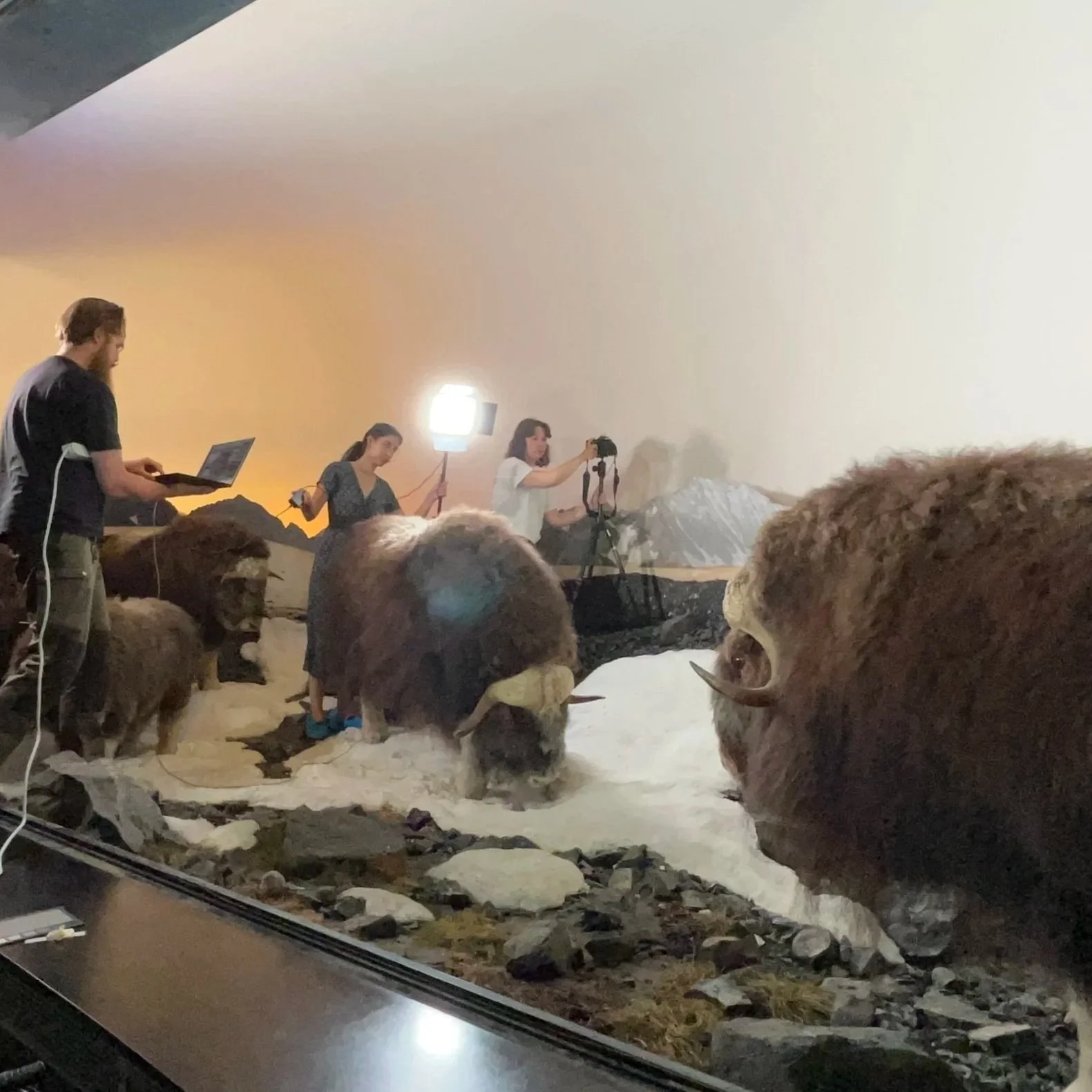
Diorama Deinstallation
The summer of 2023 marked a major turning point, as the glass was removed from six of the Natural History Museum of Denmark - Zoological Museum’s habitat dioramas, allowing access into the scenes. Throughout the summer, extensive work was carried out on five of these displays, including documentation, deinstallation, and conservation of the specimens. This group comprised three tropical forest dioramas, featuring a rhinoceros, okapis, and orangutans, and two Arctic scenes with walruses and muskoxen. Additional deinstallations followed later, including that of an Africa diorama.
Documentation
Dioramas are historically significant objects that reflect a long tradition of displaying taxidermy within carefully constructed, lifelike settings, designed to give audiences a clearer sense of animals in their natural habitats. However, their importance extends beyond the specimens themselves. Dioramas are intricate artistic works, integrating taxidermy with scenographic elements such as painted backdrops, lighting, and mirrors to produce immersive visual experiences.
For this reason, the project extended far beyond the removal of taxidermy. Equal emphasis was placed on thorough documentation of every component. Conservation efforts focused on understanding how the dioramas were constructed and assembled, while creating a detailed record prior to the removal of specimens and materials. This process was further enriched through archival research and conversations with some of the original makers, providing valuable insights into construction methods and material choices that would otherwise have remained unknown.
Click the button below to view the condition report I prepared, which provides a detailed assessment of the Okapi Diorama, including its specimens, model materials, background, and lighting components.
Deinstallation
Once documentation was complete, we developed a careful plan for removing each mount, with the aim of minimizing any additional damage. This included identifying the safest access points into the dioramas, planning movement within the space, and determining which materials needed to be removed first to reach the specimens.
In the densely constructed forest dioramas, some foreground elements had to be temporarily removed to allow safe entry and extraction. These materials were carefully organized and, whenever possible, returned to positions close to their original placement. This methodical approach was essential to protect both the specimens and the integrity of the dioramas.
Treatment
Finally, following the removal of the specimens selected for display, conservation treatment could begin. Click here to learn more about the okapi treatment I carried out.